What it means
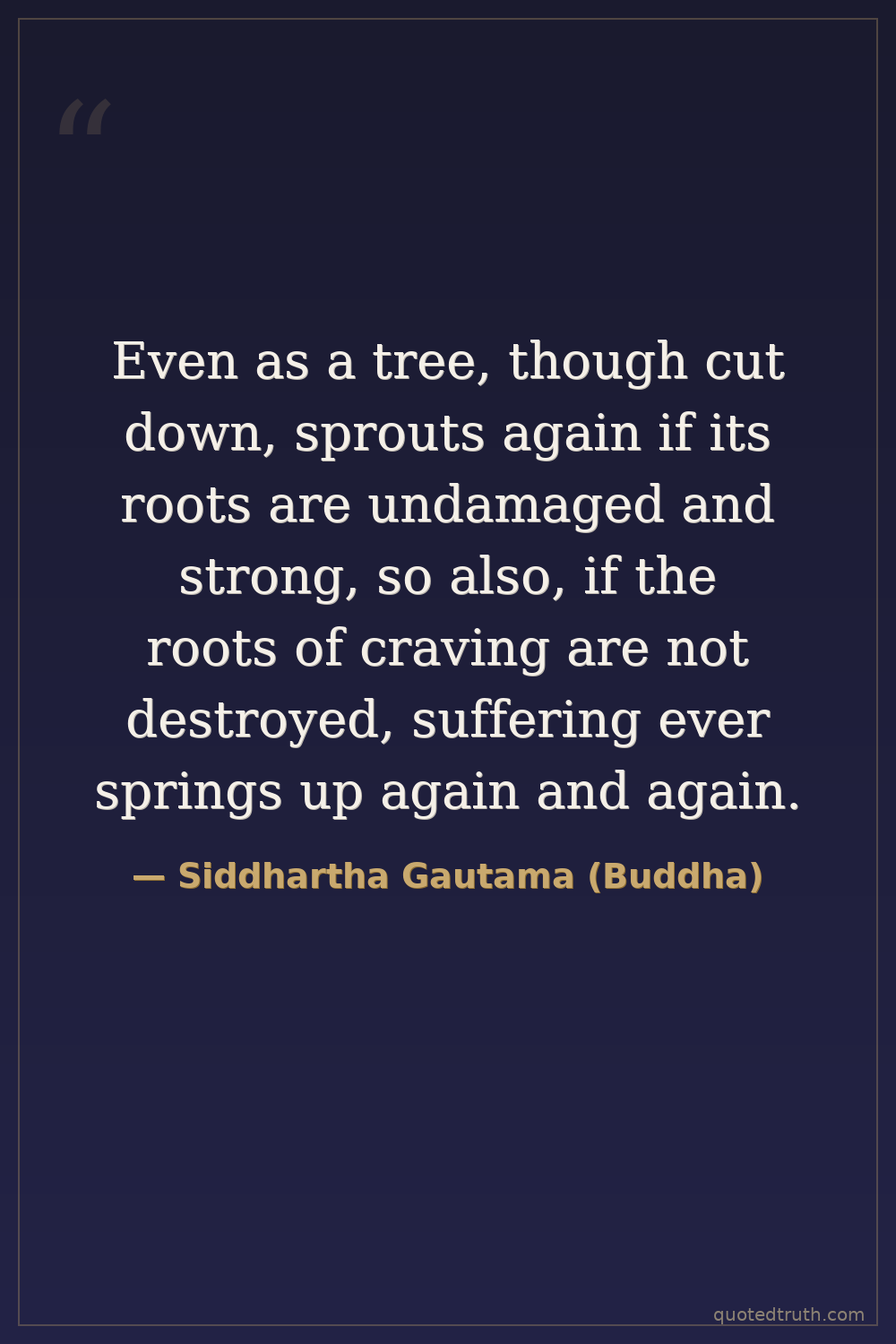
Pulling out a weed at ground level does nothing if the roots remain; it grows back. The same applies to suffering. Temporary relief, distraction, or surface changes will not end pain if the underlying craving that produces it is untouched. As long as desire, attachment, and thirst persist beneath the surface, suffering keeps regenerating. Lasting freedom requires uprooting the cause, not managing the symptoms.
Relevance to Siddhartha Gautama (Buddha)
Buddha built his entire teaching around this diagnosis. After leaving his princely life and meditating under the Bodhi tree, he articulated the Four Noble Truths, whose second truth identifies craving (tanha) as the origin of suffering. His agricultural metaphor reflects a teacher speaking to farmers and villagers in the Ganges plain. The prescription, the Eightfold Path, is essentially a method for cutting those roots, not trimming the branches.
The era
In 5th-century BCE northern India, Vedic Brahmanism emphasized ritual sacrifice, caste duty, and appeasing gods to secure good rebirth. Rival shramana movements, including Jains and Ajivikas, were questioning these rituals and searching for liberation through asceticism or fate. Urbanization along the Ganges was creating new wealth, anxiety, and spiritual seekers. Buddha's claim that suffering has an internal psychological root, not a ritual or cosmic one, reframed religion as inner work rather than external ceremony.
AI-generated insights based on extensive research and information for context. Factual errors? Email [email protected].