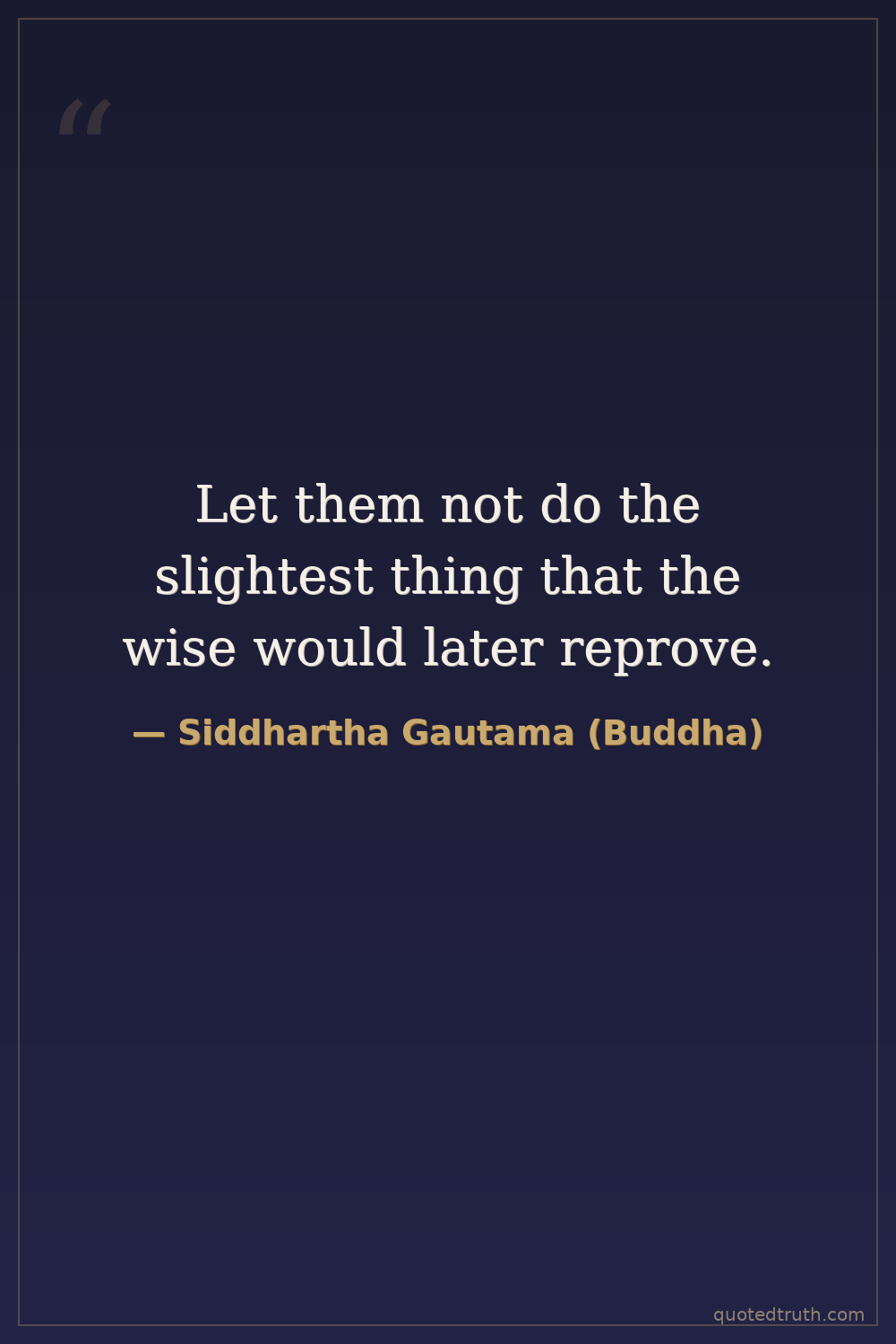
Siddhartha Gautama (Buddha) — "Let them not do the slightest thing that the wise would later reprove."
Let them not do the slightest thing that the wise would later reprove.
Let them not do the slightest thing that the wise would later reprove.
Click any product to generate a realistic preview. Up to 3 at a time.
* Initial load can take up to 90 seconds — revising the preview in another color is nearly instant.
"The body, monks, is not self. If the body were the self, this body would not lend itself to dis-ease. It would be possible (to say) with regard to the body, 'Let my body be thus. Let my body not be th…"
"The tongue is a sharp knife... It kills without drawing blood."
"The greatest prayer is patience."
"Conquer the angry one by love. Conquer the evil one by good. Conquer the stingy one by generosity. Conquer the liar by truth."
"Long is the night to him who is awake; long is a mile to him who is tired; long is life to the foolish who do not know the true law."
Found in 1 providers: gemini
1 source checked
Live so that nothing you do could be criticized by someone genuinely wise and clear-sighted, even in hindsight. The standard is not whether you can get away with an action or whether it feels acceptable now, but whether a person of deep insight, looking back, would find fault. It is a call to hold yourself to a higher bar than social approval, using wisdom as the measuring stick for every small choice.
The Buddha built his entire teaching around ethical conduct (sila) as the foundation of the Eightfold Path, insisting that liberation requires blameless action in thought, word, and deed. Having left a royal life to investigate suffering, he framed morality not as obedience to gods but as what the discerning would approve. This saying appears in the Metta Sutta, reflecting his emphasis on mindful self-restraint and the cultivation of conscience as the groundwork for meditation and insight.
In 5th-century BCE northern India, Vedic Brahmanism dominated through ritual sacrifice and caste-bound duty, while the shramana movement produced wandering ascetics challenging priestly authority. Ethics were largely tied to ritual purity and dharma assigned by birth. The Buddha's appeal to the judgment of 'the wise' rather than scripture, priests, or caste was radical, placing moral authority in reasoned insight. This fit a ferment of thinkers like Mahavira and the Upanishadic sages probing individual conduct over inherited ceremony.
AI-generated insights based on extensive research and information for context. Factual errors? Email [email protected].
Your cart is empty