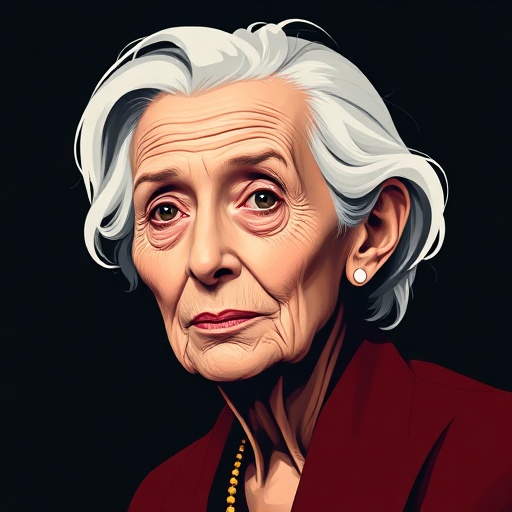
Jane Goodall — "Every day is a chance to make a difference."
Every day is a chance to make a difference.
Every day is a chance to make a difference.
Click any product to generate a realistic preview. Up to 3 at a time.
* Initial load can take up to 90 seconds — revising the preview in another color is nearly instant.
"My early mentors were animals. They taught me patience, observation, and how to listen."
"Hope is what keeps us going. Hope is what drives us to make a difference."
"I often think about what the chimpanzees would say if they could talk. I think they'd tell us to be kinder to each other, and to the planet."
"I can't imagine living without hope. It's what keeps me going."
"My mission is to create a world where people live in harmony with nature."
British primatologist who in 1960 began the longest-running wild primate study at Gombe Stream, transforming our understanding of chimpanzees. Closely associated with Dian Fossey (mountain-gorilla researcher) and Birutė Galdikas (orangutan researcher; together with Goodall and Fossey one of Louis Leakey's 'Trimates'). For an intellectual contrast, see Walter Palmer, American dentist who killed Cecil the Lion in Zimbabwe in 2015 — Palmer represents the trophy-hunting tradition Goodall's life's work has been organized against — the colonial-era hunter-naturalist worldview that treated primates and big game as specimens or trophies, which Goodall's Roots & Shoots and Jane Goodall Institute exist specifically to displace.
Found in 1 providers: grok
1 source checked
Each day presents a genuine opportunity to act in ways that matter — to help someone, improve something, or move toward a better world. The emphasis is on personal agency: change is not left to fate or others but is achievable through deliberate daily choices, however small. Consistency of effort compounds over time into meaningful impact.
Goodall spent decades in Gombe observing chimpanzees before pivoting to global conservation activism. She founded the Jane Goodall Institute and the Roots & Shoots youth program, visiting over 300 days a year to lecture and inspire action. Her life embodies incremental, sustained effort — each talk, each planted tree, each mind changed as its own unit of difference.
Goodall rose to prominence as humanity confronted accelerating deforestation, mass extinction, and climate change. By the 1980s–90s scientific consensus on biodiversity loss hardened while public engagement lagged. Her message reframed environmental crisis as personally solvable rather than overwhelming — a deliberate counter to the paralysis and despair that ecological data increasingly provoked in public audiences.
AI-generated insights based on extensive research and information for context. Factual errors? Email [email protected].
Your cart is empty