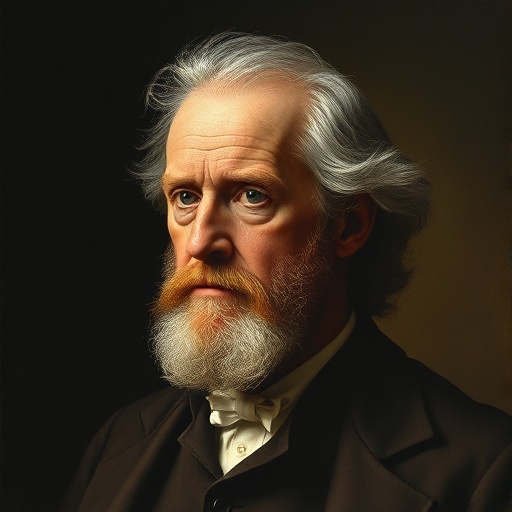
James Watt — "Every inefficiency in machinery is an insult to the engineer."
Every inefficiency in machinery is an insult to the engineer.
Every inefficiency in machinery is an insult to the engineer.
Click any product to generate a realistic preview. Up to 3 at a time.
* Initial load can take up to 90 seconds — revising the preview in another color is nearly instant.
"one of the most ingenious, simple pieces of mechanism I have contrived."
"groped in the dark, misled by many an ignis fatuus, but nature has a weak side, if we can only find it out."
"In the mean time do all you can to cure him of Bashfullness which will ruin him in this impudent age; but beware he be not led into the opposite vice of self conceit or arrogance which is 1000 times w…"
"I had gone to take a walk on a fine Sabbath afternoon, early in 1765... I was thinking upon the engine at the time... when the idea came into my mind that as steam was an elastic body it would rush in…"
"I have made an engine that shall not waste a single particle of steam."
Found in 1 providers: deepseek
1 source checked
A well-built machine should waste nothing — no fuel, no motion, no force. Any energy lost to friction, heat, or poor design represents a failure the engineer could have prevented. Inefficiency isn't just a technical shortcoming; it's a mark against the person responsible. The engineer's job is mastery over physical processes, and leaving avoidable losses in a design is a professional failure, not an acceptable compromise.
Watt's entire career was a war on wasted energy. The Newcomen steam engine he inherited burned enormous coal to pump mine water. He invented the separate condenser specifically to stop heat loss, reducing fuel consumption by roughly 75%. He also added the double-acting piston, centrifugal governor, and calculated improvements methodically. For Watt, efficiency wasn't just commercial logic — it was the literal measure of whether an engineer had done his job.
In 18th-century Britain, coal was finite and costly to transport beyond mine sites, so engine fuel waste directly capped industrial reach. The Scottish Enlightenment framed engineers as rational improvers serving society, not mere tradesmen. Britain's emerging factory system competed on cost, making every wasted calorie real lost money. Engineers were gaining professional identity distinct from craftsmen, and precision manufacturing was newly possible — making the deliberate elimination of inefficiency both achievable and expected.
AI-generated insights based on extensive research and information for context. Factual errors? Email [email protected].
Your cart is empty