What it means
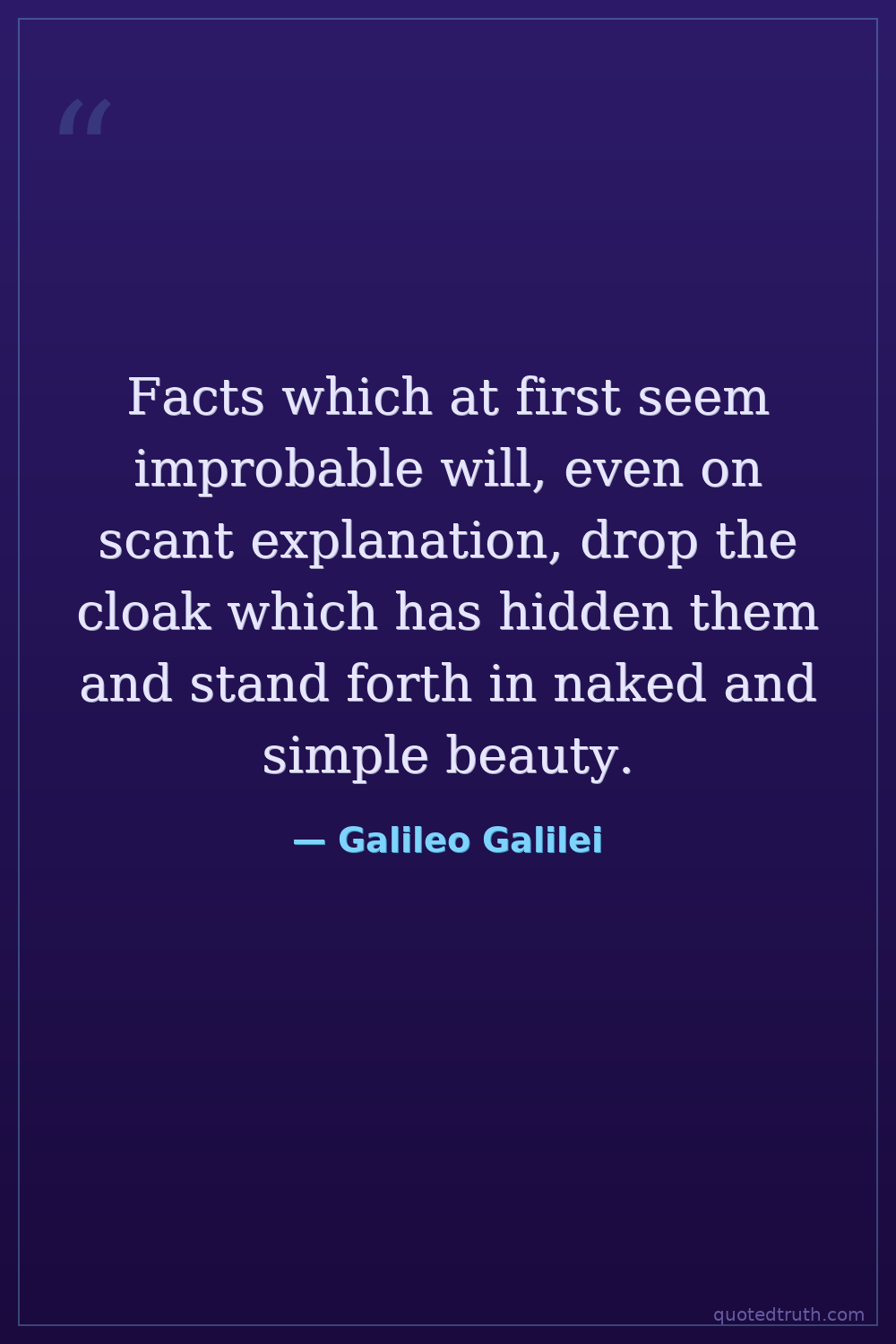
Surprising or counterintuitive truths don't require exhaustive proof to become clear. Once you offer even a basic explanation, what seemed impossible or strange reveals itself as elegantly straightforward. Truth has an inherent simplicity that emerges once the fog of unfamiliarity lifts. Understanding doesn't always demand complexity — sometimes a small key unlocks a door that looked permanently sealed.
Relevance to Galileo Galilei
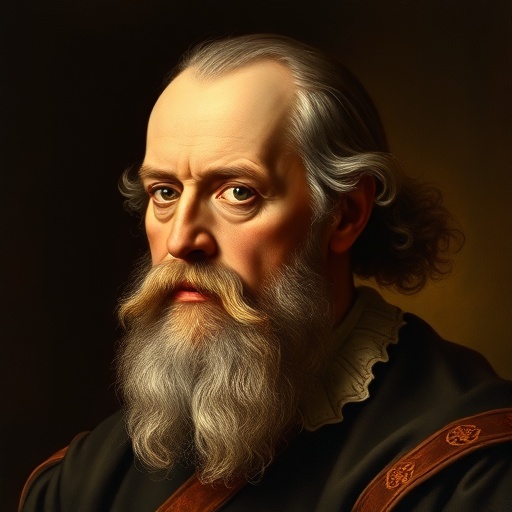
Galileo spent his career revealing improbable-seeming truths: that Earth moves around the Sun, that heavy and light objects fall equally fast, that Jupiter has moons. Each discovery met fierce resistance before its simplicity became undeniable. He personally experienced how demonstration — a telescope, a dropped object — could strip away centuries of false assumption and expose clean mathematical reality underneath.
The era
The early modern period was defined by conflict between inherited Aristotelian dogma and empirical observation. Church authority and scholastic tradition treated established cosmology as sacred truth. Galileo's era was one where 'improbable' facts — heliocentrism, terrestrial motion — were genuinely dangerous to assert. The Scientific Revolution he helped launch was precisely the cultural moment when simple observed reality began overturning centuries of accepted but unexamined belief.
AI-generated insights based on extensive research and information for context. Factual errors? Email [email protected].