What it means
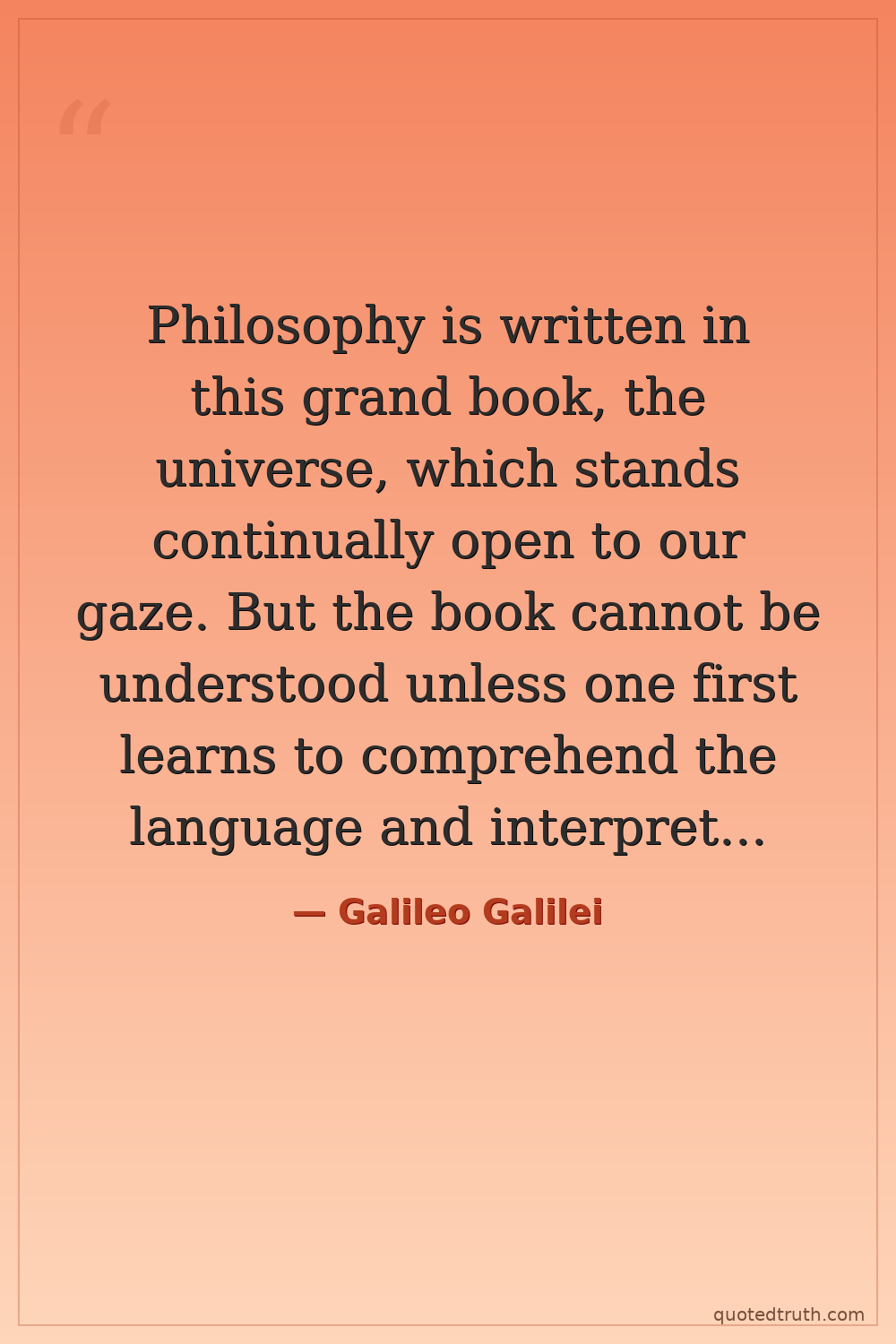
The universe operates according to discoverable rules, but understanding it requires learning mathematics first. Nature does not reveal its secrets through casual observation or pure reasoning alone — you must master the precise language of numbers and geometry to decode what the physical world is actually saying.
Relevance to Galileo Galilei
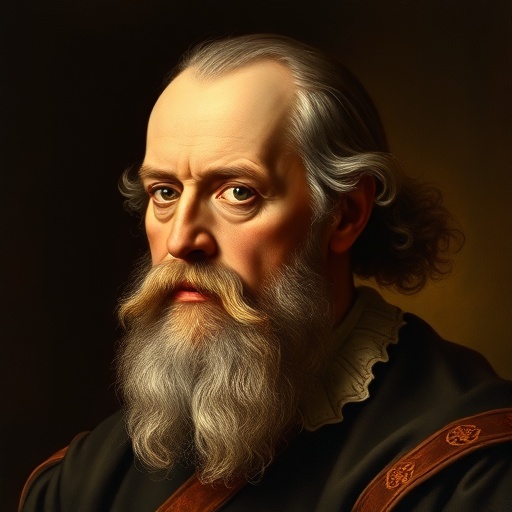
Galileo spent decades translating natural phenomena into mathematical relationships — projectile motion, falling bodies, pendulum timing, planetary orbits. His telescopic observations fed directly into quantitative models. This quote captures his core method: reject untested philosophy, measure everything, let equations speak. It also justified his break from Aristotelian natural philosophy, which relied on verbal argument rather than measurement.
The era
In early modern Europe, natural philosophy was dominated by Aristotle's texts and Church-endorsed commentaries. Mathematics was considered a tool for accountants and astronomers, not a foundation for understanding reality. Galileo's insistence that the cosmos was fundamentally mathematical — not theological or rhetorical — was intellectually revolutionary and directly contributed to the Scientific Revolution that reshaped European thought throughout the 17th century.
AI-generated insights based on extensive research and information for context. Factual errors? Email [email protected].