What it means
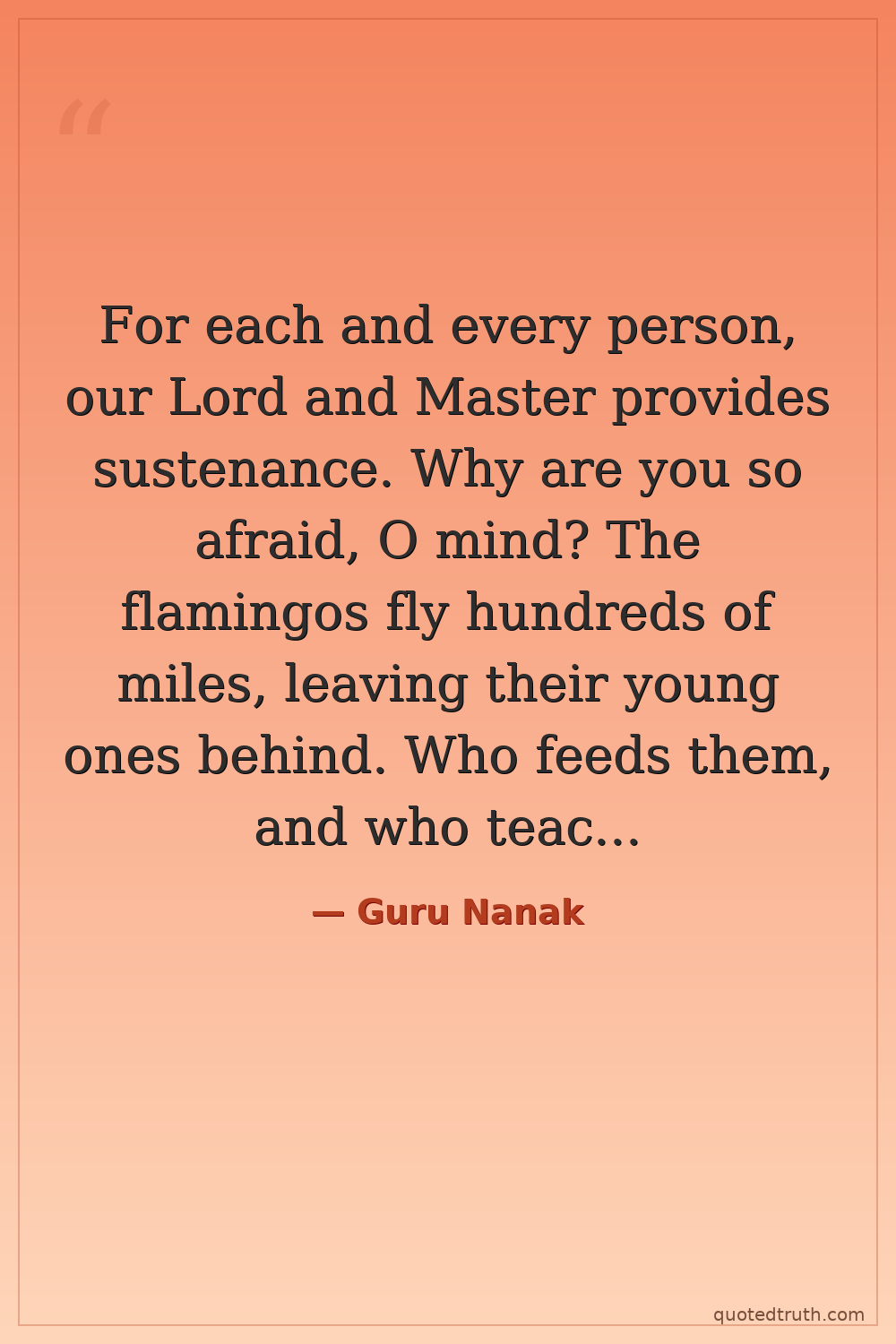
This quote argues that God sustains every living creature, making human anxiety about survival misplaced. Using flamingos as a metaphor — birds that leave helpless chicks behind while traveling vast distances — Nanak challenges the listener to recognize divine providence operating without human intervention. The rhetorical question is a spiritual exercise: if you truly believed God provides for all beings unconditionally, what would you still have reason to fear?
Relevance to Guru Nanak
Guru Nanak undertook four massive Udasis, traveling thousands of miles across South Asia, Persia, and Arabia, trusting divine provision throughout. He rejected caste-based hierarchy and the hoarding mentality of priestly classes. His theology centers on Waheguru as universal sustainer — Ik Onkar, one God. The flamingo metaphor mirrors his own wandering life, placing absolute trust in God over material security, which defined his personal example as much as his preaching.
The era
Nanak lived through Babur's Mughal invasions of 1524–1526, which he witnessed and condemned in the Babarvani hymns. Peasants across Punjab faced violent displacement, famine, and caste-enforced poverty. The Brahmin priestly class exploited fear of divine punishment for income and control. Against this backdrop, Nanak's message that God feeds even abandoned flamingo chicks was politically subversive — undermining fear-based religion — and practically consoling to displaced people uncertain of tomorrow.
AI-generated insights based on extensive research and information for context. Factual errors? Email [email protected].