What it means
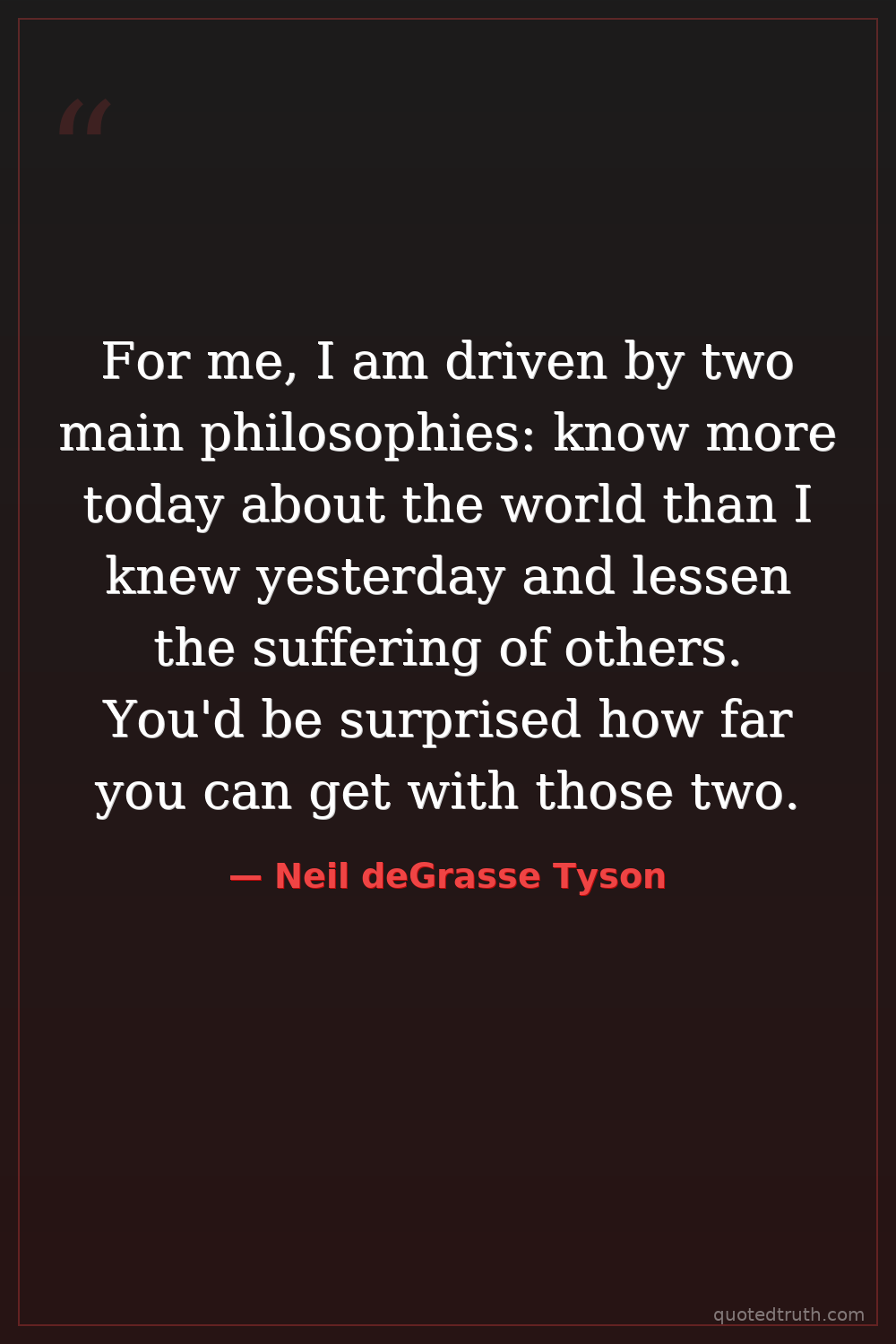
The quote distills a complete life philosophy into two actionable principles: relentless curiosity and compassion. Always expanding what you know, and actively working to reduce harm to others, are framed as sufficient engines for a meaningful existence. The closing line is the quiet punchline—these humble, unglamorous goals produce more achievement and impact than elaborate ambitions or complex ideologies. Simplicity of purpose, compounded daily, becomes extraordinary over time.
Relevance to Neil deGrasse Tyson
Tyson has spent decades as director of the Hayden Planetarium and host of Cosmos: A Spacetime Odyssey and StarTalk, embodying both principles directly. His relentless public science communication—books, podcasts, Congressional testimony—reflects the daily pursuit of knowing more. His consistent argument that scientific literacy reduces poverty, disease, and conflict reflects the compassion pillar. The quote isn't abstract philosophy for him; it describes the actual operating logic behind a 40-year career bridging astrophysics and public understanding.
The era
Tyson emerged as a leading science communicator during early 21st-century America, a period marked by climate denial, vaccine hesitancy, post-9/11 science-religion tensions, and deepening distrust of institutions. Public scientific literacy was deteriorating precisely when it mattered most. His two-philosophy framework offered an accessible, secular humanist foundation during an era when misinformation spread rapidly and science advocates were urgently needed to counter a polarized, increasingly anti-intellectual public discourse.
AI-generated insights based on extensive research and information for context. Factual errors? Email [email protected].