What it means
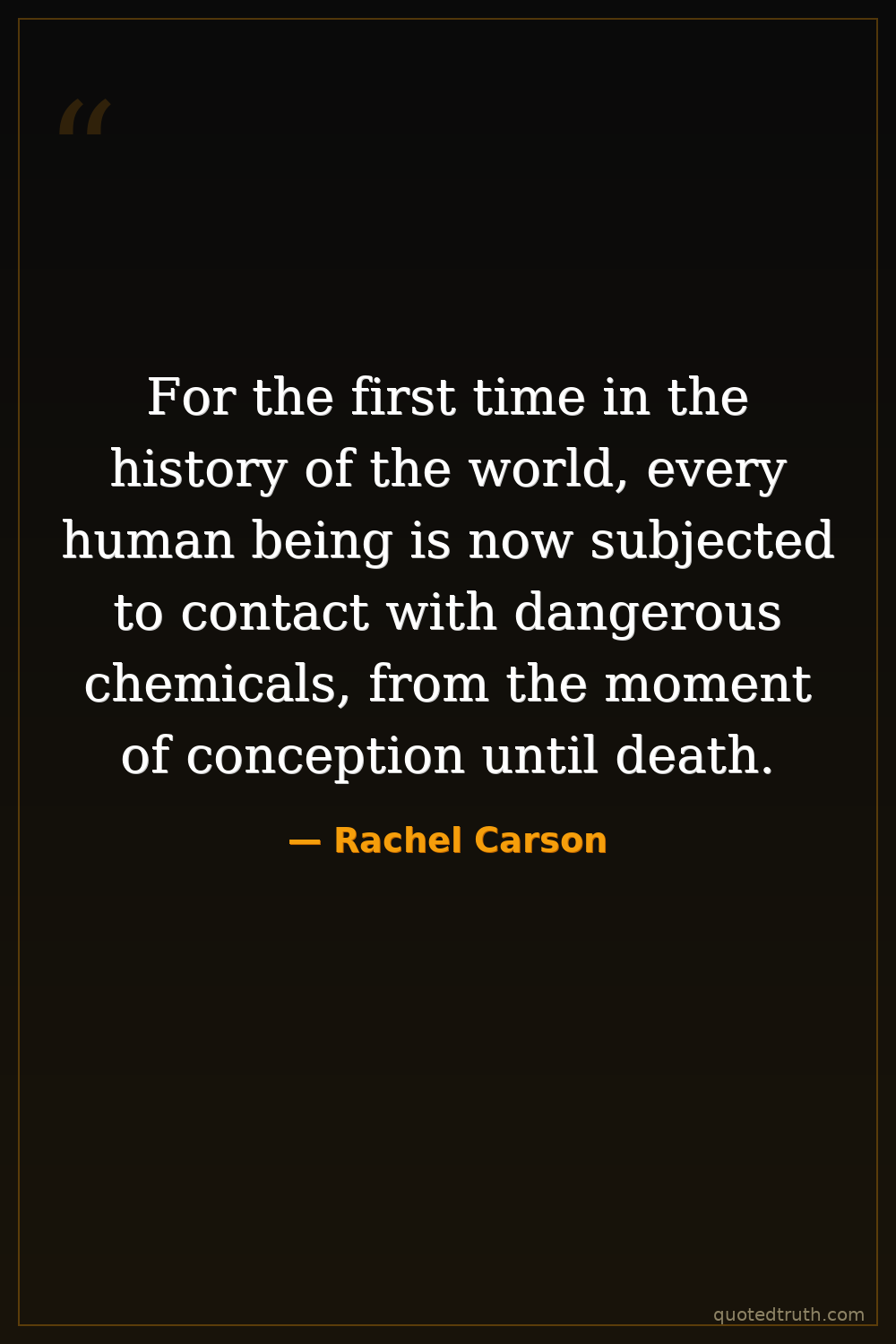
Synthetic chemicals — pesticides, industrial compounds, plastics — have saturated food, water, air, and soil so completely that no human escapes exposure. Unlike natural toxins limited to specific places, these man-made substances now circulate globally. Every person absorbs them continuously from before birth onward, regardless of where they live or what choices they make. Chemical contamination is no longer a local problem — it is the universal condition of modern life, imposed on everyone without consent.
Relevance to Rachel Carson
Carson was a marine biologist who spent years tracing how synthetic pesticides like DDT accumulated in living tissue through food chains — biomagnification. Her 1962 book Silent Spring documented collapsing bird populations, dying fish, and pesticide residues in human breast milk and fetal tissue. She was battling breast cancer while writing it. The quote distills her core scientific finding: industrialization had made chemical exposure inescapable and universal, stripping individuals of any meaningful ability to opt out.
The era
Post-WWII America saw explosive growth in synthetic pesticide use. DDT, developed during WWII, was sprayed on crops, lawns, and children with minimal regulation, backed by enormous chemical-industry political power. Nuclear weapons testing had already spread strontium-90 into global milk supplies, proving contamination crossed all borders. Carson published Silent Spring in 1962 during peak industrial optimism, when claiming that chemicals caused cellular harm was actively dismissed as hysteria by government agencies and corporate-funded scientists.
AI-generated insights based on extensive research and information for context. Factual errors? Email [email protected].