What it means
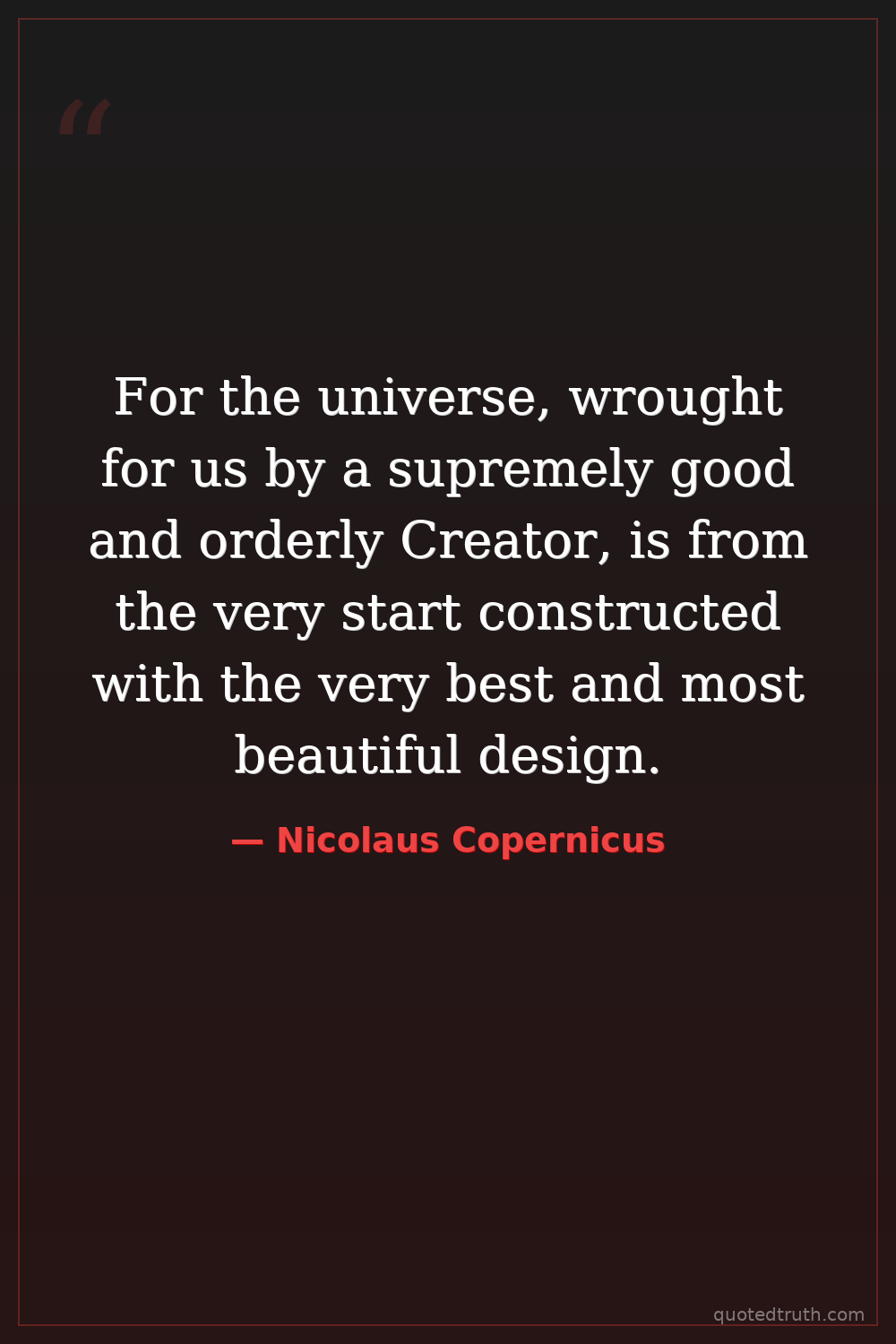
The universe was deliberately and perfectly designed by a supremely good Creator — not born from chaos or accident. The cosmos possesses inherent order, beauty, and rational purpose. This reflects a teleological worldview: creation is optimally structured from its very beginning. The universe's mathematical regularity and elegance are evidence of divine intelligence, not randomness. Order is not imposed by human minds but discovered within nature's existing fabric.
Relevance to Nicolaus Copernicus
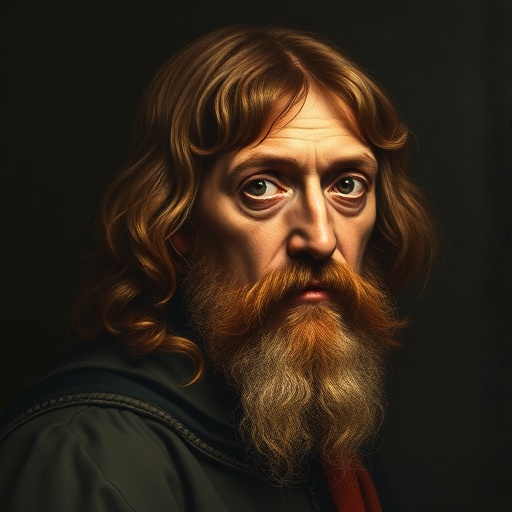
Copernicus was a Polish Renaissance polymath — canon lawyer, physician, and astronomer — who repositioned the Sun at the cosmos's center in De Revolutionibus (1543). His heliocentric model was driven by conviction that God would design a simpler, more harmonious system than the unwieldy Ptolemaic model. He reconciled radical astronomy with faith by framing heliocentrism as revealing the Creator's elegant design, not contradicting Church doctrine but honoring divine order through mathematics.
The era
The early modern period saw the Renaissance and Reformation shake Europe's intellectual foundations. The Catholic Church maintained that Earth occupied the cosmos's privileged center. Natural philosophers still blended theological reasoning with empirical observation — science and faith were inseparable disciplines. Copernicus published De Revolutionibus in 1543 amid intense religious controversy, strategically framing his revolutionary astronomy within the language of divine design to soften ecclesiastical resistance and assert his work's moral legitimacy.
AI-generated insights based on extensive research and information for context. Factual errors? Email [email protected].