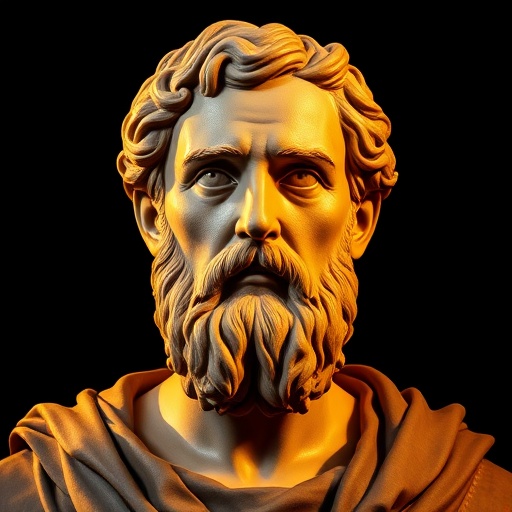
Saint Paul — "For this cause ought the woman to have power on her head because of the angels."
For this cause ought the woman to have power on her head because of the angels.
For this cause ought the woman to have power on her head because of the angels.
Click any product to generate a realistic preview. Up to 3 at a time.
* Initial load can take up to 90 seconds — revising the preview in another color is nearly instant.
"Notwithstanding she shall be saved in childbearing, if they continue in faith and charity and holiness with sobriety."
"And unto the Jews I became as a Jew, that I might gain the Jews; to them that are under the law, as under the law, that I might gain them that are under the law; To them that are without law, as witho…"
"I am made all things to all men, that I might by all means save some."
"If I speak in the tongues of men and of angels, but have not love, I am a noisy gong or a clanging cymbal."
"If anyone thinks that he is something when he is nothing, he deceives himself."
Found in 1 providers: gemini
1 source checked
Paul argues that a woman should wear a head covering during worship as a visible sign of authority or order. The 'power on her head' means a symbol of her position within the gathered community. He ties this practice to the presence of angels, who witness worship and expect proper conduct. It was a rule about reverence, modesty, and respecting structured roles during prayer and prophecy in mixed assemblies.
Paul, a former Pharisee trained under Gamaliel, constantly navigated tensions between Jewish tradition, Greco-Roman custom, and new Christian practice. As founder of the Corinthian church, he wrote this to address disorder in their worship gatherings. His rabbinic background shows in the appeal to angels as witnesses, a common Jewish concept. Paul repeatedly issued practical instructions to young congregations, balancing freedom in Christ with cultural decency expected of respectable women in that port city.
First-century Corinth was a wealthy Roman colony notorious for mixed cultures and loose morals. Respectable married women typically covered their heads in public; uncovered hair signaled prostitutes or disgrace. Jewish synagogues also observed veiling customs. Early Christian worship included women praying and prophesying aloud, which was radical. Paul wrote around 55 CE, when house churches met openly and pagans watched closely. Proper appearance protected the fledgling movement's reputation amid Roman scrutiny and Corinthian gossip.
AI-generated insights based on extensive research and information for context. Factual errors? Email [email protected].
Your cart is empty