What it means
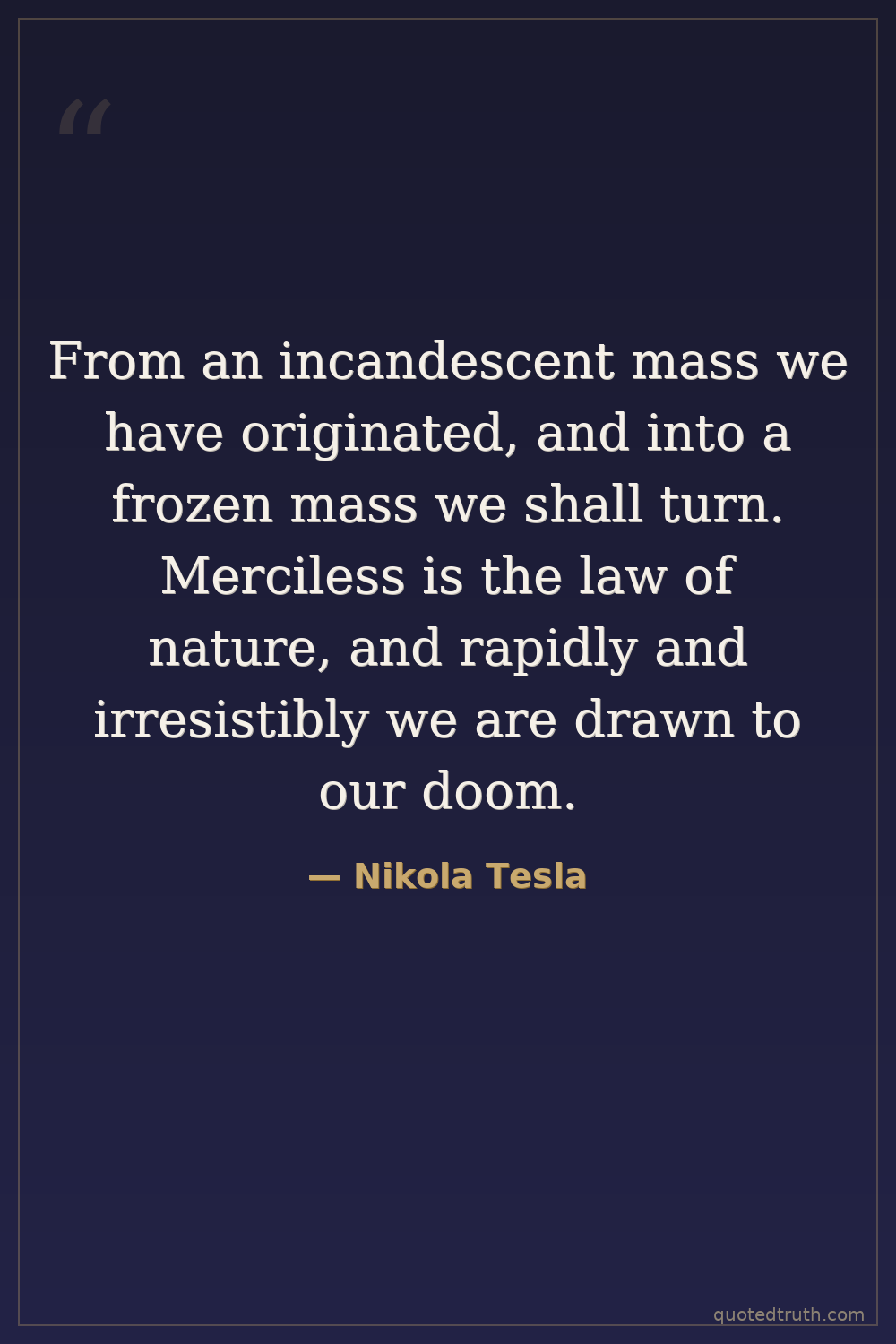
The quote describes humanity's origins in a molten, incandescent planetary body and its inevitable end in a cold, frozen world. Physical laws — particularly entropy and thermodynamics — operate without mercy or exception. No human achievement can override nature's trajectory toward decay. It is a blunt, unsentimental acknowledgment that all existence is temporary, governed by forces indifferent to life, and heading toward an inescapable conclusion.
Relevance to Nikola Tesla
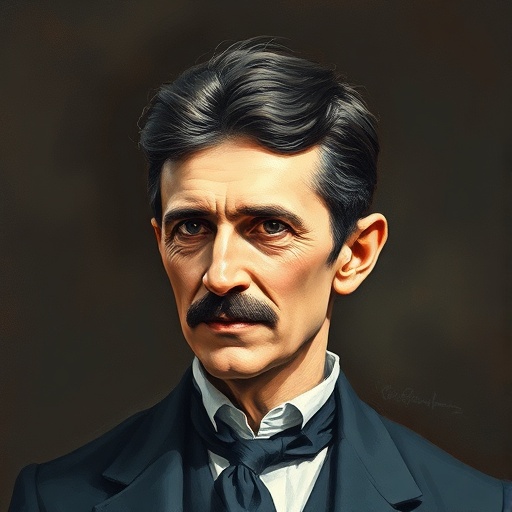
Tesla devoted his life to harnessing electrical energy — fighting entropy by converting and transmitting power efficiently. Yet he held a deeply deterministic worldview rooted in physics. His AC system and wireless energy dreams represented humanity's brief resistance against nature's indifference. Increasingly isolated and commercially defeated in later life, Tesla's fatalism reflected personal experience as much as science: brilliant work ultimately swallowed by forces — financial, biological, cosmic — beyond any individual's control.
The era
Tesla's most productive years spanned the late 1800s through early 1900s, when thermodynamics was redefining scientific understanding. Kelvin, Clausius, and Helmholtz had established entropy and universal heat death as settled physics. Meanwhile, the Industrial Revolution promised human dominion over nature. World War I then shattered Enlightenment optimism entirely. Intellectuals of Tesla's era grappled with a sharp paradox: unprecedented technological power coexisting alongside proof that the universe was running irreversibly down.
AI-generated insights based on extensive research and information for context. Factual errors? Email [email protected].