What it means
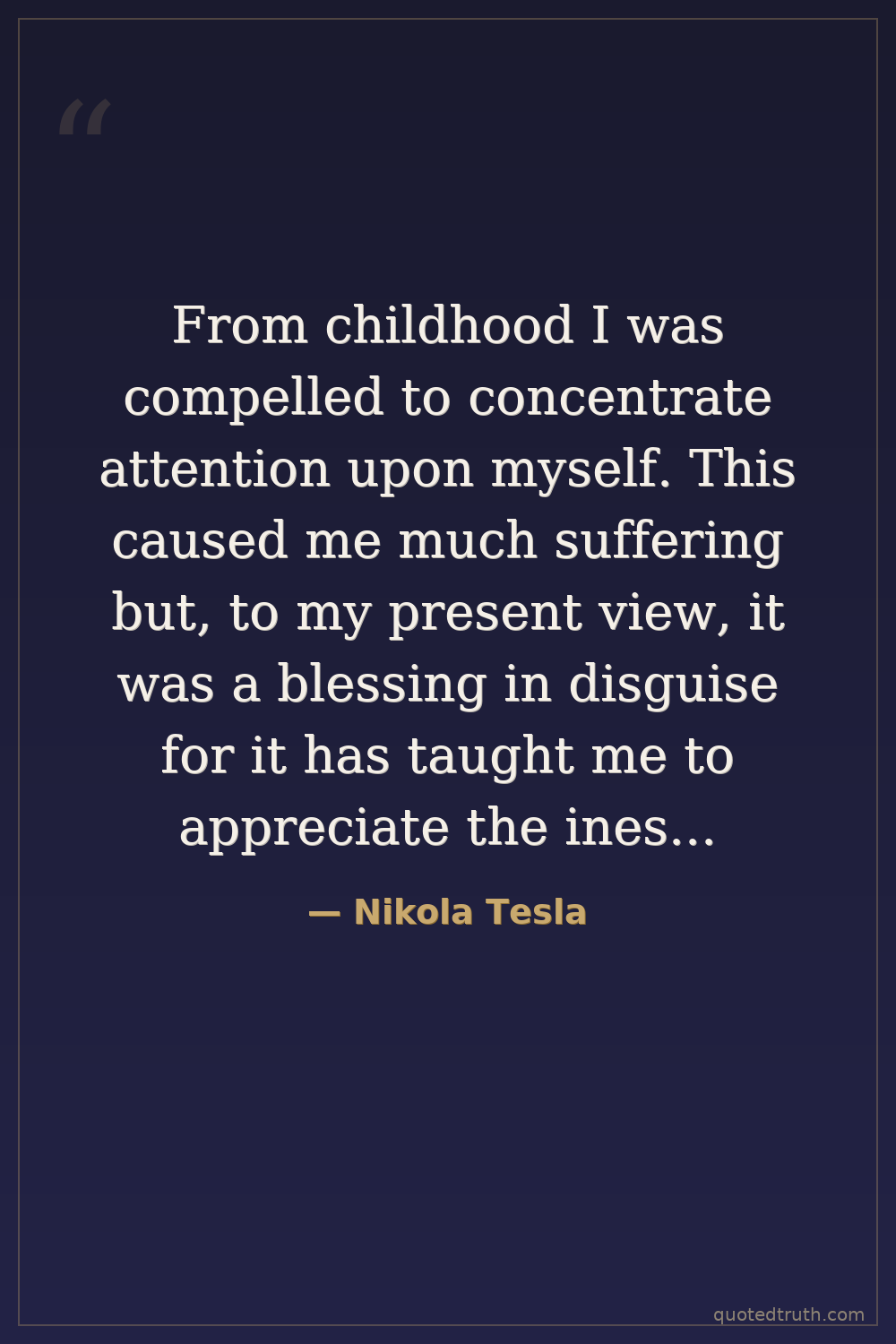
Being forced to focus inward as a child feels isolating and painful. But looking back, that inward turn becomes an asset. Knowing your own mind deeply — your fears, drives, and patterns — helps you survive hardship and direct energy toward meaningful goals. Self-examination isn't navel-gazing; it's a foundation for both resilience and genuine accomplishment. What felt like a curse in youth reveals itself as the source of lasting strength.
Relevance to Nikola Tesla
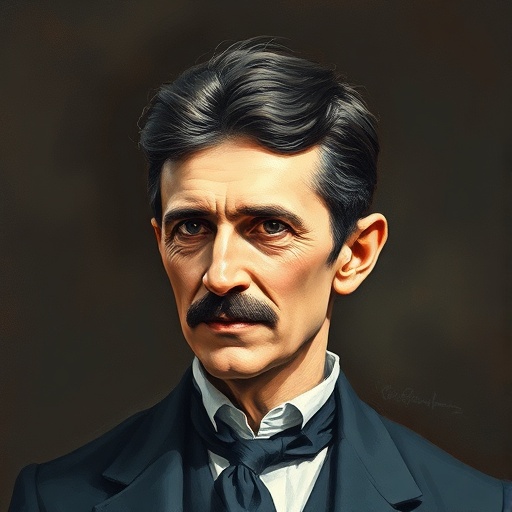
Tesla was famously solitary — never marrying, maintaining few friendships, working in near-total absorption. He suffered OCD-like compulsions, extreme sensory sensitivities, and recurring breakdowns. Yet his extraordinary ability to mentally visualize and simulate entire machines before building them came directly from this intense inward focus. His introspection wasn't passive; it powered AC electricity, the Tesla coil, and wireless transmission concepts decades ahead of his contemporaries.
The era
Tesla lived through the Industrial Revolution's peak, when inventors were celebrated as public heroes and external achievement — patents, machines, visible progress — defined worth. Psychology was just emerging; Freud and William James were publishing foundational works on the mind. In this aggressively outward-looking age, valuing introspection was countercultural. Tesla's framing of self-examination as a survival tool challenged an era obsessed with productivity and measurable output over inner understanding.
AI-generated insights based on extensive research and information for context. Factual errors? Email [email protected].