What it means
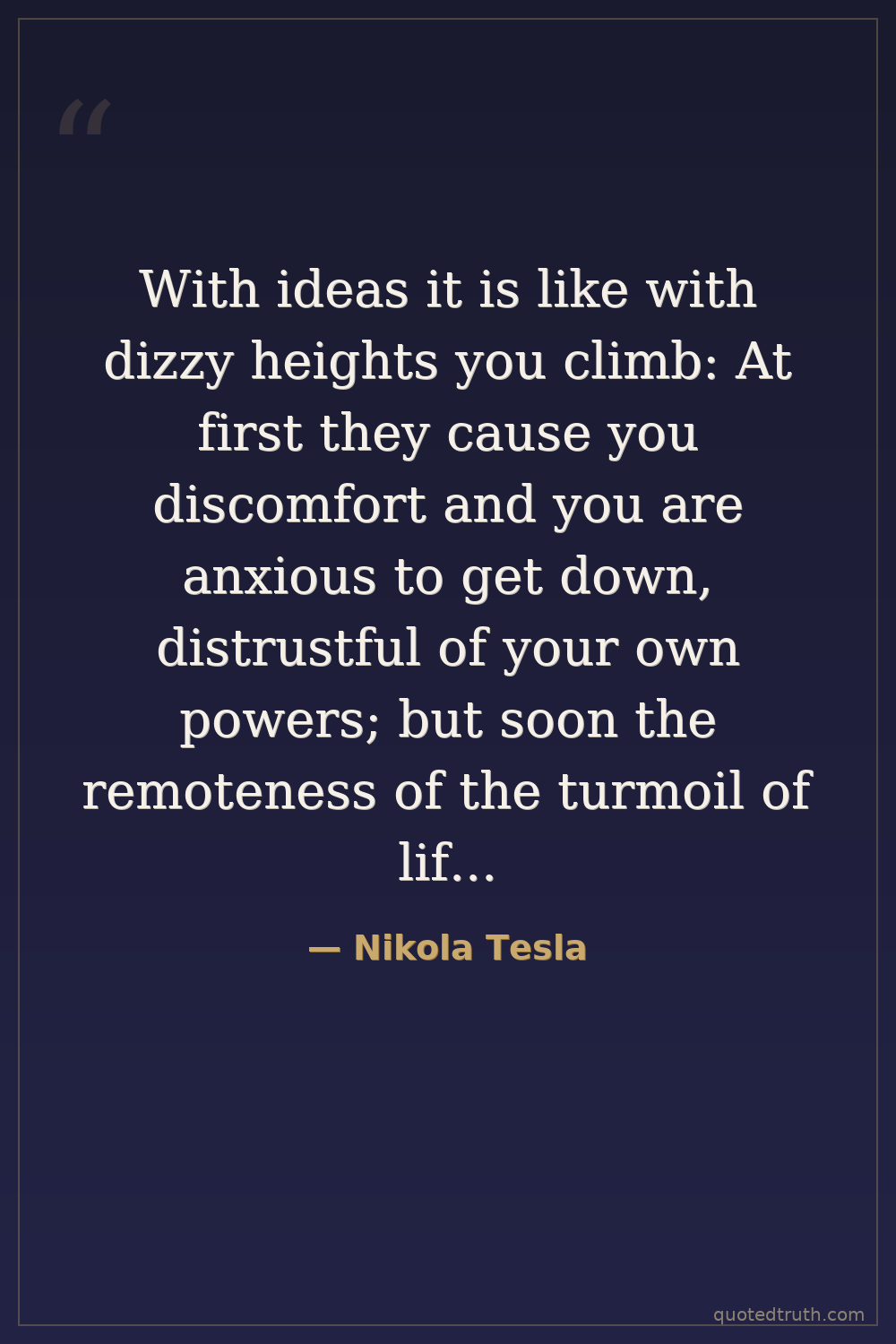
Engaging with a bold, ambitious idea feels like standing on a dizzying cliff — terrifying at first, with every instinct urging retreat. But if you hold on, something shifts: the chaos of ordinary life falls away, fear steadies into confidence, and your footing becomes sure. Instead of wanting to come back down, you start scanning the horizon for an even higher peak. Ambition grows through the act of climbing.
Relevance to Nikola Tesla
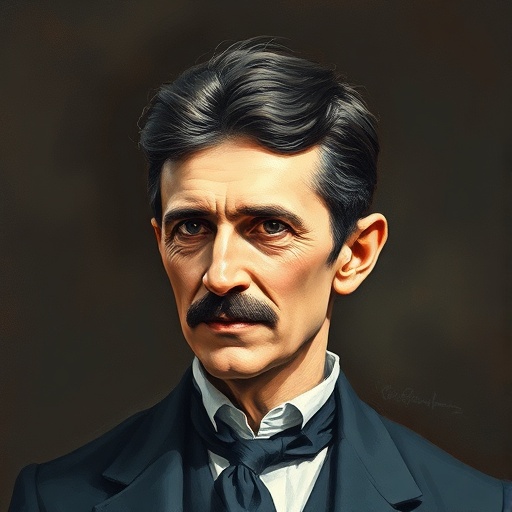
Tesla embodied this progression exactly. His early idea of an AC motor driven by a rotating magnetic field was dismissed as fantasy, including by Edison. He persisted through poverty and a brutal patent war to power the 1893 World's Fair with AC electricity. Rather than stopping there, he chased global wireless power transmission at Wardenclyffe Tower. Each hard-won summit only sharpened his hunger for the next, seemingly unreachable one.
The era
Tesla worked during civilization's electrification — the 1880s through 1930s — when inventors were simultaneously celebrated and viewed with suspicion. The War of Currents pitted Edison's DC system against Tesla and Westinghouse's AC in a high-stakes fight over the modern world's power grid. Breakthroughs in radio, telephone, and X-rays were arriving rapidly, yet visionaries faced enormous institutional resistance. That volatile climate made Tesla's metaphor of seeking ever-dizzier intellectual heights an urgent, lived reality.
AI-generated insights based on extensive research and information for context. Factual errors? Email [email protected].