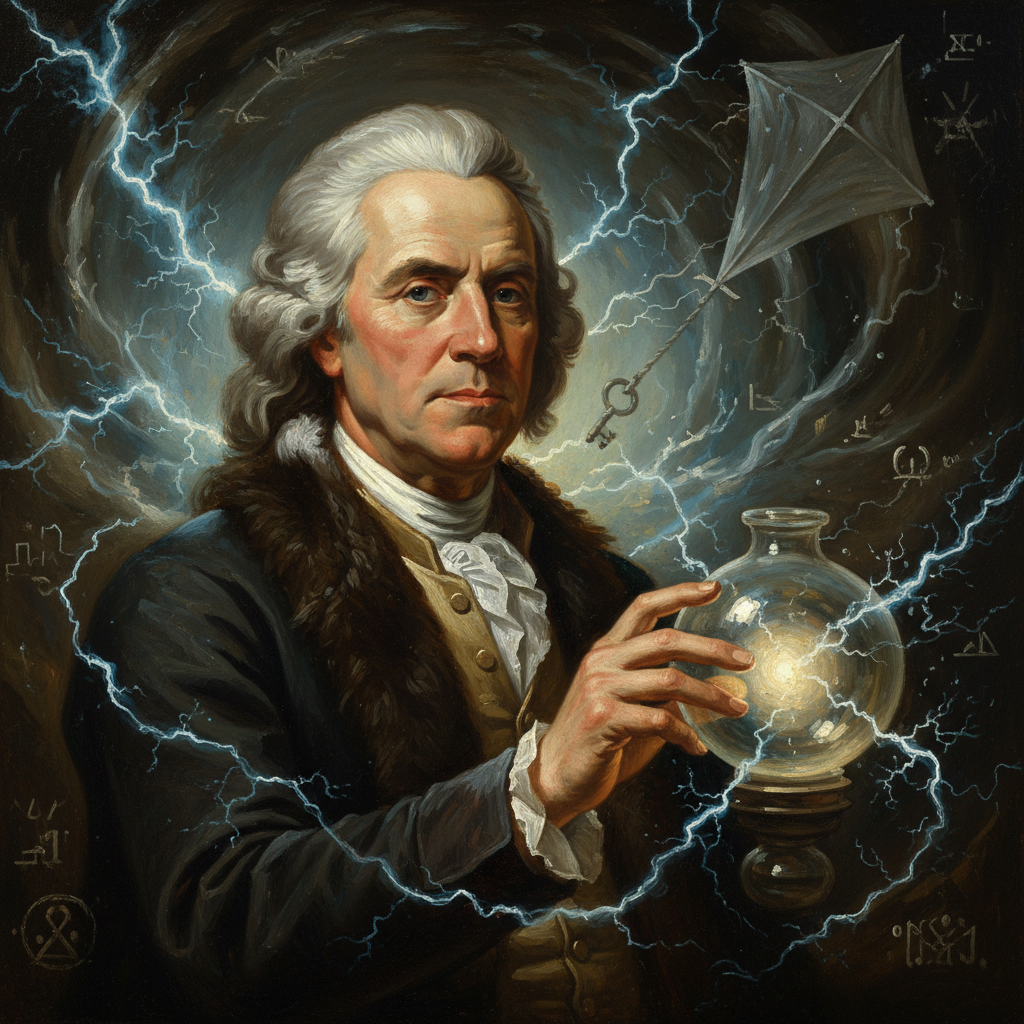
Benjamin Franklin — "God heals, and the doctor takes the fees."
God heals, and the doctor takes the fees.
God heals, and the doctor takes the fees.
Click any product to generate a realistic preview. Up to 3 at a time.
* Initial load can take up to 90 seconds — revising the preview in another color is nearly instant.
"Who has deceived thee as often as thyself?"
"He that has a Trade, has an Office of Profit and Pleasure."
"If a man empties his purse into his head, no man can take it away from him. An investment in knowledge always pays the best interest."
"Lying rides upon Debt's back."
"He that composes himself is wiser than he that composes books."
Polymath Founding Father, diplomat, and Poor Richard's Almanack author who helped draft the Declaration of Independence and the Constitution. Closely associated with John Adams (fellow Founder, Massachusetts statesman) and Thomas Jefferson (fellow Declaration drafter). For an intellectual contrast, see Thomas Hutchinson, last royal governor of colonial Massachusetts — Franklin leaked Hutchinson's loyalist correspondence to Boston in 1772 to inflame revolutionary sentiment — Hutchinson represented the colonial-aristocrat crown-loyalty that Franklin's revolution was organized to dismantle.
Found in 1 providers: grok
1 source checked
The quote wryly observes that recovery from illness is nature's work — doctors merely show up afterward and collect payment. It's a skeptical jab at medical professionals who take credit for healing they didn't truly cause. Patients often recover through the body's own resilience and time, yet physicians profit as though their interventions were decisive. It's a timeless critique of billing for outcomes beyond one's actual contribution.
Franklin was a scientist who prized empirical evidence — he understood precisely how little 18th-century doctors actually knew. His Poor Richard's Almanack overflows with sharp aphorisms cutting through pretension and self-interest. Having lived through an era of bloodletting and purging, his skepticism was well-founded. He consistently distrusted institutions that overstated their value — religious, political, or medical — making this quip characteristic of his core Enlightenment instinct to question authority.
In 18th-century colonial America and Europe, medicine was largely ineffective and often harmful. Bloodletting, mercury dosing, and purging based on humoral theory were standard treatments. Germ theory was a century away, and most recoveries happened despite physicians, not because of them. Quacks and patent medicine sellers proliferated freely. The Enlightenment encouraged skepticism toward received authority, making Franklin's critique of medical credentialism culturally pointed and widely resonant among educated readers of the age.
AI-generated insights based on extensive research and information for context. Factual errors? Email [email protected].
Your cart is empty