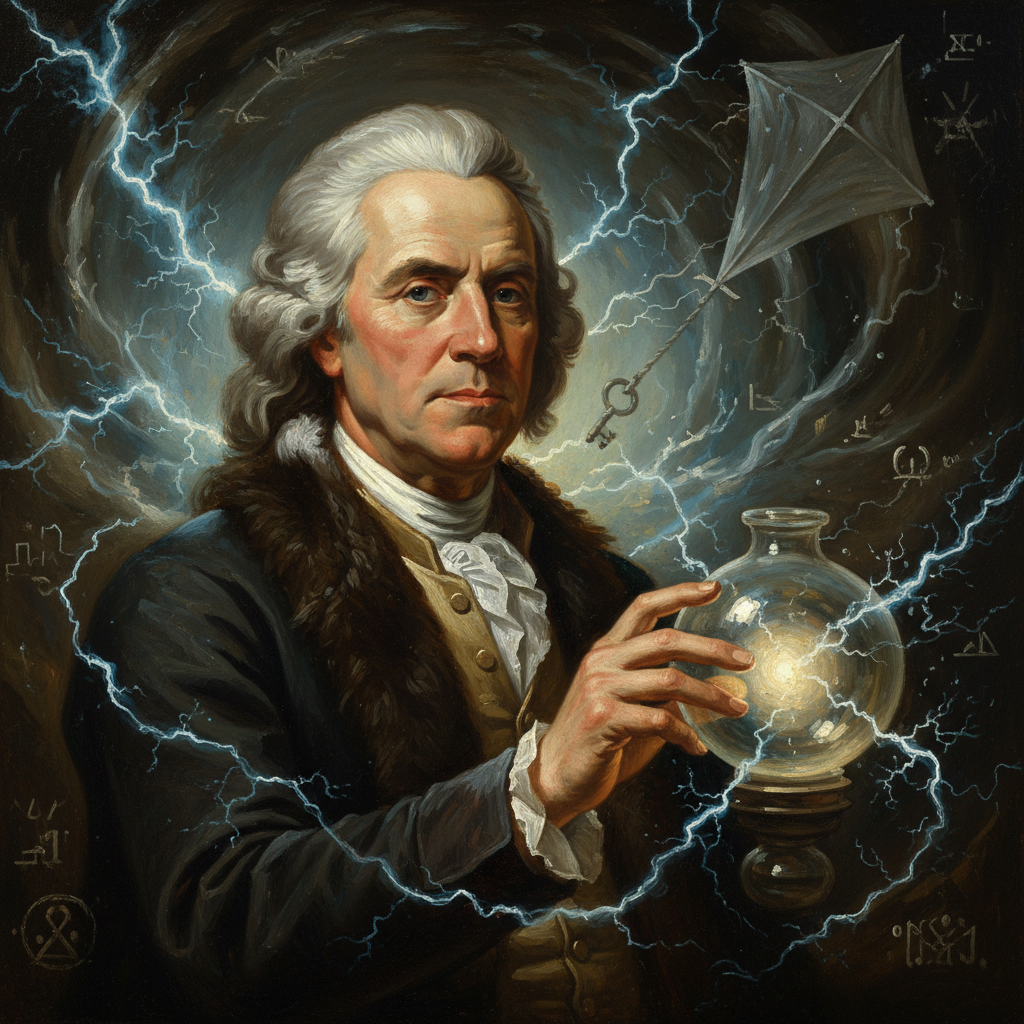
Benjamin Franklin — "If a man empties his purse into his head, no man can take it away from him. An i…"
If a man empties his purse into his head, no man can take it away from him. An investment in knowledge always pays the best interest.
If a man empties his purse into his head, no man can take it away from him. An investment in knowledge always pays the best interest.
Click any product to generate a realistic preview. Up to 3 at a time.
* Initial load can take up to 90 seconds — revising the preview in another color is nearly instant.
"Each year one vicious habit rooted out, in time might make the worst man good throughout."
"It is a grand mistake to think of being great without ever being good."
"Beware of the flattery of a woman, and the treachery of a man."
"He that composes himself is wiser than he that composes books."
"Creditors have better memories than debtors."
Polymath Founding Father, diplomat, and Poor Richard's Almanack author who helped draft the Declaration of Independence and the Constitution. Closely associated with John Adams (fellow Founder, Massachusetts statesman) and Thomas Jefferson (fellow Declaration drafter). For an intellectual contrast, see Thomas Hutchinson, last royal governor of colonial Massachusetts — Franklin leaked Hutchinson's loyalist correspondence to Boston in 1772 to inflame revolutionary sentiment — Hutchinson represented the colonial-aristocrat crown-loyalty that Franklin's revolution was organized to dismantle.
Found in 1 providers: gemini
1 source checked
Spend your money on learning rather than possessions. Physical wealth can be stolen, lost, or destroyed — but knowledge lives in your mind permanently. The quote uses a financial metaphor deliberately: education is an investment that compounds, paying returns for your entire life. Unlike a house or a purse of coins, no thief, creditor, or disaster can strip away what you have learned.
Franklin had just two years of formal schooling yet became a scientist, inventor, diplomat, and statesman through relentless self-education. He founded America's first public lending library in Philadelphia in 1731 and helped establish what became the University of Pennsylvania. He taught himself French, Spanish, Italian, and scientific principles through reading and experimentation. His entire career proved that a tradesman's son could reshape the world through accumulated knowledge.
In colonial America, formal education was a privilege of the wealthy — most people received little or no schooling. Books were scarce and expensive; libraries barely existed. Yet the Enlightenment was sweeping Europe and America, championing reason and self-improvement over inherited status. Franklin's message was radical: any man, regardless of birth or class, could elevate himself through learning, a democratic idea that challenged the rigid social hierarchies of the age.
AI-generated insights based on extensive research and information for context. Factual errors? Email [email protected].
Your cart is empty