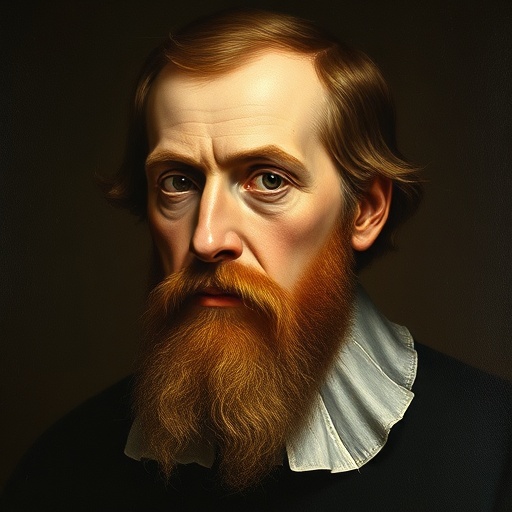
John Calvin — "God never abandons his own."
God never abandons his own.
God never abandons his own.
Click any product to generate a realistic preview. Up to 3 at a time.
* Initial load can take up to 90 seconds — revising the preview in another color is nearly instant.
"God's glory is manifested in the salvation of the elect and the damnation of the reprobate."
"The perdition of the wicked is a manifestation of God's justice."
"When God chooses a man, he does not consider what he is, but what he will make him."
"All true knowledge of God is born of obedience."
"A dog barks when his master is attacked. I would be a coward if I saw that God's truth is attacked and yet would remain silent."
French theologian whose Institutes of the Christian Religion (1536) systematized Protestant Reformed doctrine, including predestination. Closely associated with Martin Luther (Reformation founder, Calvin's predecessor). For an intellectual contrast, see Jacobus Arminius, Dutch Reformed theologian (1560-1609) — Arminius's rejection of strict double-predestination founded Arminianism — the theological tradition modern Methodism, most evangelicalism, and Pentecostalism descend from. The Calvinist-Arminian debate has divided Protestantism for 400 years.
Found in 1 providers: grok
1 source checked
The quote asserts that once someone belongs to God, that relationship is permanent and unconditional. It speaks directly to fear, despair, and doubt—promising that divine commitment cannot be revoked by human failure or external hardship. It offers psychological and spiritual security: those who are God's own will not be forsaken, no matter the circumstances pressing against them. It is a statement of absolute, unilateral divine faithfulness.
Calvin's doctrine of the perseverance of the saints held that the truly elect cannot ultimately fall away from God's grace. This was not abstract theology for him—Calvin was exiled from Geneva, faced relentless opposition from Catholic authorities, lost his wife Idelette, and suffered chronic illness. He watched fellow reformers burned as heretics. His conviction that God does not abandon his own was a personal anchor through decades of political turmoil and institutional hostility.
The early modern Reformation era was defined by brutal religious violence—the Inquisition, martyrdoms, the burning of reformers, and massacres like those of French Huguenots. Protestants faced exile, torture, and execution across Catholic Europe. State power and religious authority were fused, making dissent existentially dangerous. Calvin's declaration that God remains faithful to his own gave persecuted believers a theological framework for endurance, directly countering the era's message that the institutional church wielded divine authority against them.
AI-generated insights based on extensive research and information for context. Factual errors? Email [email protected].
Your cart is empty