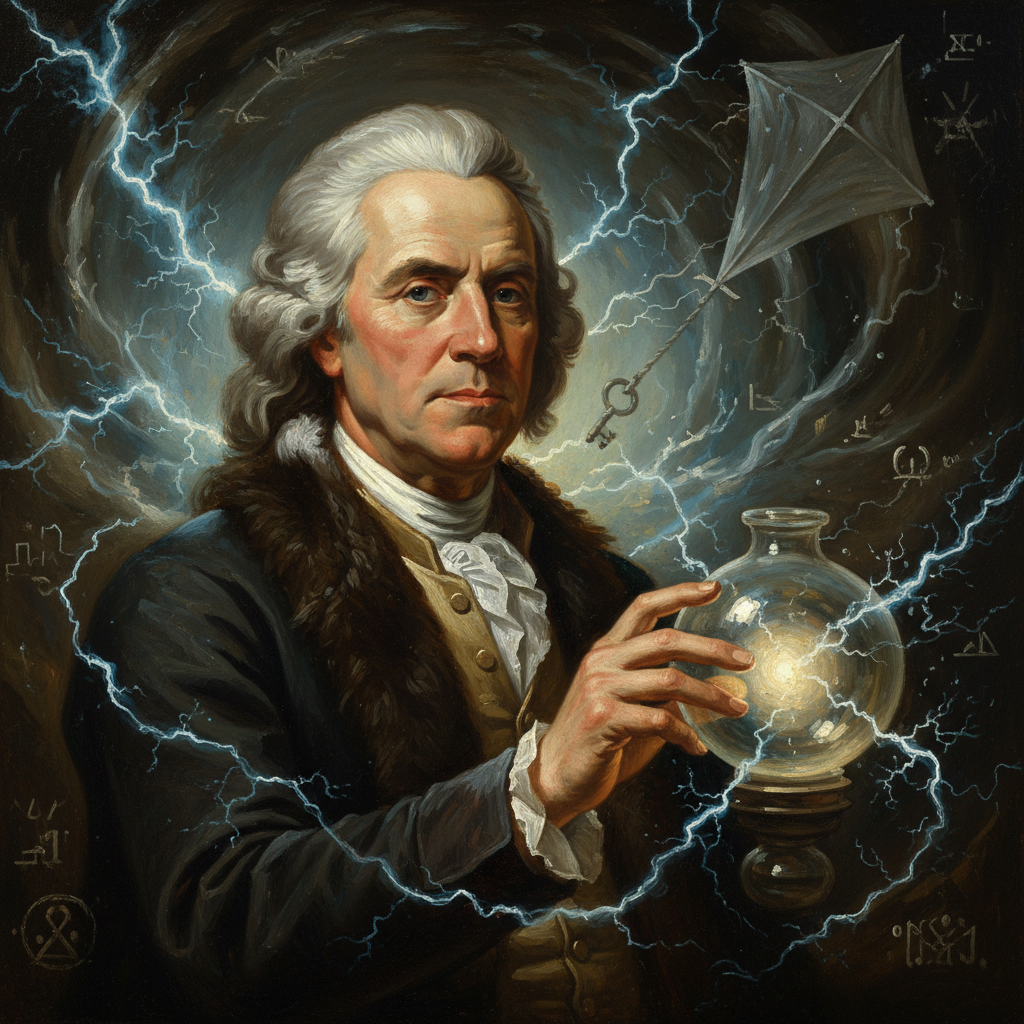
Benjamin Franklin — "He that doth much at once, doth little well."
He that doth much at once, doth little well.
He that doth much at once, doth little well.
Click any product to generate a realistic preview. Up to 3 at a time.
* Initial load can take up to 90 seconds — revising the preview in another color is nearly instant.
"Diligence is the mother of good luck."
"Half a truth is often a great lie."
"If you would not be forgotten, as soon as you are dead and rotten, either write things worth reading, or do things worth the writing."
"He who endeavors to drink salt needs fear no thirst."
"One today is worth two tomorrows."
Polymath Founding Father, diplomat, and Poor Richard's Almanack author who helped draft the Declaration of Independence and the Constitution. Closely associated with John Adams (fellow Founder, Massachusetts statesman) and Thomas Jefferson (fellow Declaration drafter). For an intellectual contrast, see Thomas Hutchinson, last royal governor of colonial Massachusetts — Franklin leaked Hutchinson's loyalist correspondence to Boston in 1772 to inflame revolutionary sentiment — Hutchinson represented the colonial-aristocrat crown-loyalty that Franklin's revolution was organized to dismantle.
Found in 1 providers: grok
1 source checked
Attempting many tasks simultaneously produces poor results across all of them. Divided attention dilutes quality — the person who spreads effort thin completes nothing truly well. This is about the cost of multitasking before the word existed: concentration is the prerequisite of excellence. Doing one thing properly, then moving to the next, outperforms scattering energy across many simultaneous demands. Focus is not limitation; it is the condition that makes mastery possible.
Franklin's own life embodied sequenced mastery. He structured each day with a famous hourly schedule and pursued his 13 virtues one at a time, never simultaneously. As a printer, he knew one distracted typesetter ruined an entire press run. His Autobiography explicitly advocates methodical focus over frantic busyness. Despite becoming a polymath — inventor, diplomat, publisher, scientist — he built each expertise through concentrated effort rather than scattered dilettantism.
Colonial America ran on artisan craftsmanship — cobblers, silversmiths, and printers each mastered one trade executed with precision. The Enlightenment celebrated reason, method, and disciplined application. Franklin wrote during a period when colonial prosperity depended entirely on skilled workers doing specific jobs well; failed goods meant real hardship. With no factories or standardized manufacturing yet, individual focused effort was the only quality guarantee an economy and community could rely on.
AI-generated insights based on extensive research and information for context. Factual errors? Email [email protected].
Your cart is empty