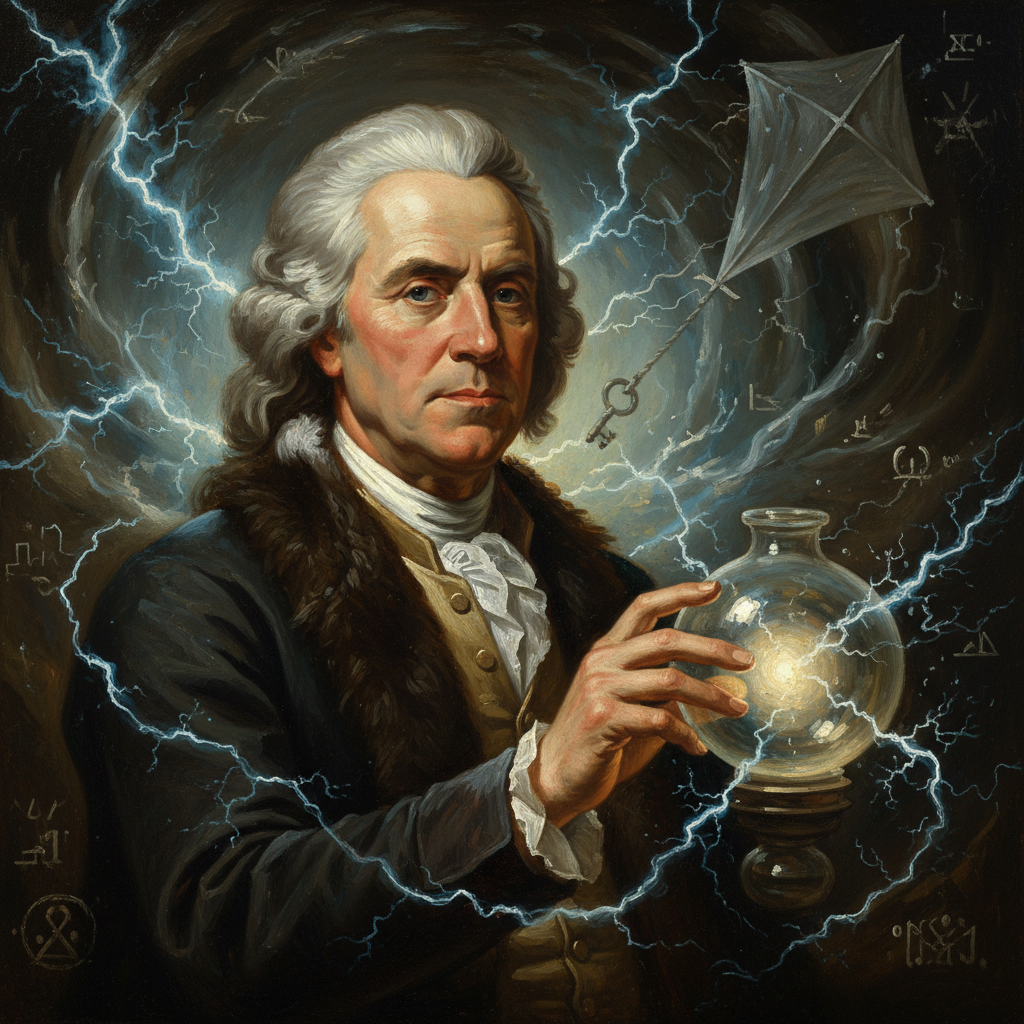
Benjamin Franklin — "Half a truth is often a great lie."
Half a truth is often a great lie.
Half a truth is often a great lie.
Click any product to generate a realistic preview. Up to 3 at a time.
* Initial load can take up to 90 seconds — revising the preview in another color is nearly instant.
"When you incline to have new clothes, look first well over the old ones, and see if you cannot shift with them another year, either by scouring, mending, or even patching if necessary. Remember, a pat…"
"What maintains one vice would bring up two children."
"The noblest question in the world is, What good may I do in it?"
"A full belly makes a dull brain."
"Tell me and I forget, teach me and I may remember, involve me and I learn."
Polymath Founding Father, diplomat, and Poor Richard's Almanack author who helped draft the Declaration of Independence and the Constitution. Closely associated with John Adams (fellow Founder, Massachusetts statesman) and Thomas Jefferson (fellow Declaration drafter). For an intellectual contrast, see Thomas Hutchinson, last royal governor of colonial Massachusetts — Franklin leaked Hutchinson's loyalist correspondence to Boston in 1772 to inflame revolutionary sentiment — Hutchinson represented the colonial-aristocrat crown-loyalty that Franklin's revolution was organized to dismantle.
Found in 2 providers: grok,gemini
2 sources checked
A partial truth misleads more dangerously than an outright lie. When someone tells you half the story, you believe you're informed — so you stop asking questions. An obvious lie can be challenged and rejected, but a half-truth exploits your trust in what's real. Selectively withholding context, cherry-picking facts, or framing incomplete information as the whole picture creates false confidence and deeper deception than pure fabrication ever could.
Franklin spent decades as a printer and journalist, where selective reporting could shape public opinion dangerously. As America's foremost diplomat in France, he navigated courts full of strategic half-truths and political maneuvering. His Poor Richard's Almanack was built on moral clarity and plain speech. As a scientist, he knew incomplete data produced wrong conclusions. Franklin valued intellectual honesty as a civic virtue — half-truths in politics or science both corrupted the republic's foundation.
Franklin's era was saturated with propaganda pamphlets, Loyalist-Patriot rhetoric, and newspaper battles where half-truths shaped public loyalty. The 1700s press operated with minimal editorial standards; printers selectively published facts to sway colonial opinion. Enlightenment thinkers championed reason and transparency as antidotes to tyranny, yet revolutionary politics weaponized omission constantly. In an age before fact-checking, a convincing partial story could start wars, ruin reputations, or topple governments — making this warning urgently practical.
AI-generated insights based on extensive research and information for context. Factual errors? Email [email protected].
Your cart is empty