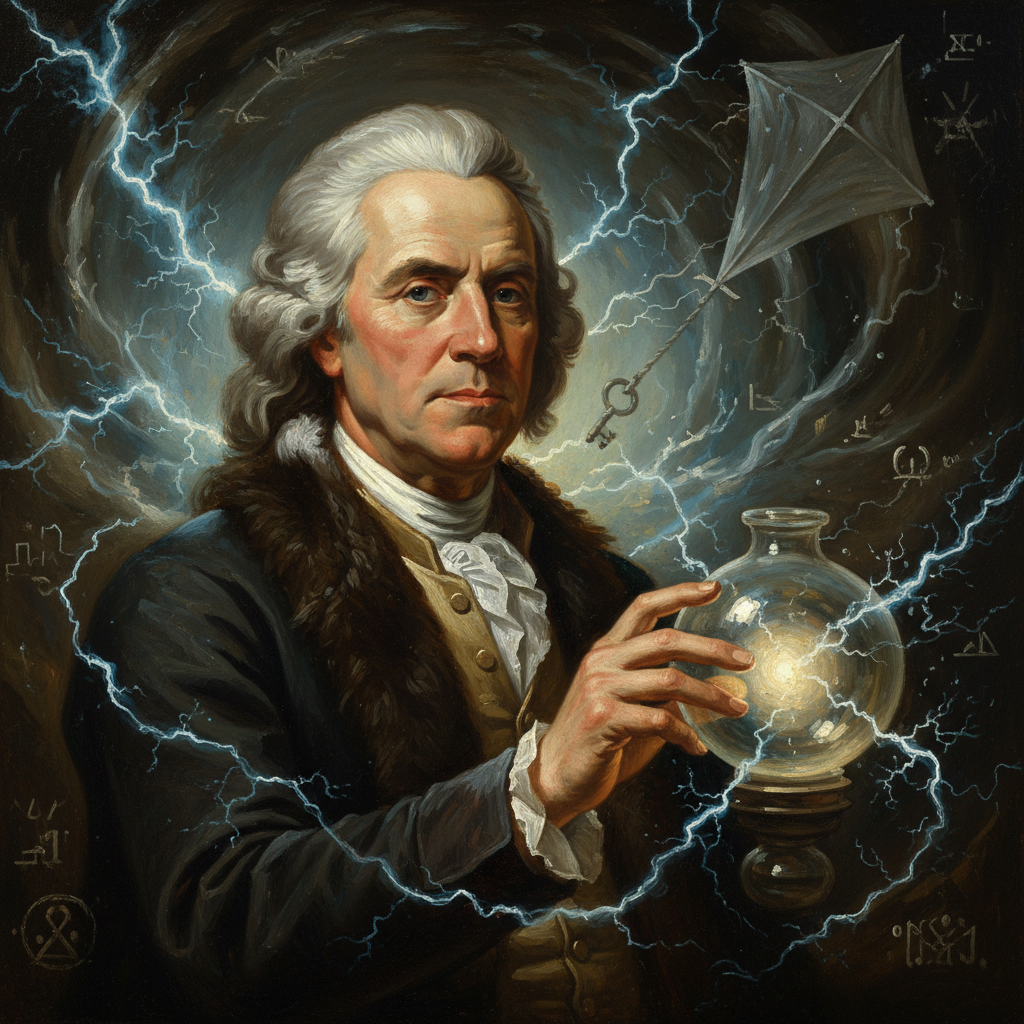
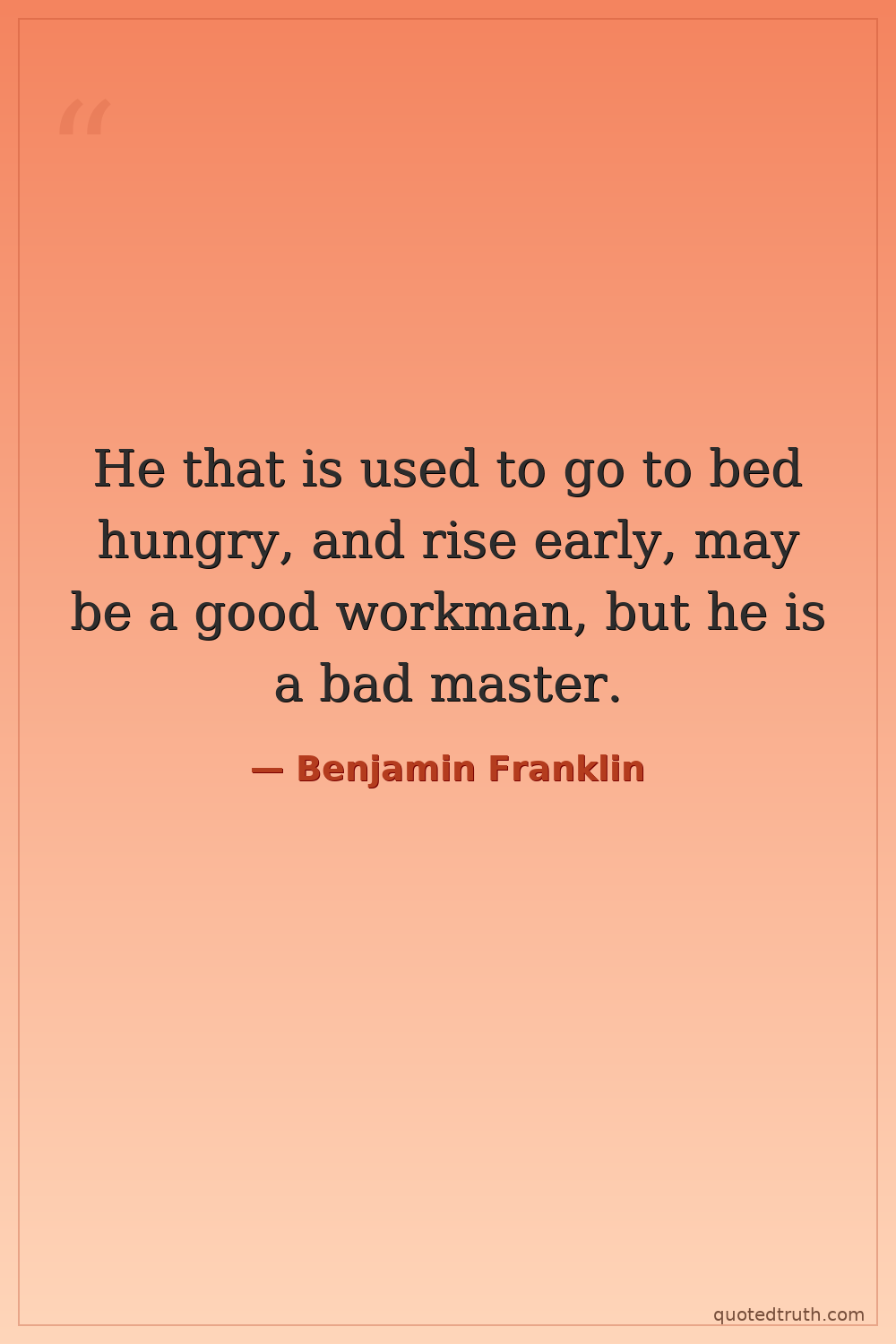
Benjamin Franklin — "He that is used to go to bed hungry, and rise early, may be a good workman, but …"
He that is used to go to bed hungry, and rise early, may be a good workman, but he is a bad master.
He that is used to go to bed hungry, and rise early, may be a good workman, but he is a bad master.
Click any product to generate a realistic preview. Up to 3 at a time.
* Initial load can take up to 90 seconds — revising the preview in another color is nearly instant.
"He that by the Plough would thrive, Himself must either hold or drive."
"Beware of little expenses; a small leak will sink a great ship."
"To be happy is not the purpose of our being, but to be useful."
"Lost time is never found again."
"Be at war with your vices, at peace with your neighbors, and let every new year find you a better man."
Polymath Founding Father, diplomat, and Poor Richard's Almanack author who helped draft the Declaration of Independence and the Constitution. Closely associated with John Adams (fellow Founder, Massachusetts statesman) and Thomas Jefferson (fellow Declaration drafter). For an intellectual contrast, see Thomas Hutchinson, last royal governor of colonial Massachusetts — Franklin leaked Hutchinson's loyalist correspondence to Boston in 1772 to inflame revolutionary sentiment — Hutchinson represented the colonial-aristocrat crown-loyalty that Franklin's revolution was organized to dismantle.
Found in 1 providers: grok
1 source checked
Hard work and personal deprivation make someone a capable laborer, but not necessarily a wise leader. Someone hardened by hunger and grueling hours knows how to endure — but that same harshness can make them an excessively demanding or tone-deaf manager. Effective leadership requires empathy, sound judgment, and genuine understanding of others' needs — qualities that suffering alone does not reliably produce.
Franklin lived both roles: he apprenticed under his brother James as a printer, worked as a journeyman in Philadelphia and London, then built his own print shop and became a successful employer. His Poor Richard's Almanack championed industry and frugality, yet he recognized those virtues alone weren't sufficient for leadership. As diplomat and founding father, he relied on persuasion and political shrewdness — proof that mastery demands wisdom beyond personal endurance.
In colonial America, the apprentice-journeyman-master hierarchy structured nearly every skilled trade. Franklin's era was shaped by Puritan work ethic equating suffering and labor with virtue. Yet the Enlightenment simultaneously elevated reason and practical wisdom over brute perseverance. With artisan labor forming the economy's backbone, the difference between a capable craftsman and a competent employer carried real economic consequence — making this distinction both socially resonant and practically urgent.
AI-generated insights based on extensive research and information for context. Factual errors? Email [email protected].
Your cart is empty