Benjamin Franklin — "He that by the Plough would thrive, Himself must either hold or drive."
He that by the Plough would thrive, Himself must either hold or drive.
He that by the Plough would thrive, Himself must either hold or drive.
Click any product to generate a realistic preview. Up to 3 at a time.
* Initial load can take up to 90 seconds — revising the preview in another color is nearly instant.
"The worst wheel of the cart makes the most noise."
"Without freedom of thought there can be no such thing as wisdom; and no such thing as public liberty, without freedom of speech."
"Some are weatherwise, some are otherwise."
"Many a false step was made by standing still."
"By diligence and patience, the mouse ate through the cable."
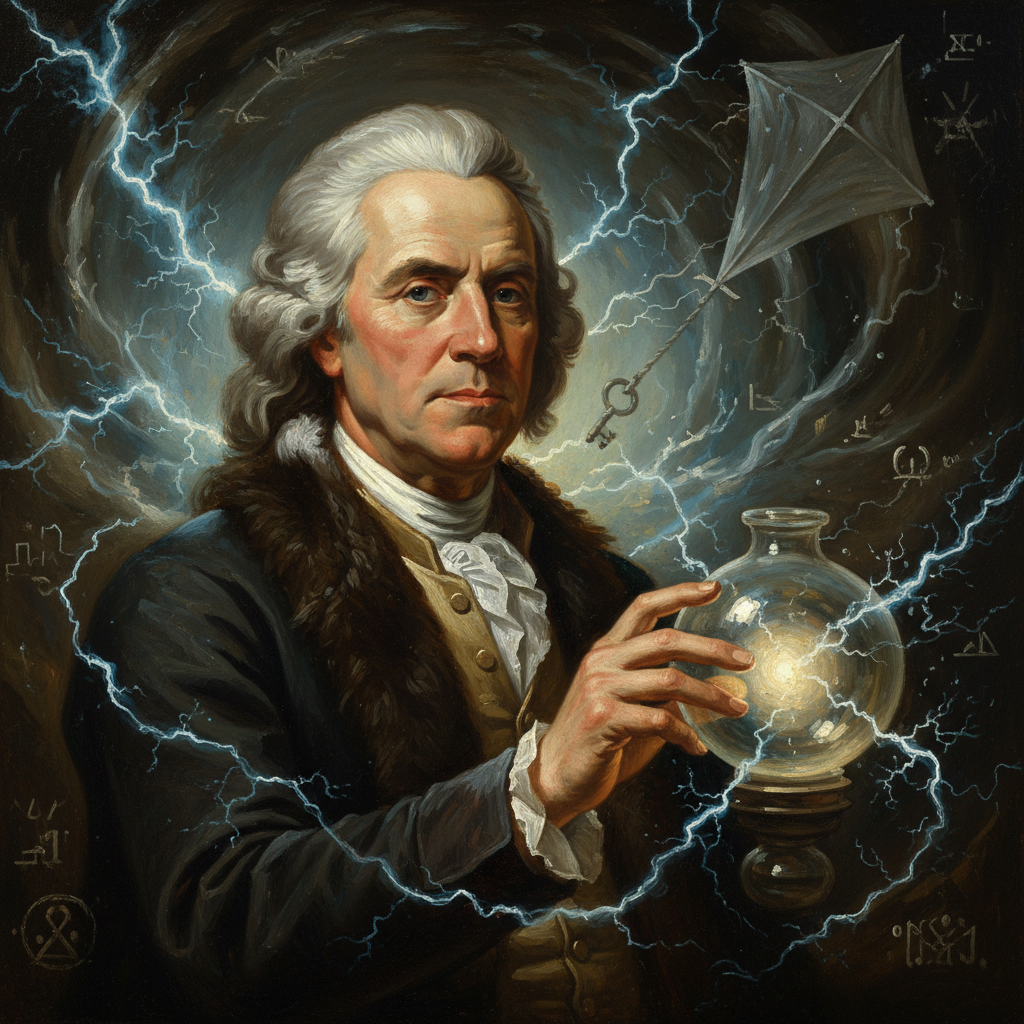
Polymath Founding Father, diplomat, and Poor Richard's Almanack author who helped draft the Declaration of Independence and the Constitution. Closely associated with John Adams (fellow Founder, Massachusetts statesman) and Thomas Jefferson (fellow Declaration drafter). For an intellectual contrast, see Thomas Hutchinson, last royal governor of colonial Massachusetts — Franklin leaked Hutchinson's loyalist correspondence to Boston in 1772 to inflame revolutionary sentiment — Hutchinson represented the colonial-aristocrat crown-loyalty that Franklin's revolution was organized to dismantle.
Found in 1 providers: grok
1 source checked
If you want to prosper from farming—or any enterprise—you must stay personally involved: either doing the hard work yourself or actively directing those who do. Passive ownership produces nothing. Success demands that you show up and remain accountable, whether you're gripping the plow or steering the operation. Stepping back and hoping for returns without direct engagement is a guaranteed path to failure.
Franklin lived this maxim firsthand. He learned printing by working his brother's press, then ran his own Philadelphia shop before wealth freed him from manual labor. He conducted electricity experiments himself, at personal risk. As postmaster general, he personally rode mail routes to diagnose inefficiencies. Poor Richard's Almanack, where this appears, was itself a product he wrote, edited, and published directly. He never coasted on delegated effort.
Colonial America was overwhelmingly agrarian—roughly 90% of colonists farmed. Absentee landlordism was a genuine grievance: wealthy proprietors extracted rents while tenants bore all risk and labor. Meanwhile, mercantile capitalism made passive profit through middlemen seem increasingly glamorous. Franklin, writing in the 1730s–1750s, pushed back against this drift. The dominant Protestant work ethic framed hands-on labor as a moral virtue, making this proverb both practical wisdom and a statement about character.
AI-generated insights based on extensive research and information for context. Factual errors? Email [email protected].
Your cart is empty