What it means
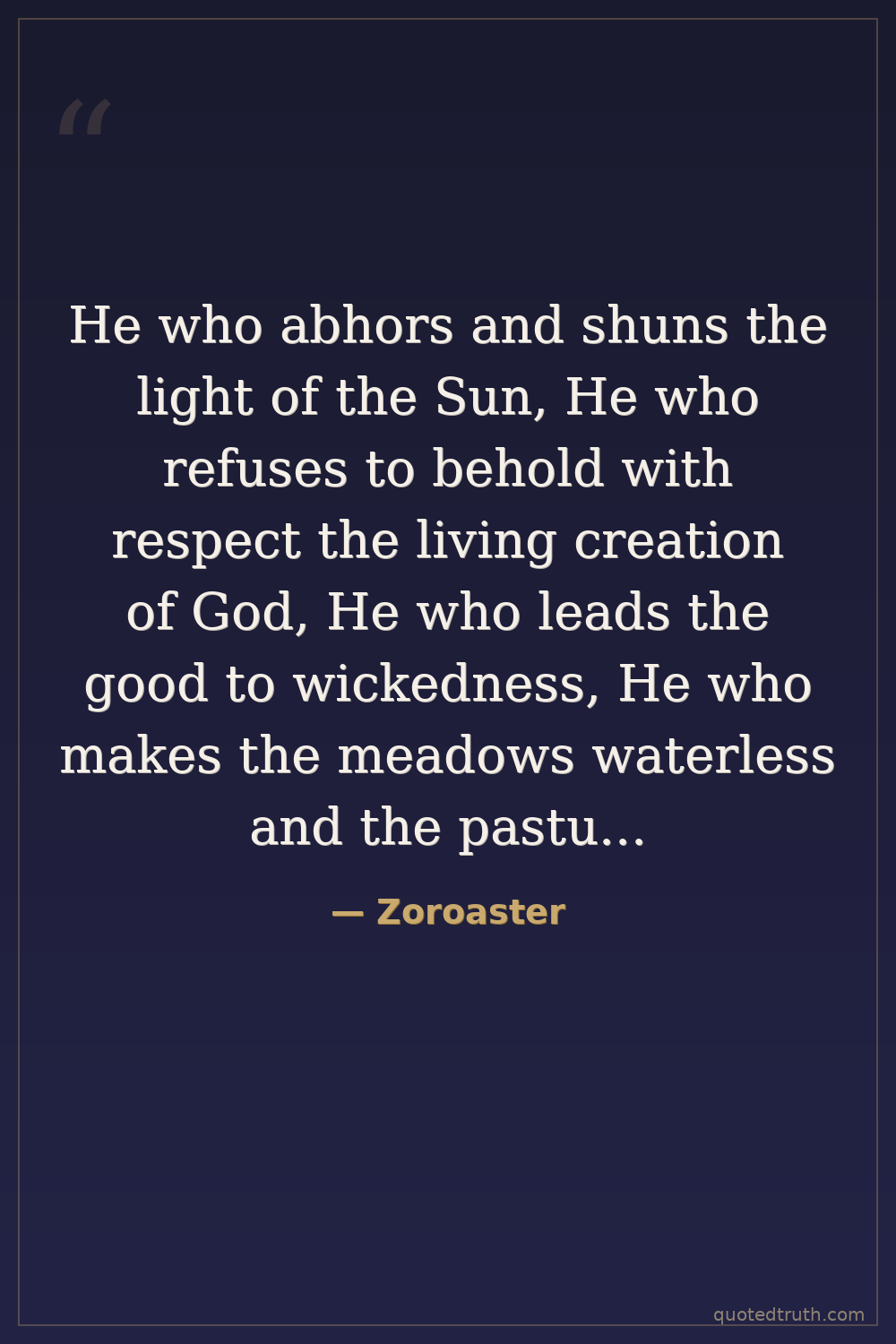
A person who hates sunlight, disrespects nature, corrupts good people, destroys water sources and farmland, and attacks the innocent is branded an enemy of truth and a wrecker of divine order. The passage lists concrete harms—environmental destruction, moral corruption, violence against the defenseless—and declares that anyone who commits them has set themselves against God. Righteousness is defined by what you protect; wickedness by what you ruin.
Relevance to Zoroaster
Zoroaster founded a faith built on the cosmic struggle between Asha (truth, order) and Druj (lie, chaos), and this passage is classic Gathic accusation. As a priest-reformer, he condemned cattle-raiders and tyrants who ravaged pastoral communities. His reverence for sun, fire, water, earth, and livestock shaped ritual life, and his insistence that ethical choice—not sacrifice alone—determines one's standing before Ahura Mazda runs directly through every clause here.
The era
Zoroaster lived in Bronze Age eastern Iran, likely around 1500–1200 BCE, among semi-nomadic herders whose survival depended on pastures, wells, and cattle. Raiding warbands routinely poisoned waterholes, torched grazing land, and slaughtered herds—real catastrophes, not metaphors. Polytheistic daeva-worship tolerated such violence through warrior cults. Zoroaster's reform elevated a single wise lord, Ahura Mazda, and recast these raiders as agents of the Lie, making ecological and social harm a theological crime.
AI-generated insights based on extensive research and information for context. Factual errors? Email [email protected].