Zoroaster — "When at the beginning the two spirits came together, one declared life and the o…"

When at the beginning the two spirits came together, one declared life and the other the destruction of life, and how at the end the worst existence shall be to the deceitful, but to the truthful the Best Mind.
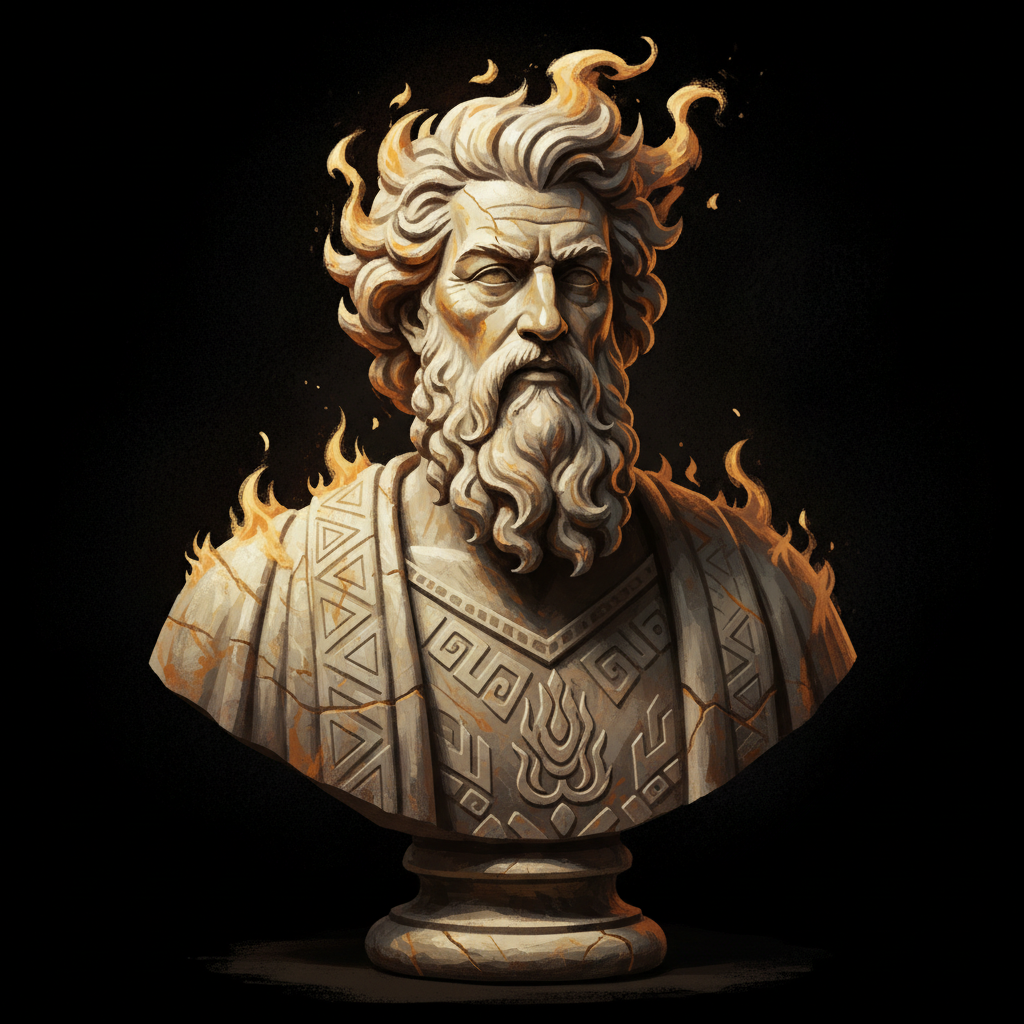
Zoroaster — Zoroaster Ancient · Founder of Zoroastrianism

Get This Quote & Author's Image Illustrated On:

Click any product to generate a realistic preview. Up to 3 at a time.
* Initial load can take up to 90 seconds — revising the preview in another color is nearly instant.

Kitchen

Apparel

Other

About Zoroaster (c. 1500-1000 BCE (debated))

Iranian prophet who founded Zoroastrianism, the first major religion of cosmic dualism between good (Ahura Mazda) and evil (Angra Mainyu). Closely associated with The Buddha (near-contemporary Eastern moral-cosmological revolutionary). For an intellectual contrast, see Friedrich Nietzsche, German philosopher of 'beyond good and evil' — Nietzsche appropriated Zarathustra's name for Thus Spoke Zarathustra (1883) precisely to invert the original's moral cosmology — the historical Zoroaster founded the good-versus-evil framework Nietzsche's character announces the end of.

Details

Gathas, Yasna 30.4

Date: c. 1500-1200 BCE (approximate)

General

Verification

Unverifiable

Found in 1 providers: gemini

1 source checked

Understanding this quote

What it means

Two opposing forces exist from the start: one chooses to create and sustain life, the other chooses to tear it down. Every person aligns with one or the other through their choices. In the end, those who live by lies and harm face the worst outcome, while those who live honestly and act with good intent experience clarity, peace, and the highest state of mind.

Relevance to Zoroaster

Zoroaster built his entire religion around this exact dualism between Asha (truth, order) and Druj (the lie, chaos). As a priest-reformer who broke from older polytheistic Iranian traditions, he preached personal moral choice as the engine of cosmic outcome. The phrase 'Best Mind' (Vohu Manah) is a core Zoroastrian concept he personally introduced, making this quote a direct statement of his founding doctrine.

The era

Zoroaster lived in ancient Iran, likely between 1500 and 1000 BCE, among pastoral tribes practicing ritual-heavy polytheism with animal sacrifice and warrior gods. Surrounding cultures accepted fate and capricious deities. His teaching that ordinary people shape cosmic good and evil through daily ethical choices was radical, and it later shaped Persian empire religion and influenced Jewish, Christian, and Islamic ideas of heaven, hell, and judgment.

AI-generated insights based on extensive research and information for context. Factual errors? Email [email protected].
Your Cart

Your cart is empty