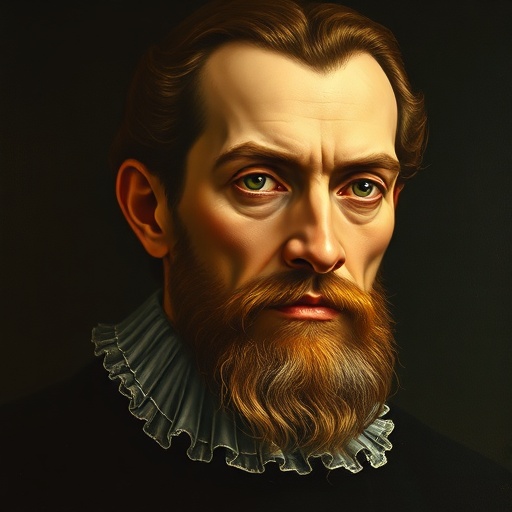
Machiavelli — "He who builds on the people, builds on mud."
He who builds on the people, builds on mud.
He who builds on the people, builds on mud.
Click any product to generate a realistic preview. Up to 3 at a time.
* Initial load can take up to 90 seconds — revising the preview in another color is nearly instant.
"Since love and fear can hardly exist together, if we must choose between them, it is far safer to be feared than loved."
"The prince who relies entirely on fortune is ruined when she changes."
"Men ought either to be indulged or utterly destroyed, for if you merely offend them, they take vengeance, whereas if you wound them incurably, they are unable to do so."
"Men are so simple and yield so readily to the necessities of the moment that he who deceives will always find someone who will let himself be deceived."
"It is not possible to provide against every inconvenience; but it is necessary to provide against the most important."
Florentine diplomat and political theorist whose The Prince (written 1513) became the founding text of political realism and gave us the adjective 'Machiavellian.' Closely associated with Francesco Guicciardini (fellow Florentine political analyst and historian). For an intellectual contrast, see Erasmus of Rotterdam, Dutch humanist and The Education of a Christian Prince author (1516) — Erasmus's princely-instruction manual was published three years after Machiavelli's, for the same European audience, and is the explicit Christian-virtue alternative to Machiavellian power-realism. The cleanest 'realism vs idealism' founding pairing in modern political theory.
Your cart is empty