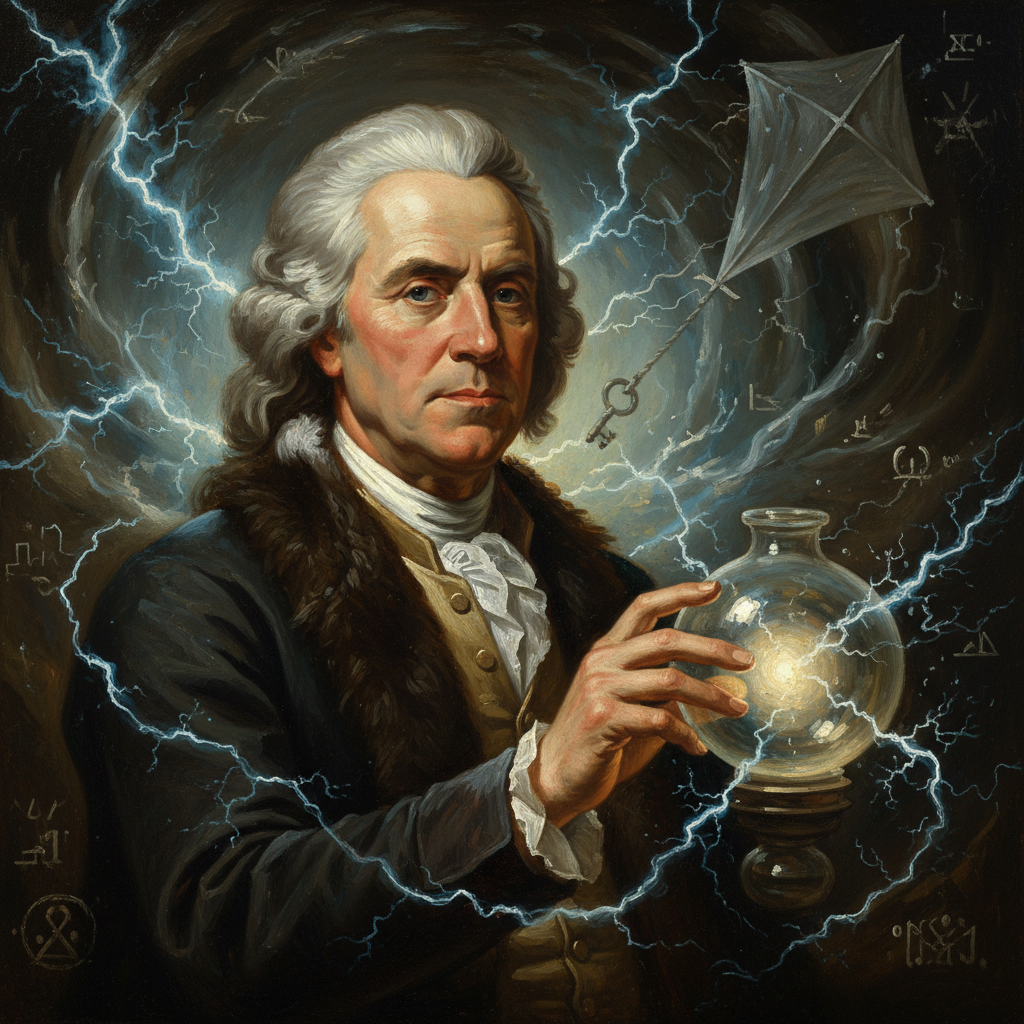
Benjamin Franklin — "Honest men marry soon, wise men never."
Honest men marry soon, wise men never.
Honest men marry soon, wise men never.
Click any product to generate a realistic preview. Up to 3 at a time.
* Initial load can take up to 90 seconds — revising the preview in another color is nearly instant.
"Search others for their virtues, thy self for thy vices."
"Never ruin an apology with an excuse."
"He who endeavors to drink salt needs fear no thirst."
"Love your enemies, for they tell you your faults."
"He that has a Trade, has an Estate."
Polymath Founding Father, diplomat, and Poor Richard's Almanack author who helped draft the Declaration of Independence and the Constitution. Closely associated with John Adams (fellow Founder, Massachusetts statesman) and Thomas Jefferson (fellow Declaration drafter). For an intellectual contrast, see Thomas Hutchinson, last royal governor of colonial Massachusetts — Franklin leaked Hutchinson's loyalist correspondence to Boston in 1772 to inflame revolutionary sentiment — Hutchinson represented the colonial-aristocrat crown-loyalty that Franklin's revolution was organized to dismantle.
Found in 1 providers: grok
1 source checked
A wry, cynical take on marriage: honest men follow their hearts and commit quickly, while the truly wise avoid matrimony altogether. The joke cuts both ways — honesty implies sincerity but also naivety, while wisdom implies self-preservation or disillusionment. The quote frames marriage as a trap sprung only on the sincere or unwary, suggesting clear-eyed experience with life's realities leads a man to remain single.
Franklin's own romantic life was tangled and unconventional. He never formally married Deborah Read — she couldn't divorce her absconded first husband — making their union a common-law arrangement. He fathered an illegitimate son, William. In Paris he flirted famously with society women well into his seventies. For a man who prized practical reason above sentiment, this sardonic quip reads as genuine autobiography, not merely clever wordplay.
In colonial and early America, marriage was less a romantic choice than an economic contract. Women lost legal standing upon marrying under coverture laws; men assumed serious financial and social obligations. The Enlightenment prized reason over tradition, and thinkers questioned inherited institutions. Franklin's era also saw high rates of early widowhood and remarriage, making matrimony a practical gamble as much as a social duty — fertile ground for sardonic wisdom.
AI-generated insights based on extensive research and information for context. Factual errors? Email [email protected].
Your cart is empty