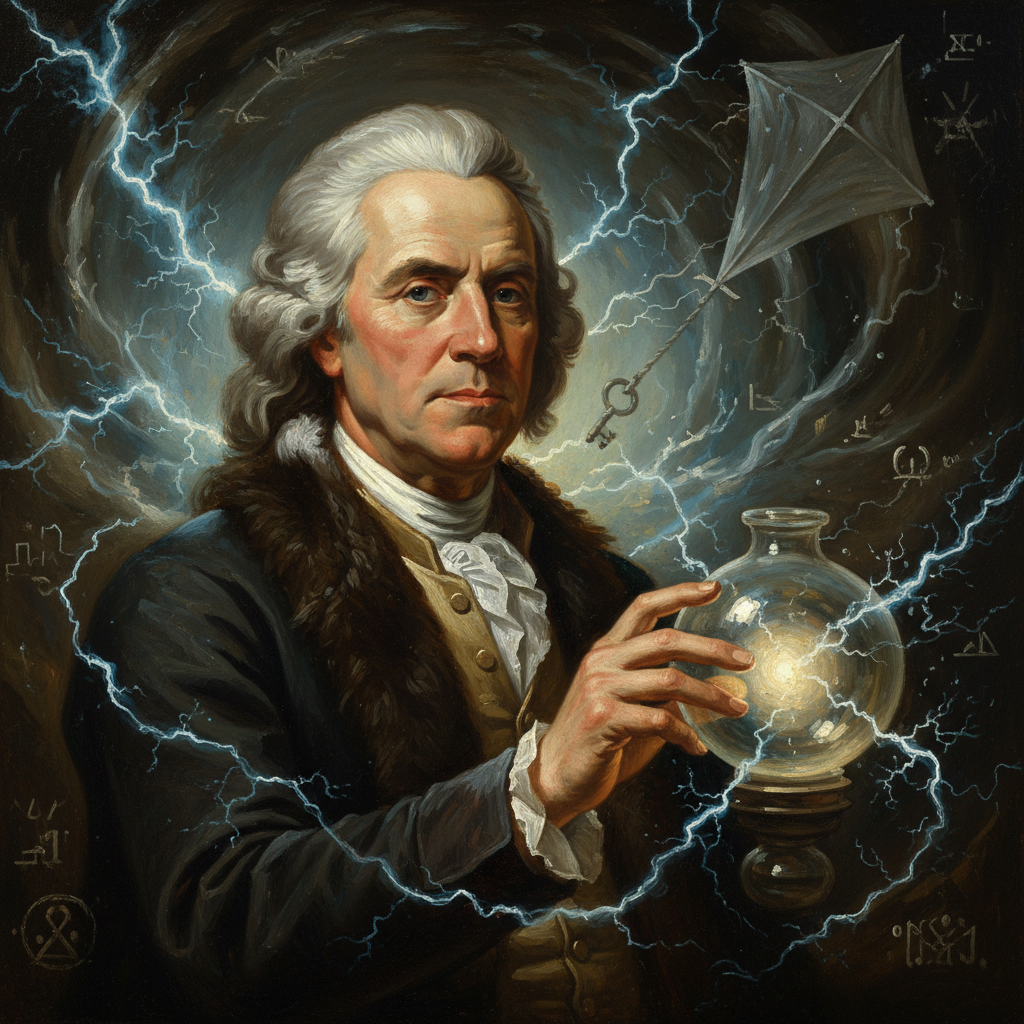
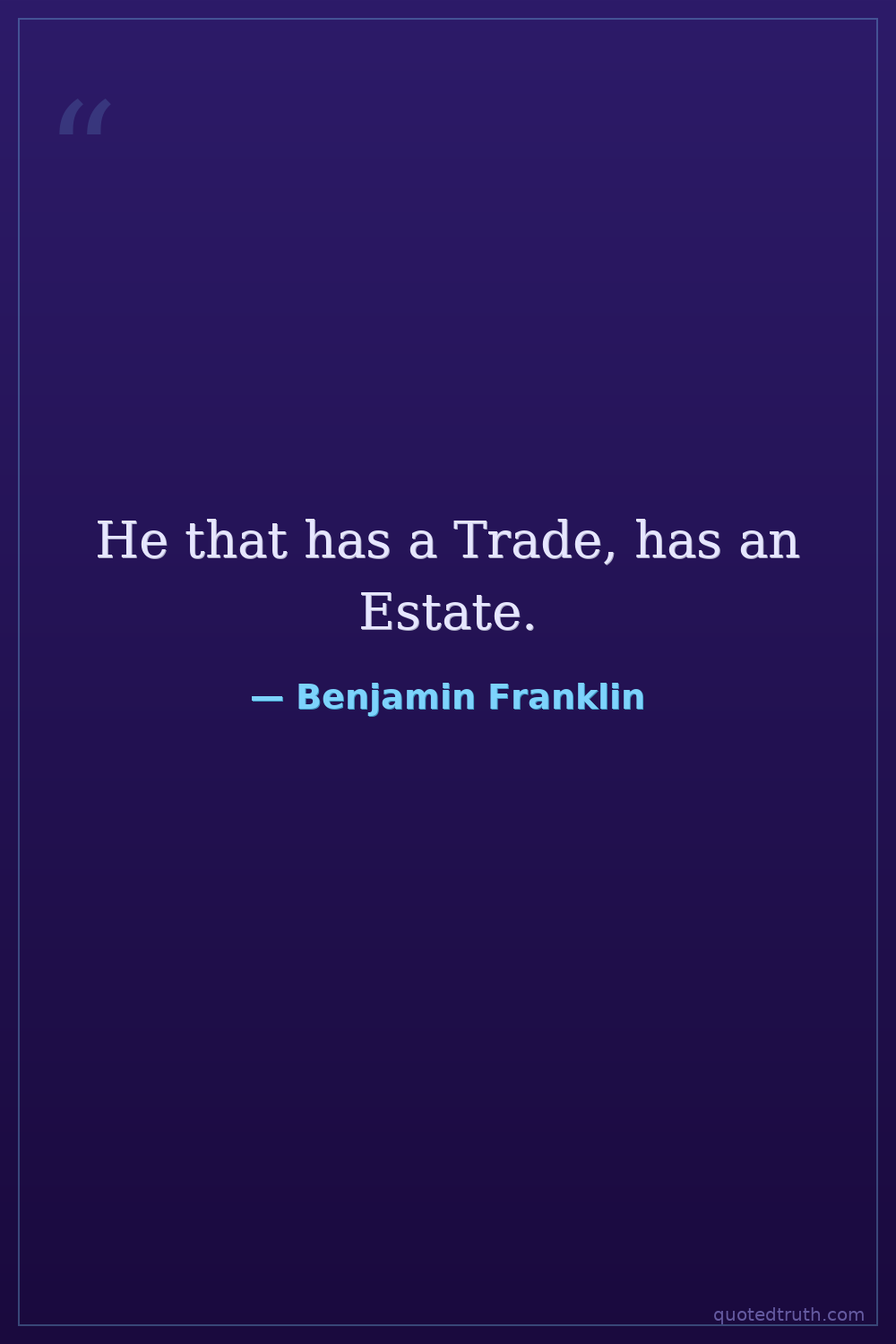
Benjamin Franklin — "He that has a Trade, has an Estate."
He that has a Trade, has an Estate.
He that has a Trade, has an Estate.
Click any product to generate a realistic preview. Up to 3 at a time.
* Initial load can take up to 90 seconds — revising the preview in another color is nearly instant.
"Save a penny every year and you shall die a millionaire."
"If a man empties his purse into his head, no man can take it away from him. An investment in knowledge always pays the best interest."
"He that best understands the world, best understands his own business."
"How many observe Christ's birthday! How few, his precepts!"
"Never ruin an apology with an excuse."
Polymath Founding Father, diplomat, and Poor Richard's Almanack author who helped draft the Declaration of Independence and the Constitution. Closely associated with John Adams (fellow Founder, Massachusetts statesman) and Thomas Jefferson (fellow Declaration drafter). For an intellectual contrast, see Thomas Hutchinson, last royal governor of colonial Massachusetts — Franklin leaked Hutchinson's loyalist correspondence to Boston in 1772 to inflame revolutionary sentiment — Hutchinson represented the colonial-aristocrat crown-loyalty that Franklin's revolution was organized to dismantle.
Found in 1 providers: grok
1 source checked
Your skill or craft is your true wealth — as reliable and valuable as owning property. A trained tradesperson can always earn income, making their expertise more dependable than inherited land or savings that can be lost. In modern terms: your marketable skills are your greatest financial asset. No one can repossess what you know how to do. Mastering a trade guarantees a livelihood regardless of circumstance.
Franklin apprenticed as a printer at age 12 and built his fortune through that trade before pivoting to science and statecraft. His Poor Richard's Almanack preached practical industry as the path to independence. Franklin embodied the self-made man: a tradesman who rose to global prominence without inherited wealth. This quote mirrors his core conviction that productive skill — not birthright — is the true foundation of a secure, dignified life.
In 18th-century colonial America, land and estates defined social class — only the propertied gentry held real security and political power. Skilled tradesmen occupied a middle tier, respected but not equal to landowners. Franklin wrote this as America's merchant class was proving that a craftsman's expertise could generate durable wealth rivaling old-world estates. The Protestant work ethic reinforced this: industriousness was both moral virtue and economic strategy during a period when apprenticeship systems structured upward mobility.
AI-generated insights based on extensive research and information for context. Factual errors? Email [email protected].
Your cart is empty