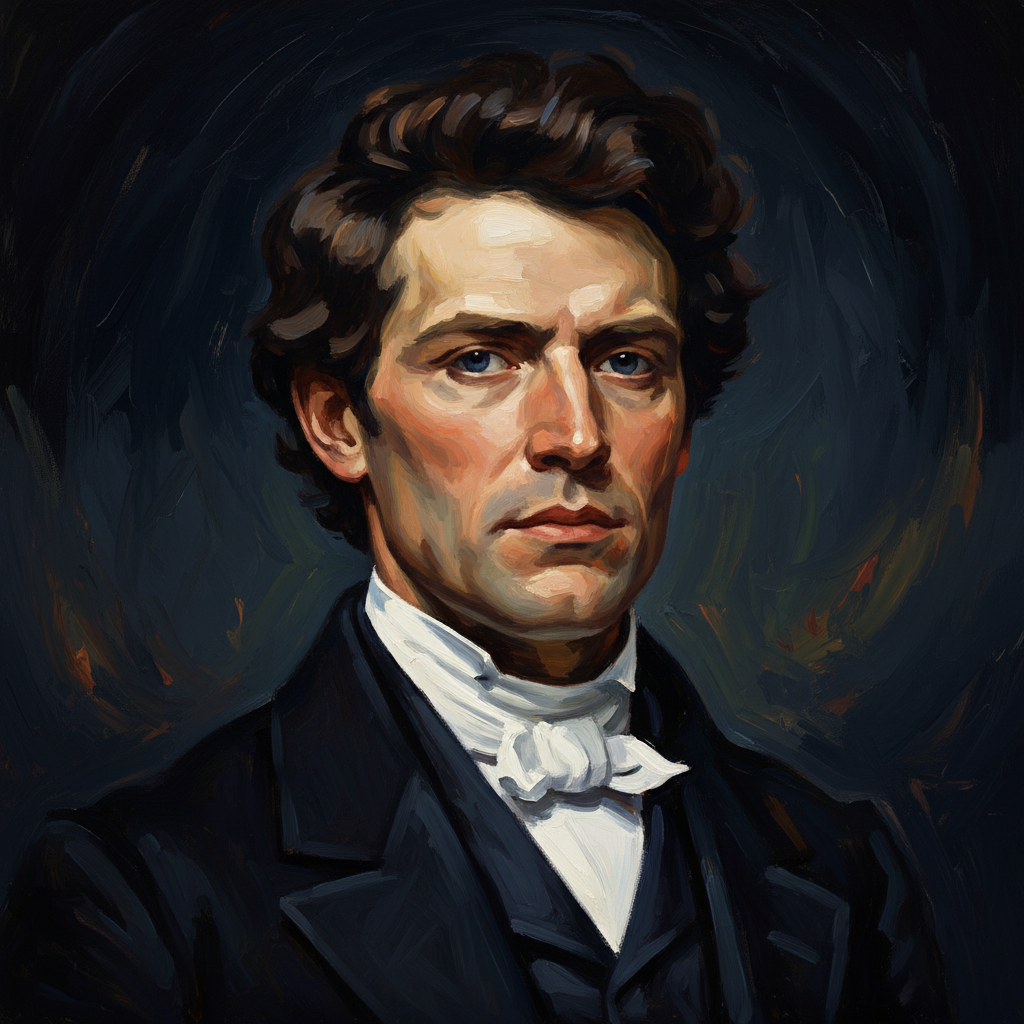
Joseph Smith — "I am a bold, fearless, and independent man."
I am a bold, fearless, and independent man.
I am a bold, fearless, and independent man.
Click any product to generate a realistic preview. Up to 3 at a time.
* Initial load can take up to 90 seconds — revising the preview in another color is nearly instant.
"I have seen the Lord, and he has talked with me face to face."
"I will refute that idea, and take away the veil, so that you may see."
"And cursed shall be the seed of him that mixeth with their seed; for they shall be cursed even with the same cursing."
"I am a man of humility, and I will be humble in all things."
"God did not make the earth out of nothing—for it is contrary to a rational mind and reason that a something could be brought from a nothing."
Found in 1 providers: grok
1 source checked
A declaration of personal courage, self-determination, and refusal to bend to outside pressure or authority. The speaker asserts they act on inner conviction rather than fear or popular approval. In modern terms: I don't back down, I don't answer to others, I stand on my own ground. It's a statement of identity — someone who faces opposition directly and makes decisions independent of what others demand or expect.
Smith faced relentless persecution founding a new faith — mob violence, imprisonment, forced exile from Ohio, Missouri, and Illinois, and assassination in 1844. Tarred and feathered in 1832, driven out under Missouri's extermination order, he still built Nauvoo into a city of 12,000, ran for U.S. president, and publicly taught plural marriage. His willingness to defy Protestant orthodoxy, claim direct divine revelation, and establish new scripture demanded exactly the boldness and fearlessness he proclaimed.
The 1830s–1840s saw intense religious revivalism under the Second Great Awakening, with Protestant orthodoxy dominating American social norms. New religious movements faced violent suspicion — mob justice was common, and state governments rarely protected minority faiths. Illinois Governor Ford failed to stop the Carthage Jail mob that killed Smith in 1844. In this climate where religious nonconformity was physically dangerous, Smith's declaration of fearless independence was not mere rhetoric but a daily, life-threatening stance.
AI-generated insights based on extensive research and information for context. Factual errors? Email [email protected].
Your cart is empty