What it means
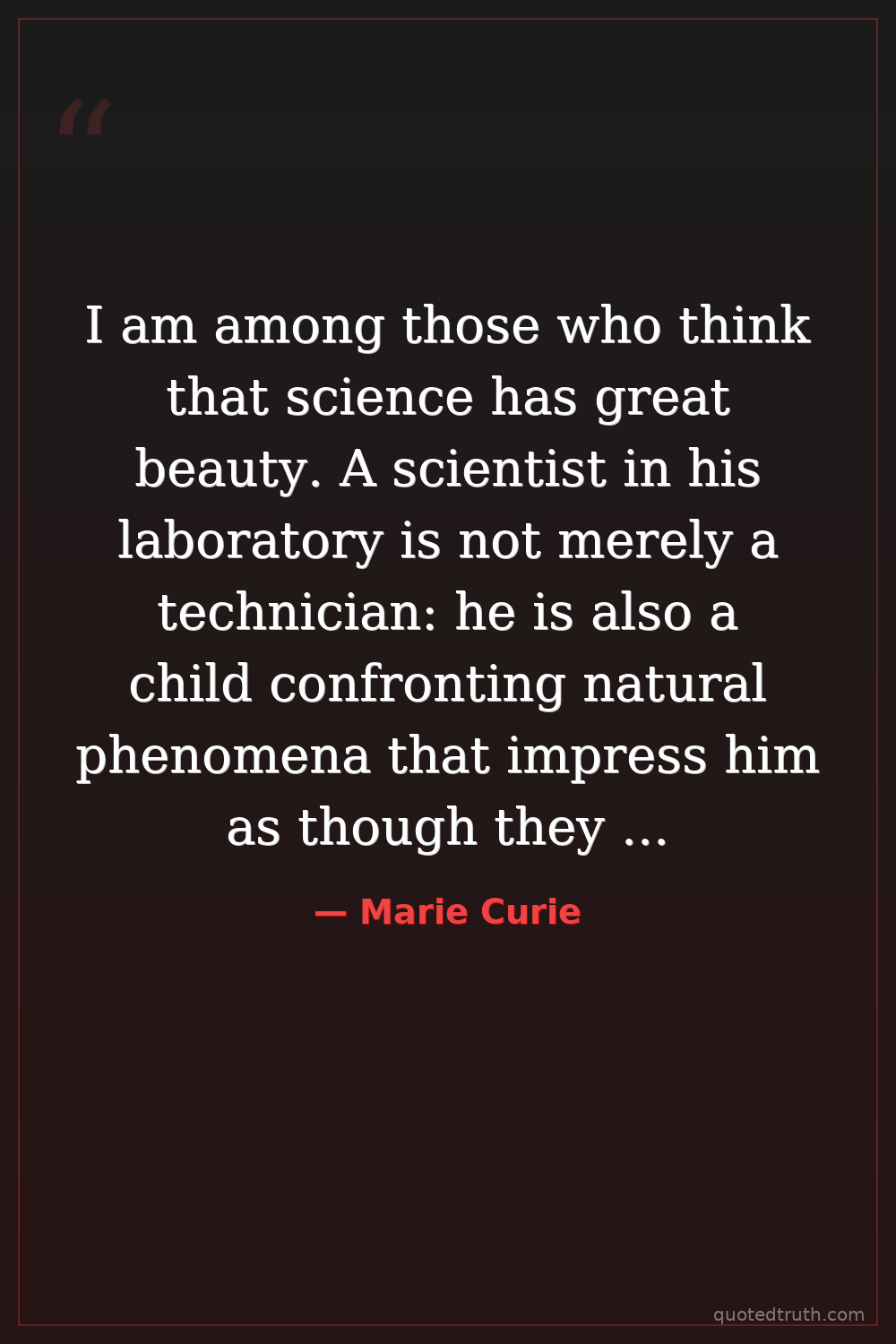
Science is not just cold mechanical work or routine problem-solving. It carries genuine aesthetic wonder. The person doing research is not merely operating instruments and recording data like a skilled craftsman; they are experiencing the same awe and astonishment a child feels when hearing a magical story. Discovery, in other words, is emotional and imaginative, not just rational, and nature itself reads like enchantment.
Relevance to Marie Curie
Curie spent decades isolating polonium and radium under brutal physical conditions, stirring tons of pitchblende in a leaky shed, yet she described radium's faint blue glow as enchanting. Twice a Nobel laureate, in physics and chemistry, she insisted research was a vocation driven by curiosity, not money or status. Her refusal to patent radium reflected this conviction: science was beauty pursued for its own sake, and the laboratory was where wonder met disciplined observation.
The era
In the late 19th and early 20th centuries, science was rapidly being industrialized and professionalized, framed publicly as utilitarian engine of progress, weapons, and medicine. X-rays, radioactivity, and the electron had just shattered Newtonian certainty. Curie, working in male-dominated Paris academia that often denied her recognition, pushed back on the cold technocratic image, defending research as a humanistic, almost spiritual pursuit during an era racing toward mechanized warfare.
AI-generated insights based on extensive research and information for context. Factual errors? Email [email protected].