What it means
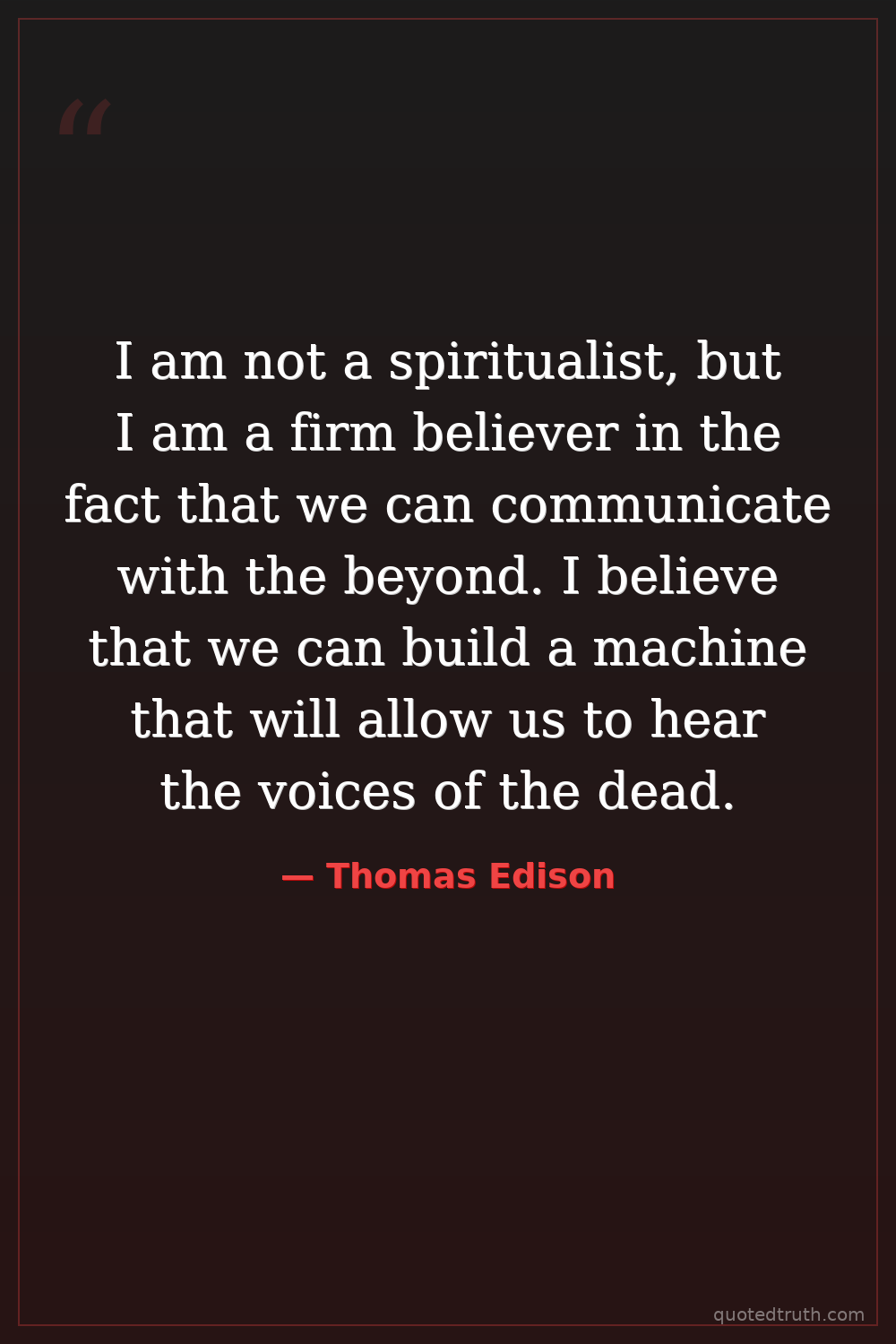
Edison says he rejects organized spiritualism and its rituals, but he genuinely thinks contact with the dead is possible through science rather than seances. He believes a physical device could one day pick up faint signals or vibrations left by deceased people, turning the afterlife into an engineering problem. Instead of faith or mysticism, he proposes instruments and measurement as the proper path to reach whatever survives death.
Relevance to Thomas Edison
Edison built his reputation on converting invisible phenomena into working hardware, electricity into light, sound into grooves on wax, images into film. Late in life he reportedly sketched a so-called spirit phone, treating death as one more signal to capture. The quote mirrors his lifelong method of doubting tradition while trusting the laboratory, and fits his habit of announcing bold ideas to newspapers before a prototype ever existed in his Menlo Park and West Orange workshops.
The era
Edison spoke in an era when Spiritualism, seances, and mediums drew huge American and European audiences after the Civil War and World War I losses. Radio, telegraphy, and X-rays were proving that unseen waves could carry information, which made talking to the dead sound like the next frontier rather than superstition. Newspapers eagerly printed inventors musings, and figures like Conan Doyle, Houdini, and Marconi publicly debated whether technology could confirm or debunk life after death.
AI-generated insights based on extensive research and information for context. Factual errors? Email [email protected].