What it means
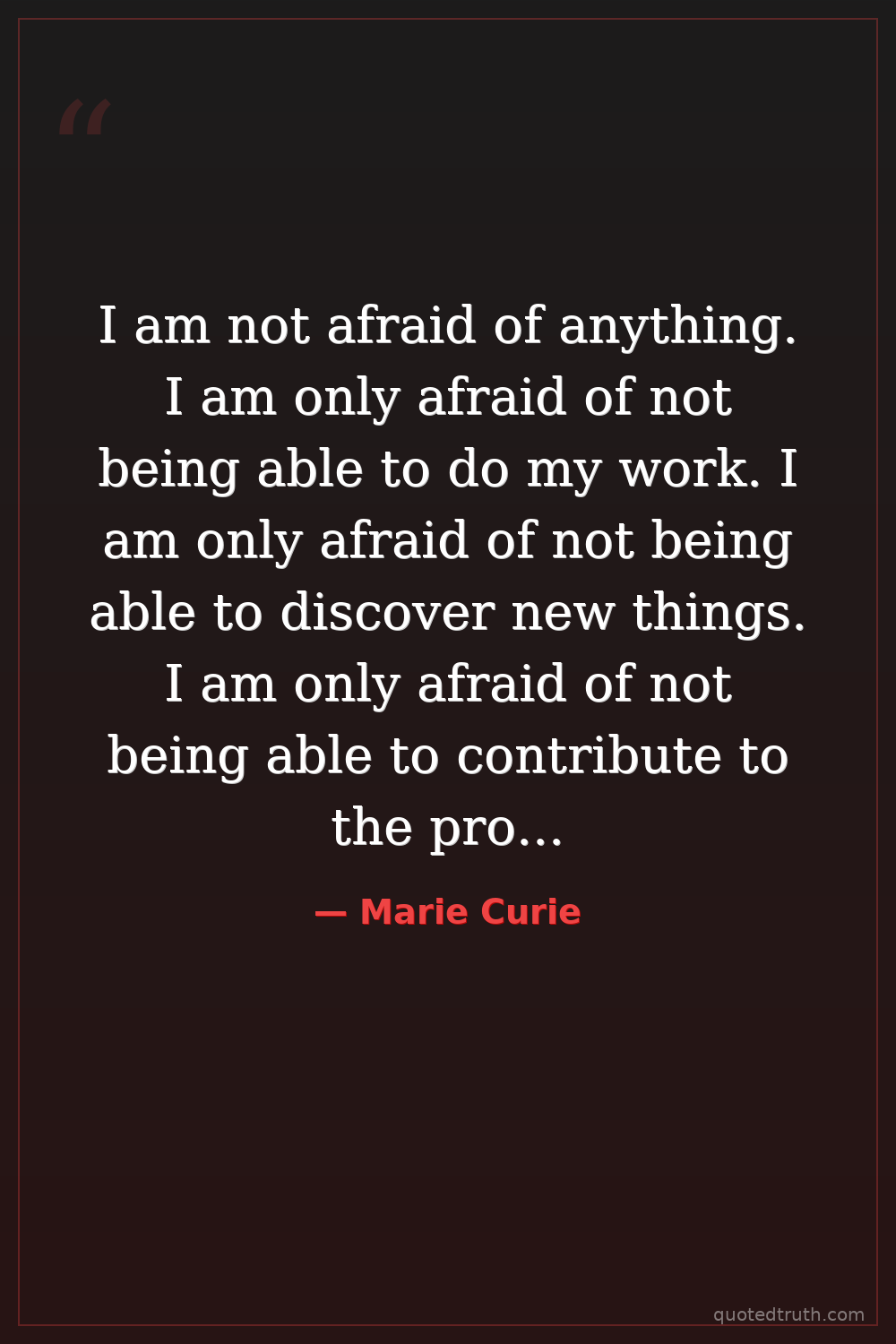
The speaker rejects ordinary fears and names the only thing that truly frightens them: being unable to keep working, unable to make new discoveries, and unable to help humanity move forward. Personal danger, criticism, or hardship do not register. What matters is productive contribution. The final line flips fear into pride, treating this singular worry as a badge of purpose rather than a weakness to hide.
Relevance to Marie Curie
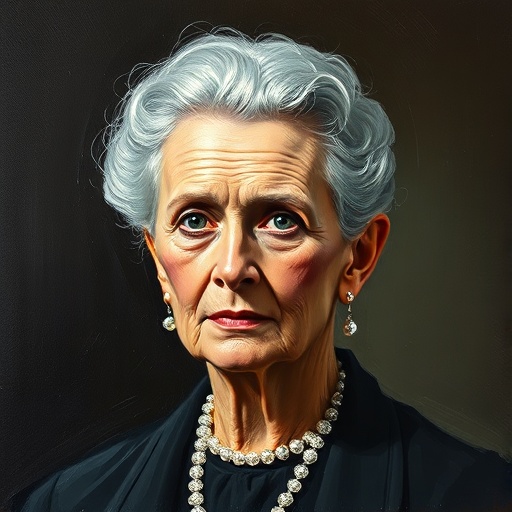
Curie lived this literally. She handled radioactive materials with bare hands, isolated polonium and radium in a leaky shed, and kept working through Pierre's death, a public affair scandal, and radiation sickness that eventually killed her in 1934. She refused to patent radium so research could spread freely, and ran mobile X-ray units at WWI front lines. Work and contribution, not safety, defined her identity.
The era
In early 20th-century Europe, women were barred from most universities and science faculties; Curie was the first woman to win a Nobel, the first person to win two, and the first woman professor at the Sorbonne. Radioactivity was brand new, WWI was reshaping science toward medicine, and the public both idolized and scrutinized her. Persisting in research meant defying gender norms, tabloid attacks, and literal physical danger from unknown radiation effects.
AI-generated insights based on extensive research and information for context. Factual errors? Email [email protected].