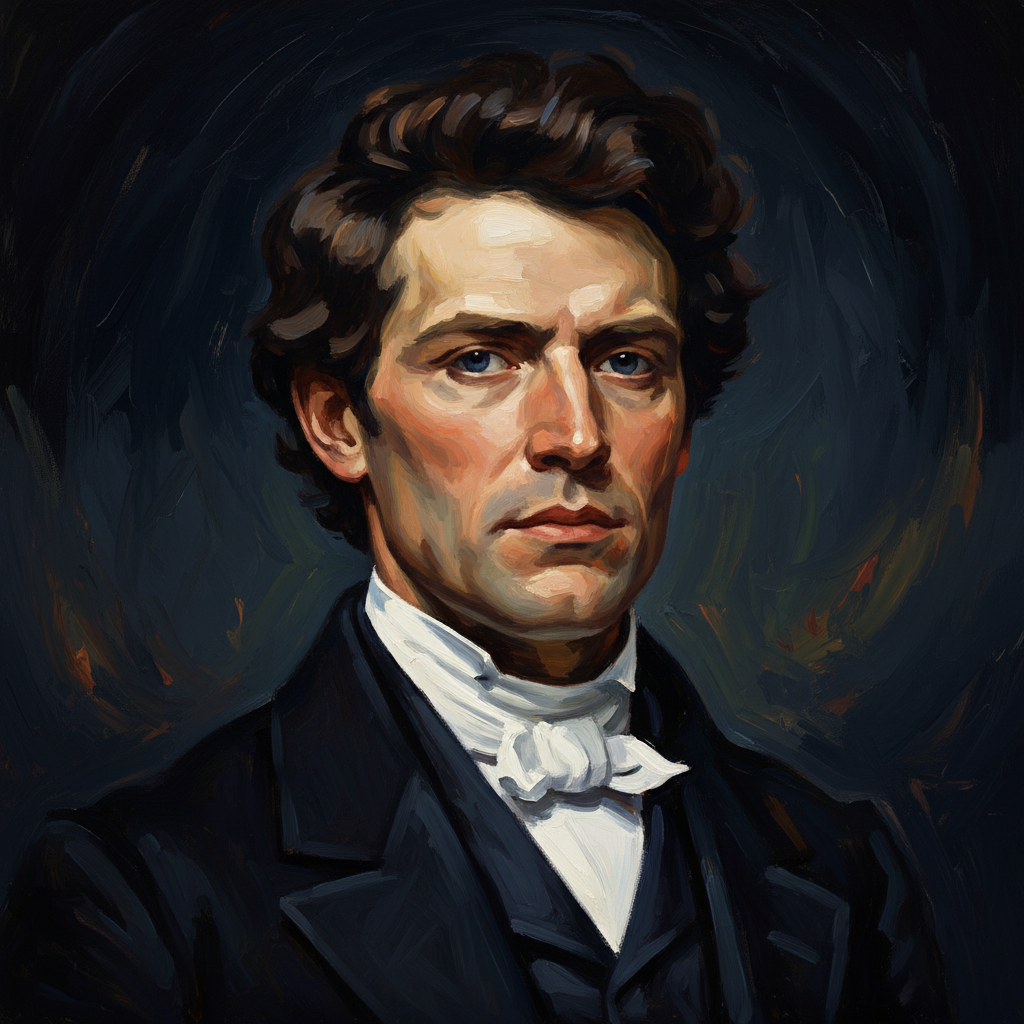
Joseph Smith — "I am not afraid to die. I shall die a martyr for the cause of Christ."
I am not afraid to die. I shall die a martyr for the cause of Christ.
I am not afraid to die. I shall die a martyr for the cause of Christ.
Click any product to generate a realistic preview. Up to 3 at a time.
* Initial load can take up to 90 seconds — revising the preview in another color is nearly instant.
"I am not afraid of death. I have a conscience void of offense toward God and toward all men."
"God himself was once as we are now, and is an exalted man, and sits enthroned in yonder heavens! That is the great secret. If the vail was rent today, and the great God who holds this world in its orb…"
"I am a man of God, and I desire to do the will of God."
"I am a man of temperance, and I will be temperate in all things."
"I calculated to be one of the instruments of setting up the kingdom of Daniel, by establishing a theocracy."
History of the Church, Vol. 6, p. 555 (Letter to Emma Smith, June 27, 1844)
Date: 1844
Life & DeathFound in 1 providers: grok
1 source checked
The speaker declares fearlessness before death, framing their willingness to die as a sacred act of devotion. Dying as a martyr means sacrificing life for a belief system one considers divinely ordained. It signals absolute conviction—that the cause transcends personal survival and that death in service of it carries spiritual honor rather than defeat.
Joseph Smith founded the Latter-day Saint movement in 1830 amid intense persecution, mob violence, and legal battles. He was murdered by a mob in Carthage Jail, Illinois, on June 27, 1844—making this statement prophetically accurate. His willingness to die for his revelations and the restored gospel defined his identity as prophet, seer, and revelator.
Antebellum America (1820s–1840s) was marked by religious ferment, frontier lawlessness, and deep hostility toward new religious movements. Mobs routinely attacked Mormon settlements in Ohio, Missouri, and Illinois. Extermination orders were issued against Latter-day Saints. Martyrdom carried powerful cultural resonance in Christian America, legitimizing new movements by comparing founders to early Christian saints.
AI-generated insights based on extensive research and information for context. Factual errors? Email [email protected].
Your cart is empty