What it means
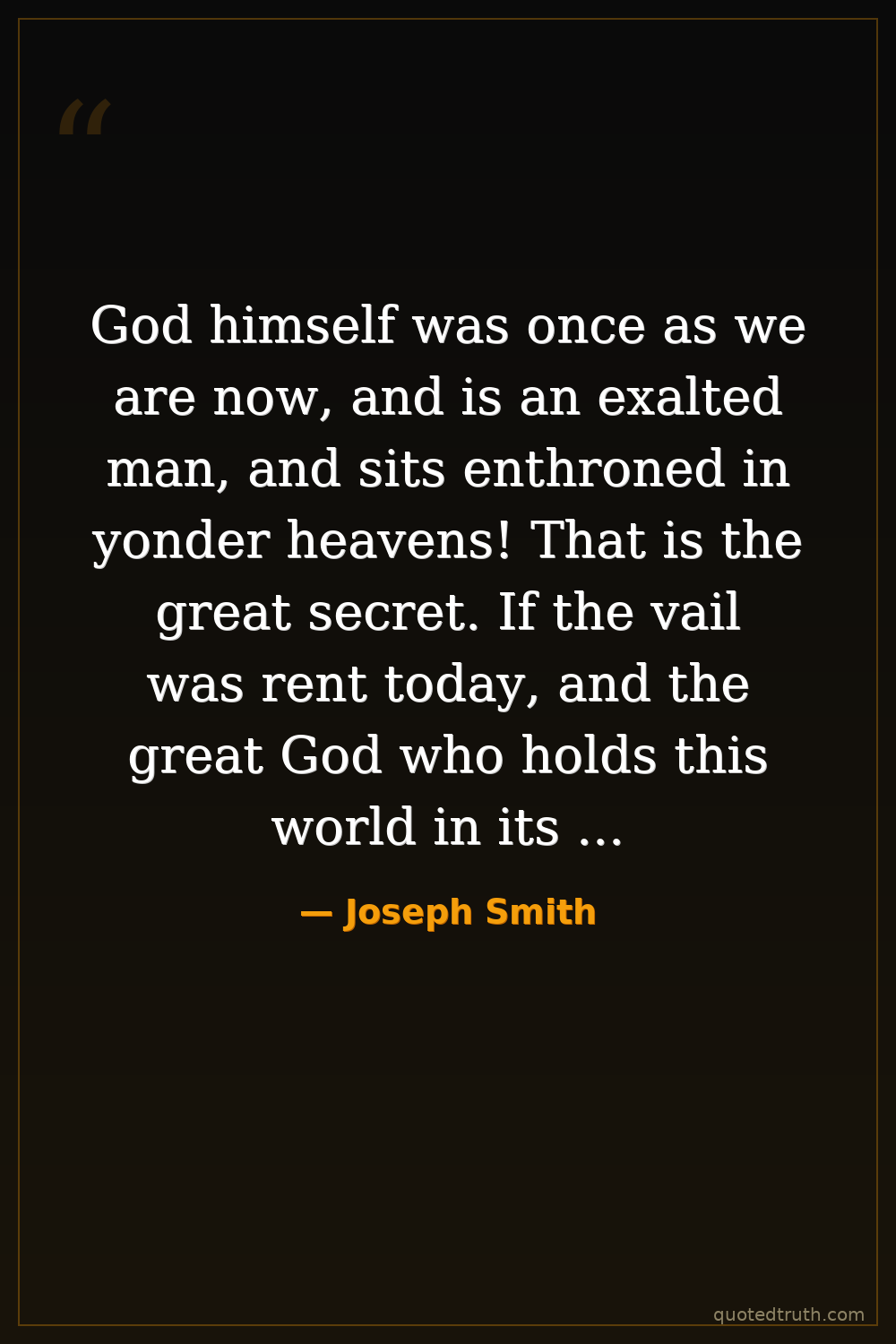
God was once a mortal being like us, and through progression became exalted. If God were visible, he would appear physically human in form and shape. This rejects classical theology's abstract, incorporeal God and asserts instead a corporeal, anthropomorphic deity who once lived as humans do now, implying humans can likewise progress toward godhood.
Relevance to Joseph Smith
Smith delivered this in the 1844 King Follett discourse weeks before his death, representing his most radical theological development. As founder of a new religion, Smith consistently claimed direct revelation, and this doctrine of eternal progression and divine embodiment became Mormonism's most distinctive theological departure from mainstream Christianity, reflecting his lifelong conviction that God communicates literally with humans.
The era
In 1844 America, frontier religious revivalism was exploding with competing denominations. Smith's teaching radically broke from Protestant orthodoxy dominating American religious life. The Second Great Awakening had democratized religion, making bold theological innovation possible. Smith's anthropomorphic God challenged Calvinist transcendence precisely when Americans were questioning inherited European religious authority and embracing individualistic, progressive worldviews.
AI-generated insights based on extensive research and information for context. Factual errors? Email [email protected].