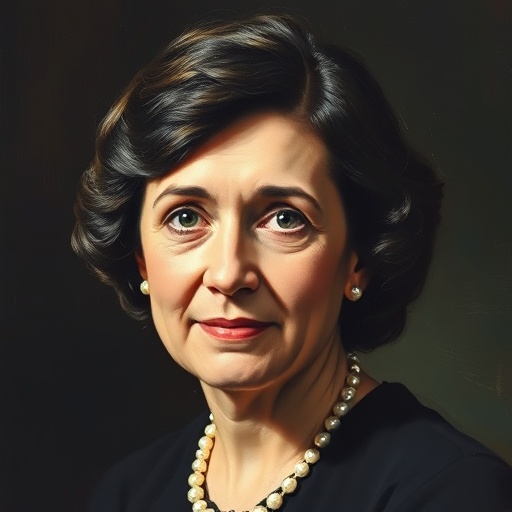
Rosalind Franklin — "I am not one to seek fame or glory, but rather to contribute to knowledge."
I am not one to seek fame or glory, but rather to contribute to knowledge.
I am not one to seek fame or glory, but rather to contribute to knowledge.
Click any product to generate a realistic preview. Up to 3 at a time.
* Initial load can take up to 90 seconds — revising the preview in another color is nearly instant.
"I don't think there's any room for guesswork in serious scientific research."
"The pursuit of knowledge is a noble endeavour, regardless of the personal cost."
"I am quite confident that the structure is helical, but the exact dimensions are still to be determined."
"I often feel that women in science have to work twice as hard to prove themselves."
"Science and everyday life cannot and should not be separated."
Found in 1 providers: grok
1 source checked
The speaker rejects personal celebrity, awards, or public recognition as a goal. Instead, they define success as adding something real to humanity's collective understanding. The work itself, and what it teaches others, matters more than who gets credit. It's a quiet declaration that motivation comes from curiosity and contribution, not from applause, prestige, or having one's name attached to a discovery.
Franklin embodied this ethic. Her 1952 X-ray diffraction images, especially Photo 51, were pivotal evidence for DNA's double helix, yet Watson, Crick, and Wilkins received the 1962 Nobel Prize while she went largely uncredited until later. She moved on to groundbreaking RNA and virus research at Birkbeck without lobbying for recognition, focused on rigorous data over self-promotion, even as male colleagues built reputations partly on her unpublished work.
In 1950s Britain, women in science faced exclusion from senior common rooms, lower pay, and skepticism about their competence. King's College London barred women from key dining areas where male scientists informally shared ideas. Postwar molecular biology was a fierce race, and credit often flowed to those best networked, not those with the cleanest data. Quiet, methodical contributors, especially women, were routinely sidelined as flashier personalities claimed the headlines and prizes.
AI-generated insights based on extensive research and information for context. Factual errors? Email [email protected].
Your cart is empty