What it means
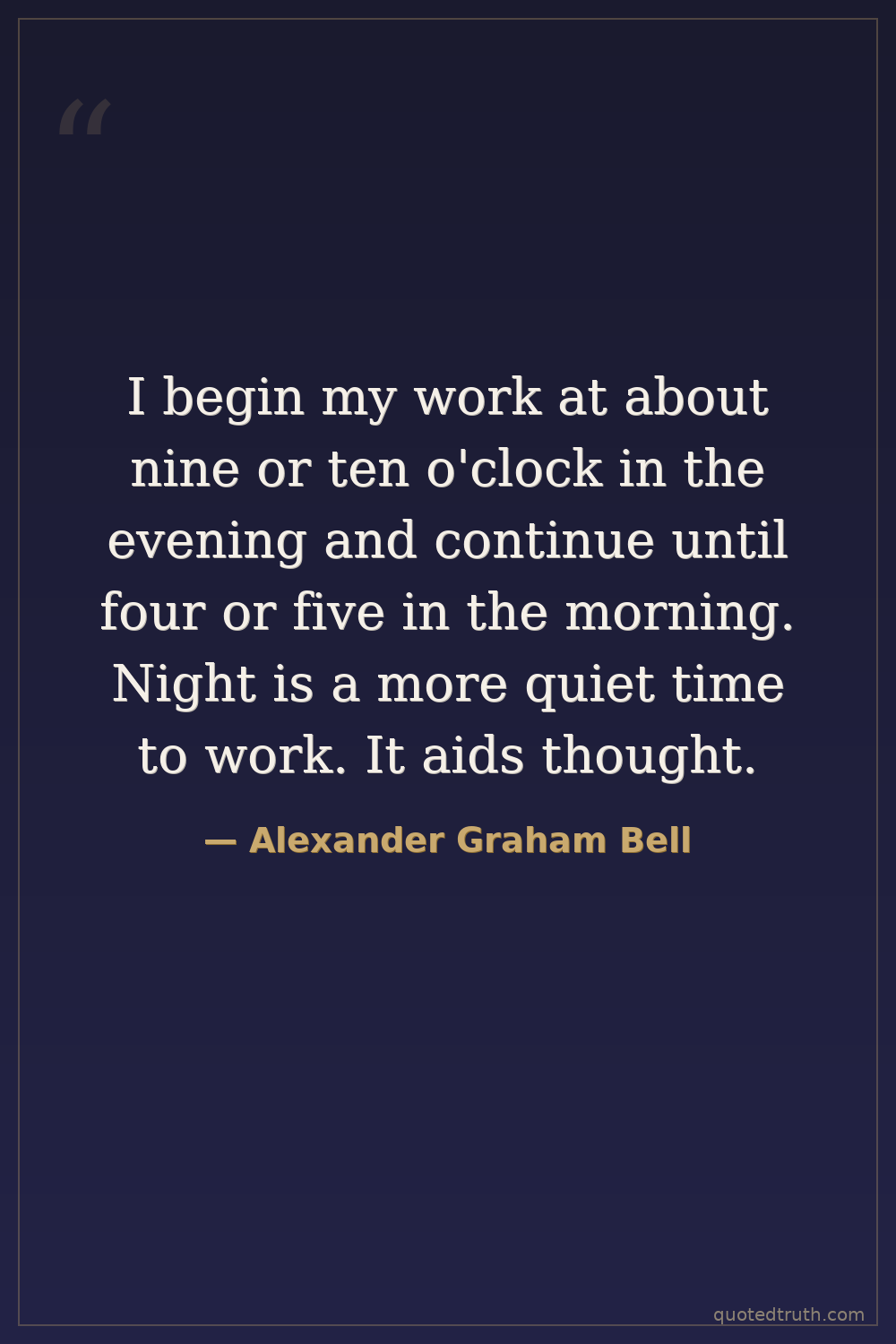
The speaker describes preferring to work from roughly 9 or 10 PM through 4 or 5 AM, explaining that nighttime quiet makes deep thinking easier. In modern terms: some people's best intellectual work happens when the world goes silent — no interruptions, no noise, just sustained focus. The quote captures the idea that creative and technical breakthroughs often require an environment stripped of daytime chaos and distraction.
Relevance to Alexander Graham Bell
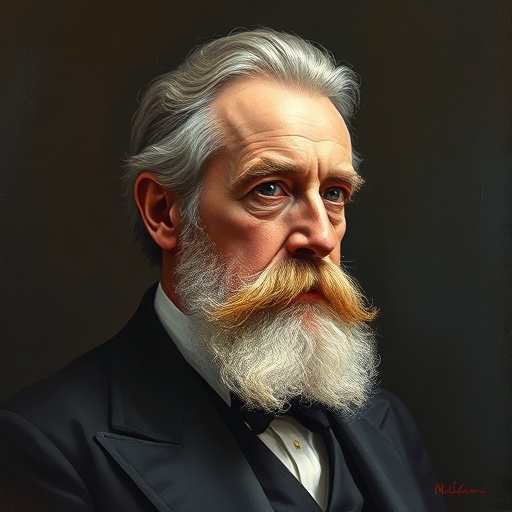
Bell was a tireless experimenter whose development of the telephone required solving intricate acoustic and electrical problems through sustained concentration. His famous Boston lab sessions in the 1870s, culminating in the first telephone call in 1876, were legendary for their intensity. Shaped by a lifetime around deafness — his mother and wife were both deaf — Bell needed deep uninterrupted focus. Night gave him the mental space his complex acoustic research demanded.
The era
Bell worked during the late 19th century, an era of frenzied invention and fierce patent competition — the same years Edison, Tesla, and others raced to transform modern life. Telegraphs, phonographs, and electric lights were upending civilization simultaneously. Daytime in industrial cities grew increasingly noisy and chaotic. The spread of electric lighting made sustained nighttime work feasible for the first time, and serious inventors treated silence after dark as a genuine competitive advantage for uninterrupted thought.
AI-generated insights based on extensive research and information for context. Factual errors? Email [email protected].