John Wesley — "I believe that all true Christians are brothers and sisters, whatever their deno…"
I believe that all true Christians are brothers and sisters, whatever their denomination.
I believe that all true Christians are brothers and sisters, whatever their denomination.
Click any product to generate a realistic preview. Up to 3 at a time.
* Initial load can take up to 90 seconds — revising the preview in another color is nearly instant.
"The Bible knows nothing of solitary religion."
"Give me one hundred preachers who fear nothing but sin, and desire nothing but God, and I care not a straw whether they be clergymen or laymen; such alone will shake the gates of hell and set up the k…"
"I conceive slavery to be such a thing as is odious to the God of love."
"I have often thought, that if I were to choose a food to eat, it should be bread and water."
"I have often wondered that any man, who has tasted of the pleasures of retirement, can ever be prevailed upon to quit them."
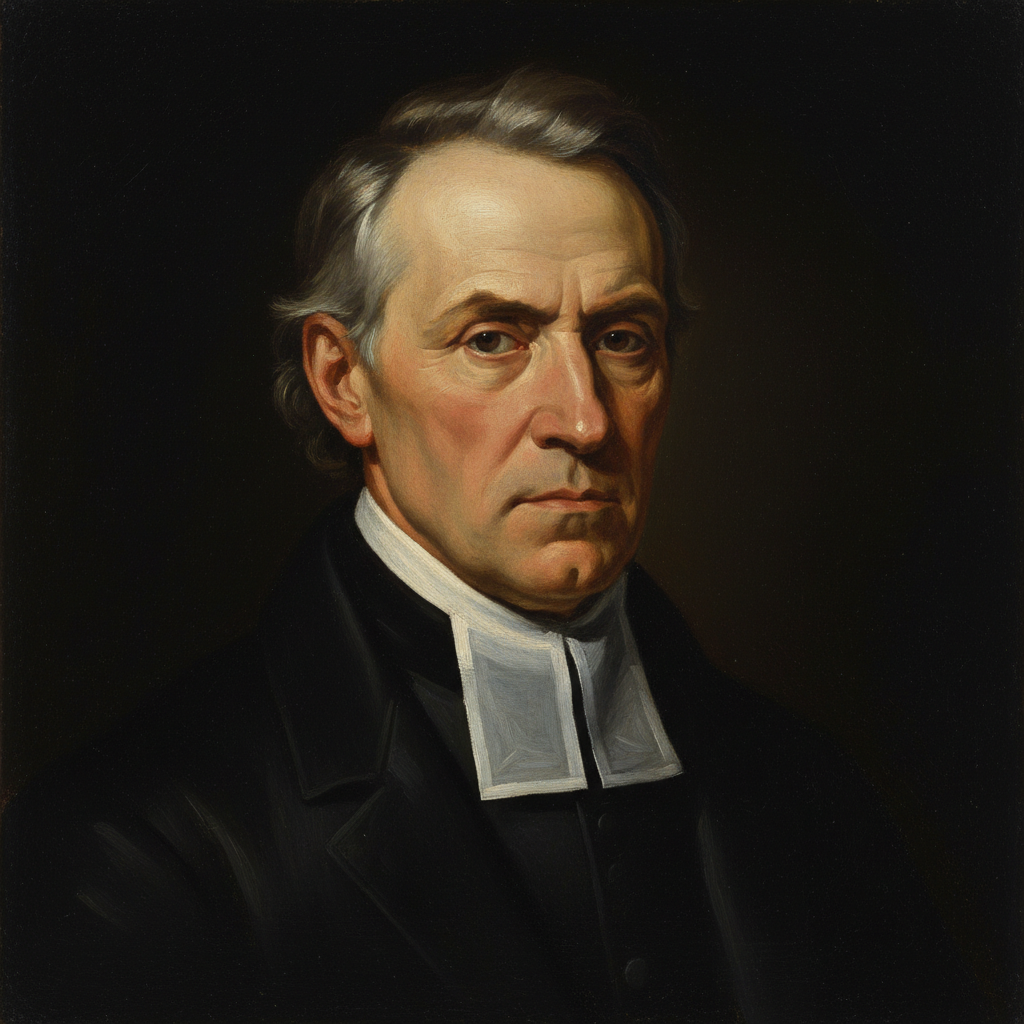
English Anglican cleric and founder of Methodism, whose open-air preaching and class-meeting structure created the largest 18th-century evangelical revival. Closely associated with Charles Wesley (his hymn-writing brother) and George Whitefield (early co-revivalist, later doctrinal opponent). For an intellectual contrast, see George Whitefield, Calvinist evangelical revivalist — Whitefield's predestinarian Calvinism vs Wesley's free-grace Arminian theology split the early Methodist movement permanently in the 1739-41 break. The founding evangelical Calvinist-Arminian schism — the two parallel evangelical traditions American Christianity descends from.
Found in 1 providers: grok
1 source checked
True Christian unity transcends institutional labels and denominational boundaries. Regardless of what church someone belongs to or what theological traditions they follow, shared faith in Christ creates a genuine family bond among believers. Organizational differences are secondary to the spiritual reality of being part of one body. This is a call for Christians to recognize common ground rather than emphasize divisions.
Wesley founded Methodism yet constantly resisted narrow sectarianism. He preached across denominational lines, collaborated with Anglicans, Moravians, and Calvinists despite doctrinal disagreements. His open-air preaching reached anyone willing to listen. He famously said the world was his parish, reflecting a catholicity of spirit that prioritized lived faith over ecclesiastical affiliation, even while building a distinct Methodist movement.
Eighteenth-century Britain was fractured by bitter Protestant rivalries between Anglicans, Dissenters, Calvinists, and newly emerging Methodists. State churches wielded political power, and denominational identity carried legal and social consequences. Religious wars and persecutions were living memory. Wesley's insistence on brotherhood across these divides was countercultural, challenging both institutional gatekeeping and the sectarian hostility that defined much of contemporary religious life.
AI-generated insights based on extensive research and information for context. Factual errors? Email [email protected].
Your cart is empty