What it means
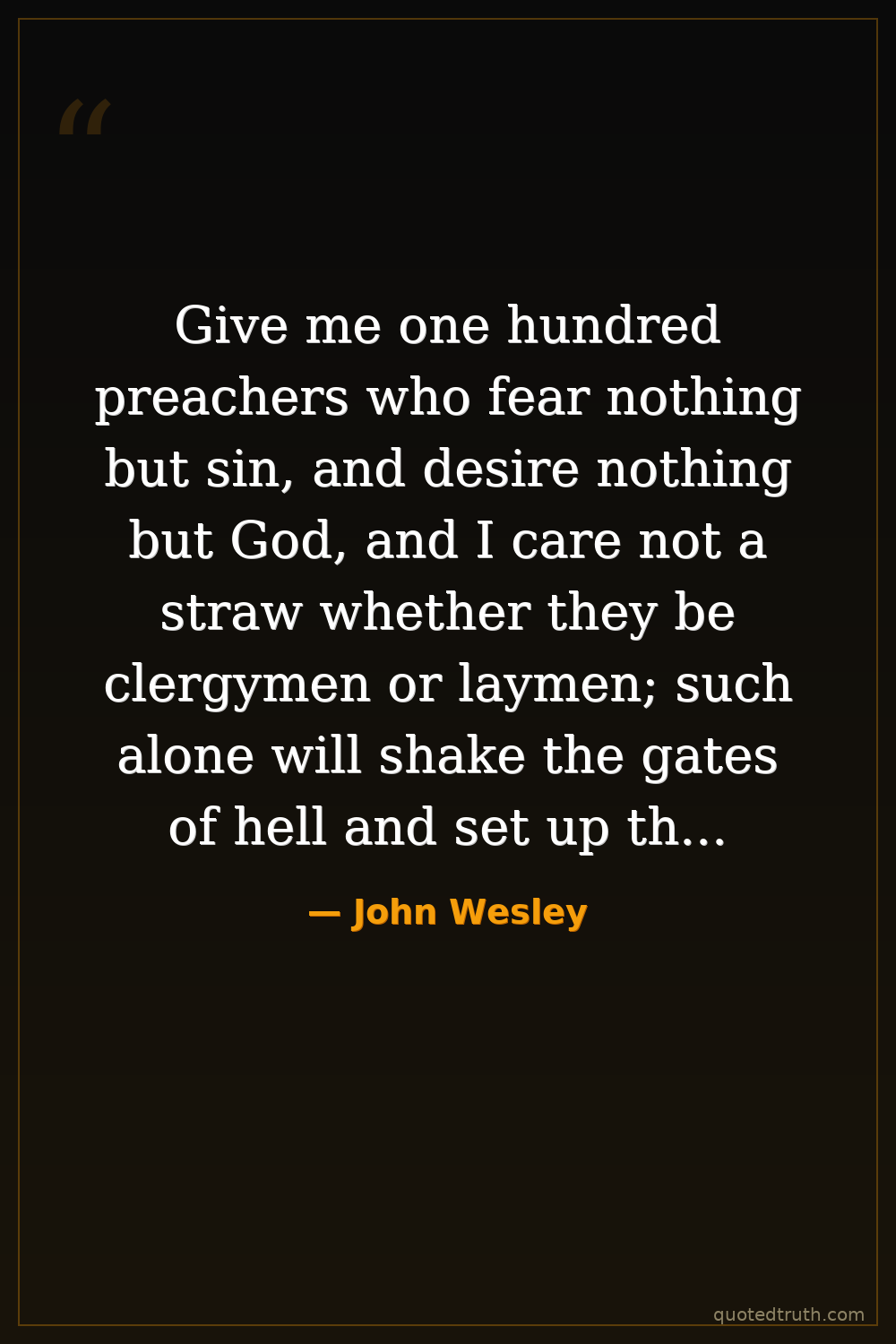
A small group of people — ordained or not — who are completely devoted to avoiding sin and pursuing God alone will have more transformative power than any large institution. What matters isn't religious credentials or official rank, but depth of moral commitment and singular focus on God. True spiritual revolution comes from radical personal dedication, not from titles, numbers, or ecclesiastical hierarchy.
Relevance to John Wesley
Wesley practiced exactly what this quote preaches. As an Anglican priest, he controversially deployed lay preachers across England and America — people with no ordination but fierce devotion. His Methodist movement was built on circuit riders and class leaders, ordinary people empowered to spread revival. His doctrine of entire sanctification demanded exactly this: complete surrender to God and rejection of sin as a daily, lived standard, regardless of clerical standing.
The era
In 18th-century England, the established Church of England held a legal monopoly on preaching, and clergy were educated, socially elevated figures largely disconnected from the working poor. Wesley's era saw industrial displacement, widespread poverty, and spiritual neglect of laboring masses. His insistence that laymen could preach as effectively as ordained clergy was genuinely radical — and legally controversial — in a society where religious authority and social class were deeply intertwined.
AI-generated insights based on extensive research and information for context. Factual errors? Email [email protected].