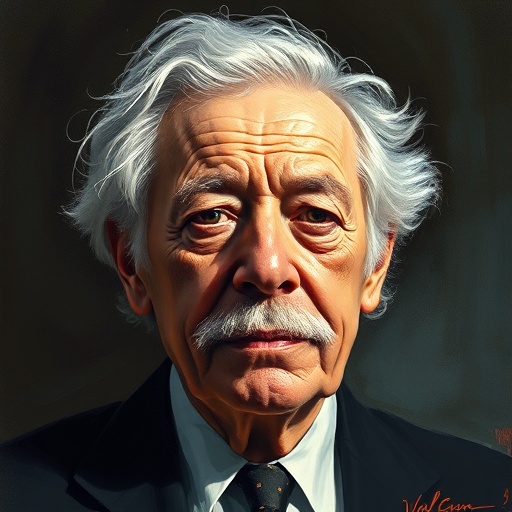
Linus Pauling — "I believe that the world is full of wonderful things, and that we should all str…"
I believe that the world is full of wonderful things, and that we should all strive to appreciate them.
I believe that the world is full of wonderful things, and that we should all strive to appreciate them.
Click any product to generate a realistic preview. Up to 3 at a time.
* Initial load can take up to 90 seconds — revising the preview in another color is nearly instant.
"I realized that medical and biological investigators were not attacking their problems the same way that theoretical physicists do, the way I had been in the habit of doing."
"I am not a believer in the idea that you have to be sick to take vitamins."
"I have never had a bad idea."
"The only way to discover the limits of the possible is to go beyond them into the impossible."
"I am convinced that there is no disease that cannot be cured by a proper intake of vitamin C."
Found in 1 providers: grok
1 source checked
The quote urges an active sense of curiosity and gratitude toward the world — its natural phenomena, human achievements, and everyday experiences. It pushes back against cynicism or indifference, arguing that wonder is available to anyone willing to look. It is a call to stay engaged rather than numbed by routine or negativity, recognizing that the world's complexity and beauty reward those who pay deliberate attention to what surrounds them.
Pauling spent his life uncovering the hidden architecture of matter — from quantum chemical bonds to the alpha-helix structure of proteins. His passion for discovery was matched by moral urgency: he campaigned relentlessly against nuclear weapons testing, earning the 1962 Nobel Peace Prize alongside his 1954 Nobel in Chemistry. This quote mirrors his dual conviction that science reveals genuine marvels and that humans bear a responsibility to respond to those marvels with awe rather than exploitation.
Pauling's most active decades — the 1940s through 1960s — were shadowed by atomic anxiety. Nuclear weapons had destroyed Hiroshima and Nagasaki, and Cold War brinkmanship kept civilization under existential threat. Yet the same era brought polio vaccines, synthetic materials, and the space race. Against that collision of terror and possibility, declaring the world full of wonderful things was not naive optimism but a deliberate counter-argument against the fatalism and militarism dominating public life.
AI-generated insights based on extensive research and information for context. Factual errors? Email [email protected].
Your cart is empty