Isaac Newton — "I built my first telescope with my own hands."
I built my first telescope with my own hands.
I built my first telescope with my own hands.
Click any product to generate a realistic preview. Up to 3 at a time.
* Initial load can take up to 90 seconds — revising the preview in another color is nearly instant.
"If I have done the public any service, it is due to my patient thought."
"The changing of bodies into light, and light into bodies, is very conformable to the course of Nature."
"He who thinks half-heartedly will not believe in God; but he who thinks seriously will believe in God, and will not doubt that God is the author of the world."
"To explain all nature is too difficult a task for any one man or even for any one age."
"I feign no hypotheses."
Found in 1 providers: grok
1 source checked
Self-reliance and hands-on craftsmanship are inseparable from discovery. Newton is asserting that scientific understanding demands physical engagement — not waiting for others to supply the tools. Building the instrument yourself means mastering how it works, controlling its precision, and connecting thought directly to observation. It positions creation as a prerequisite to knowledge, rejecting passive dependence on others and embracing the idea that the investigator must also be the maker.
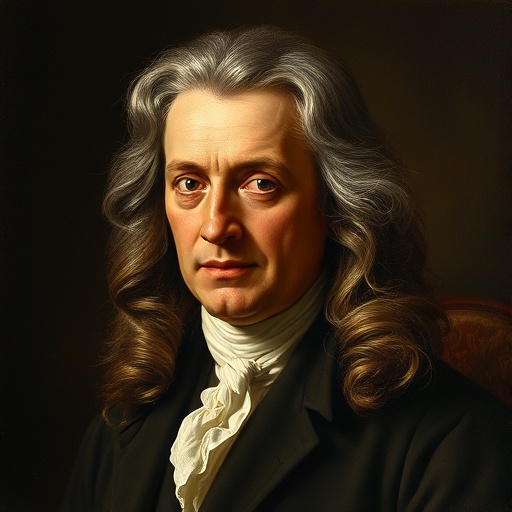
Newton built a reflecting telescope around 1668, grinding its curved mirrors by hand to eliminate the chromatic aberration that plagued lens-based designs. He presented the finished instrument to the Royal Society in 1671, earning immediate recognition. This reflects his character precisely — obsessively self-reliant, equally skilled as craftsman and theorist, unwilling to separate making from knowing. His optical experiments and mirror work were not separate from his physics; the hands and the mind operated as one.
In the mid-17th century, precision instruments were costly, rare, and produced by specialist craftsmen — most natural philosophers simply purchased or borrowed them. The Scientific Revolution had established that direct observation, not inherited authority, revealed truth about nature. Galileo's telescope had already transformed astronomy. Yet building one yourself remained extraordinary. Newton's handmade reflector solved a real technical problem of the age and signaled seriousness: in an era valuing experimentation over scholasticism, making your own tools was proof of genuine inquiry.
AI-generated insights based on extensive research and information for context. Factual errors? Email [email protected].
Your cart is empty