What it means
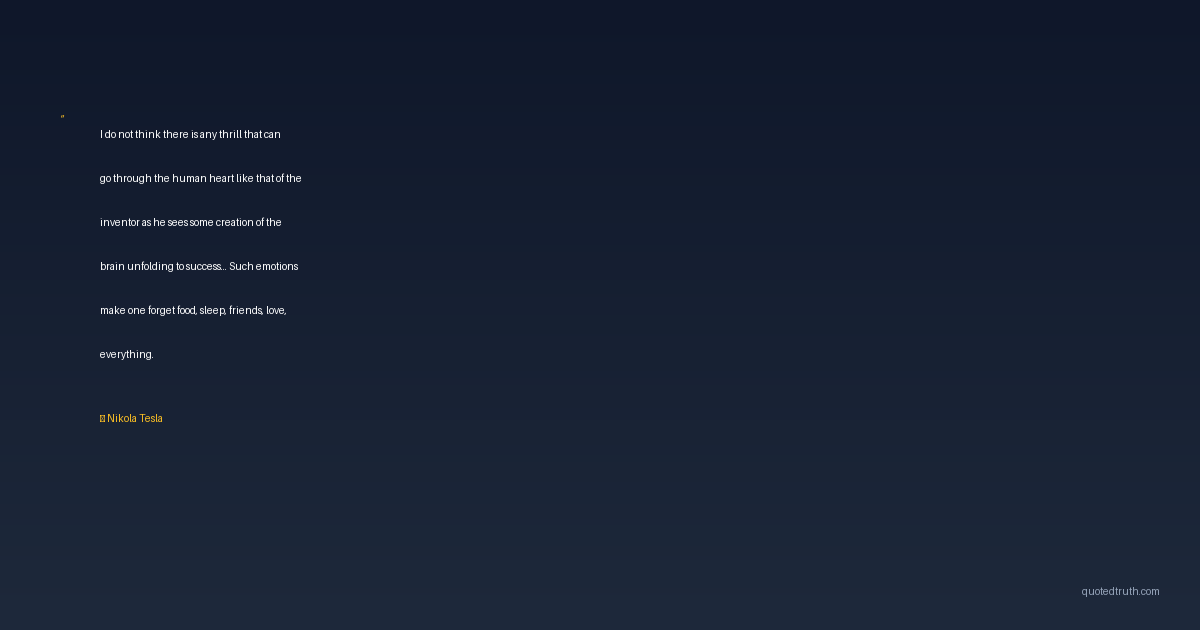
The inventor's thrill of watching an idea become reality is unmatched by any human experience. That singular rush of creation is so consuming it overrides every basic need and desire — hunger, rest, relationships, love — all fall away when a vision finally works. It captures total absorption in creative success, the purest form of flow state a person can enter.
Relevance to Nikola Tesla
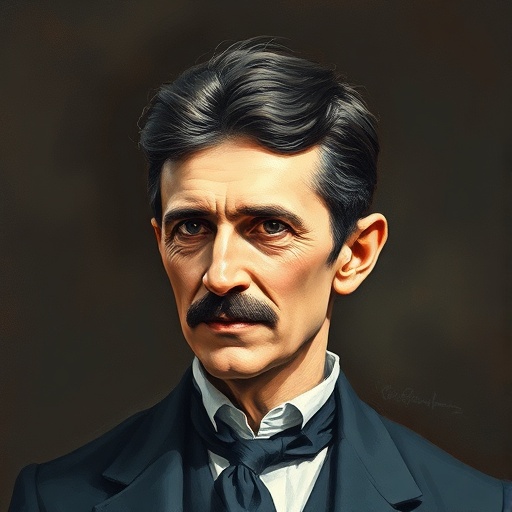
Tesla lived this obsessively. He reportedly slept only two hours nightly during intense projects, rarely ate, and never married. His AC induction motor and Tesla coil weren't just inventions — they were brain-children he described visualizing completely before building. His rivalry with Edison, his financial ruin, his isolation — all were accepted costs of pursuing that inventor's high he describes here.
The era
Tesla worked in the 1880s–1930s, the Second Industrial Revolution, when electricity was transforming civilization in real time. Inventors were rock stars remaking the world — Edison, Bell, the Wright Brothers. The race to harness electricity, build infrastructure, and patent transformative technology made invention genuinely world-altering. A successful creation didn't just satisfy curiosity; it could illuminate cities and reshape human civilization overnight.
AI-generated insights based on extensive research and information for context. Factual errors? Email [email protected].