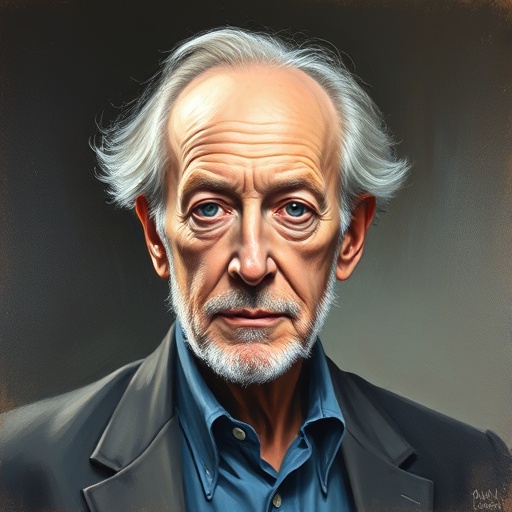
James Watson — "I don't care what people think of me. I care about the truth."
I don't care what people think of me. I care about the truth.
I don't care what people think of me. I care about the truth.
Click any product to generate a realistic preview. Up to 3 at a time.
* Initial load can take up to 90 seconds — revising the preview in another color is nearly instant.
"If you're not having fun, you're doing something wrong."
"It's much more fun to be famous than not to be famous."
"I always looked for the most beautiful women."
"If you're not offending someone, you're not doing your job."
"Whenever you interview fat people, you feel bad, because you know you're not going to hire them."
Found in 1 providers: grok
1 source checked
This declares that truth outweighs reputation or social approval. It frames the speaker as immune to judgment — someone who follows honest conclusions regardless of public reaction. It valorizes intellectual courage over conformity, the willingness to voice uncomfortable findings when accurate. It's a claim of independence from social pressure, positioning truth-seeking as the only legitimate standard by which ideas should be judged.
Watson won the 1962 Nobel Prize for co-discovering DNA's double helix, though he controversially overlooked Rosalind Franklin's critical X-ray data. Later, he repeatedly made racist claims about racial intelligence differences, losing his Cold Spring Harbor honorary titles in 2019. He consistently refused to recant. This quote maps directly onto that pattern: Watson prioritized his own conception of scientific truth over professional standing, social acceptability, or factual nuance.
Watson's most provocative statements came in the 2000s–2010s, when genomics and race were intensely debated. The Human Genome Project (2003) revealed deep genetic similarity across populations, yet disputes over heritable intelligence differences persisted. Science simultaneously faced growing demands for equity and accountability — including recognition of overlooked contributors like Franklin. Watson's defiant posture toward public opinion resonated as both scientific courage and, to critics, a rationalization for discredited racial science.
AI-generated insights based on extensive research and information for context. Factual errors? Email [email protected].
Your cart is empty