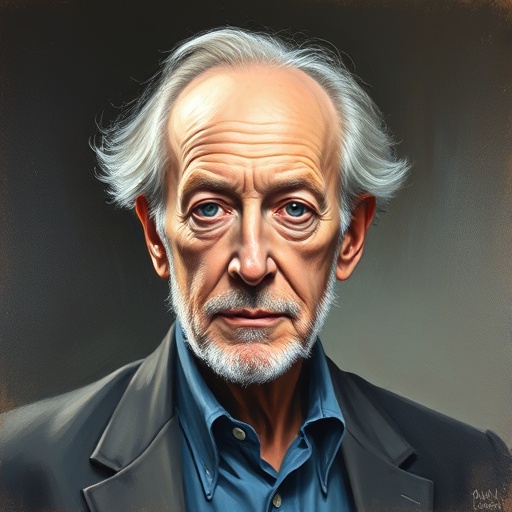
James Watson — "It's much more fun to be famous than not to be famous."
It's much more fun to be famous than not to be famous.
It's much more fun to be famous than not to be famous.
Click any product to generate a realistic preview. Up to 3 at a time.
* Initial load can take up to 90 seconds — revising the preview in another color is nearly instant.
"The more you know, the more you realize you don't know."
"I'm not a racist. I just see the world as it is."
"The less you know, the more you can discover."
"I like to stir things up."
"If you could find a way to make all girls pretty, you'd be a hero."
Found in 1 providers: grok
1 source checked
Fame brings real, tangible rewards — recognition, doors opened, deference granted, a sense of consequence in the world. Watson isn't being ironic or falsely modest; he's stating plainly what most people sense but won't admit. Being widely known grants social capital and opportunities unavailable to even brilliant unknowns. The quote cuts through performative humility about celebrity, confessing that public recognition genuinely enhances life's texture, however unfashionable that admission might seem.
Watson's post-discovery life actively embraced prominence. After co-discovering DNA's double helix in 1953, he leveraged fame aggressively — publishing 'The Double Helix' (1968), a gossipy self-promotional memoir that scandalized colleagues by naming names and settling scores. As longtime director of Cold Spring Harbor Laboratory, he cultivated media presence and made repeatedly controversial public statements on race and genetics that kept him in headlines. He seemed genuinely energized by attention long after scientific laurels alone would have sufficed.
Watson came of age precisely when science invented the celebrity researcher. Post-WWII decades saw science dominate public consciousness — nuclear physics, space exploration, molecular biology all captured mass imagination. Cold War competition elevated scientists to national heroes. By the 1960s, television transformed accomplished researchers into public figures, and the Nobel Prize became a cultural spectacle. Watson arrived at the exact historical moment when a scientist could simultaneously be a rigorous professional and a recognizable, provocative household name.
AI-generated insights based on extensive research and information for context. Factual errors? Email [email protected].
Your cart is empty