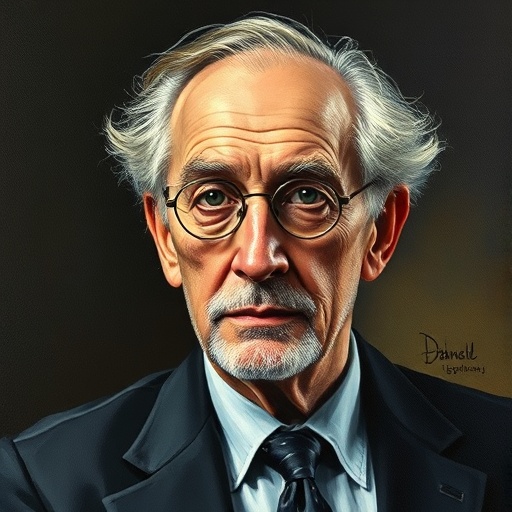
Francis Crick — "I enjoy being controversial."
I enjoy being controversial.
I enjoy being controversial.
Click any product to generate a realistic preview. Up to 3 at a time.
* Initial load can take up to 90 seconds — revising the preview in another color is nearly instant.
"The future of biology is in the brain."
"The more we know about the brain, the more we realize how complex it is."
"I have always been fascinated by the brain."
"The Christian believer is like a tenant who is about to sign a lease on a flat when someone tells him that the owner of the flat does not exist."
"If you want to understand life, you have to understand DNA."
Found in 1 providers: grok
1 source checked
Being controversial means deliberately taking positions that disrupt consensus and provoke discomfort. This quote captures someone who sees intellectual friction not as a cost but as a reward — a sign that an idea is challenging assumptions worth challenging. Rather than seeking approval or avoiding conflict, the speaker finds genuine satisfaction in staking out positions others resist, trusting that provoking disagreement is often how truth gets closer to the surface.
Crick embodied intellectual provocation throughout his life. He helped dismantle vitalism by showing life's blueprint is mere chemistry. He publicly resigned a Cambridge college fellowship in 1961 rather than accept a chapel being built. A committed atheist, he argued consciousness is purely neuronal activity. He later championed directed panspermia — life seeded from space. These weren't attention-seeking positions; Crick followed evidence wherever it led, no matter how uncomfortable for religious or scientific orthodoxy.
Crick's most active decades — the 1950s through 1990s — spanned the molecular biology revolution, the Cold War, and science's growing confrontation with religious authority. Mid-century Western society still treated scientific materialism as provocative, not mainstream. The DNA discovery itself upended ideas about life's mystery. Later, neuroscience attacking the concept of the soul felt radical. Crick operated in an era when science could still genuinely shock polite society by claiming nothing is sacred.
AI-generated insights based on extensive research and information for context. Factual errors? Email [email protected].
Your cart is empty