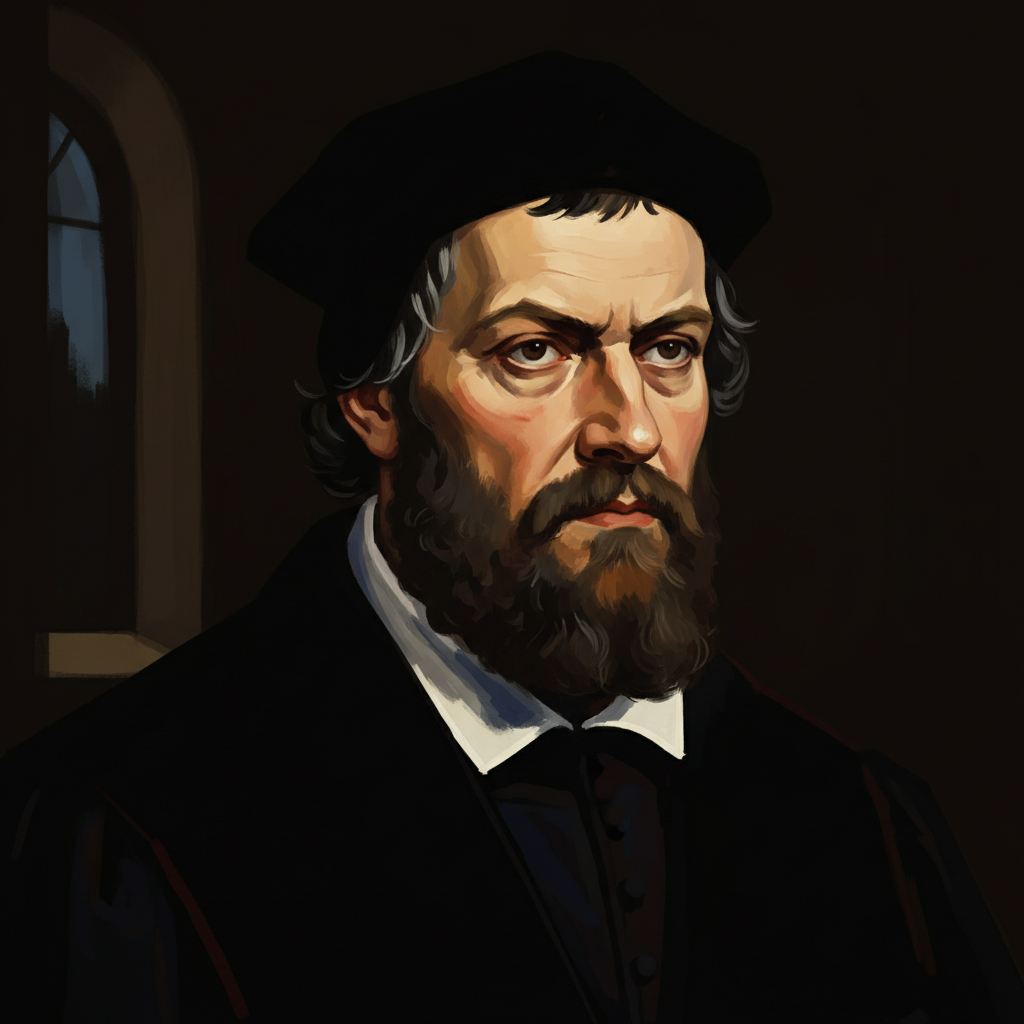
Martin Luther — "I have been so busy with writing that I have not had time to pray."
I have been so busy with writing that I have not had time to pray.
I have been so busy with writing that I have not had time to pray.
Click any product to generate a realistic preview. Up to 3 at a time.
* Initial load can take up to 90 seconds — revising the preview in another color is nearly instant.
"One should praise women, whether it be true or false."
"The Bible is alive, it speaks to me; it has feet, it runs after me; it has hands, it lays hold on me."
"The world is a great book, of which they who never stir from home read only one page."
"The greatest good in marriage is the love of husband and wife."
"A Christian is a perfectly free lord of all, subject to none. A Christian is a perfectly dutiful servant of all, subject to all."
German theologian whose 95 Theses (1517) launched the Protestant Reformation and broke the Catholic Church's monopoly on Western Christianity. Closely associated with Philipp Melanchthon (Lutheran systematizer) and John Calvin (later Reformer who built on Luther's break). For an intellectual contrast, see Pope Leo X, Renaissance pope (1513-1521) — Leo X's indulgence sales triggered Luther's break and Leo excommunicated him in 1521 — Luther's entire Reformation is structured as a direct answer to the indulgence-funded Vatican Leo represented.
Found in 1 providers: grok
1 source checked
The speaker admits that workload has crowded out prayer. Being swamped with writing left no space for the spiritual discipline that normally grounds the day. It is a confession of misplaced priorities, acknowledging that productivity can starve the soul. The line lands as self-criticism rather than boast, warning that even urgent, meaningful tasks can edge out the quieter practices that give those tasks their purpose and keep the person steady.
Luther was a prolific writer, producing Bible translations, catechisms, hymns, treatises, and thousands of letters that fueled the Reformation. He also preached constantly and counseled reformers across Europe. Famously, he elsewhere said he prayed more on busy days, not less, so this line captures a rare moment of self-reproach. It reflects his blunt honesty about his own failings and his conviction that prayer, not output, sustained a Christian life.
In the early sixteenth century, the printing press turned theological disputes into mass movements, and Luther's pamphlets, sermons, and German Bible flooded Europe. He lived under constant deadline pressure: responding to papal bulls, imperial edicts, peasant revolts, and rival reformers. Monastic hours of prayer were being challenged and reformed, yet personal devotion remained central to Protestant identity. The saying captures the tension of a reformer whose very writing was reshaping Christendom while threatening the contemplative rhythms it drew from.
AI-generated insights based on extensive research and information for context. Factual errors? Email [email protected].
Your cart is empty