What it means
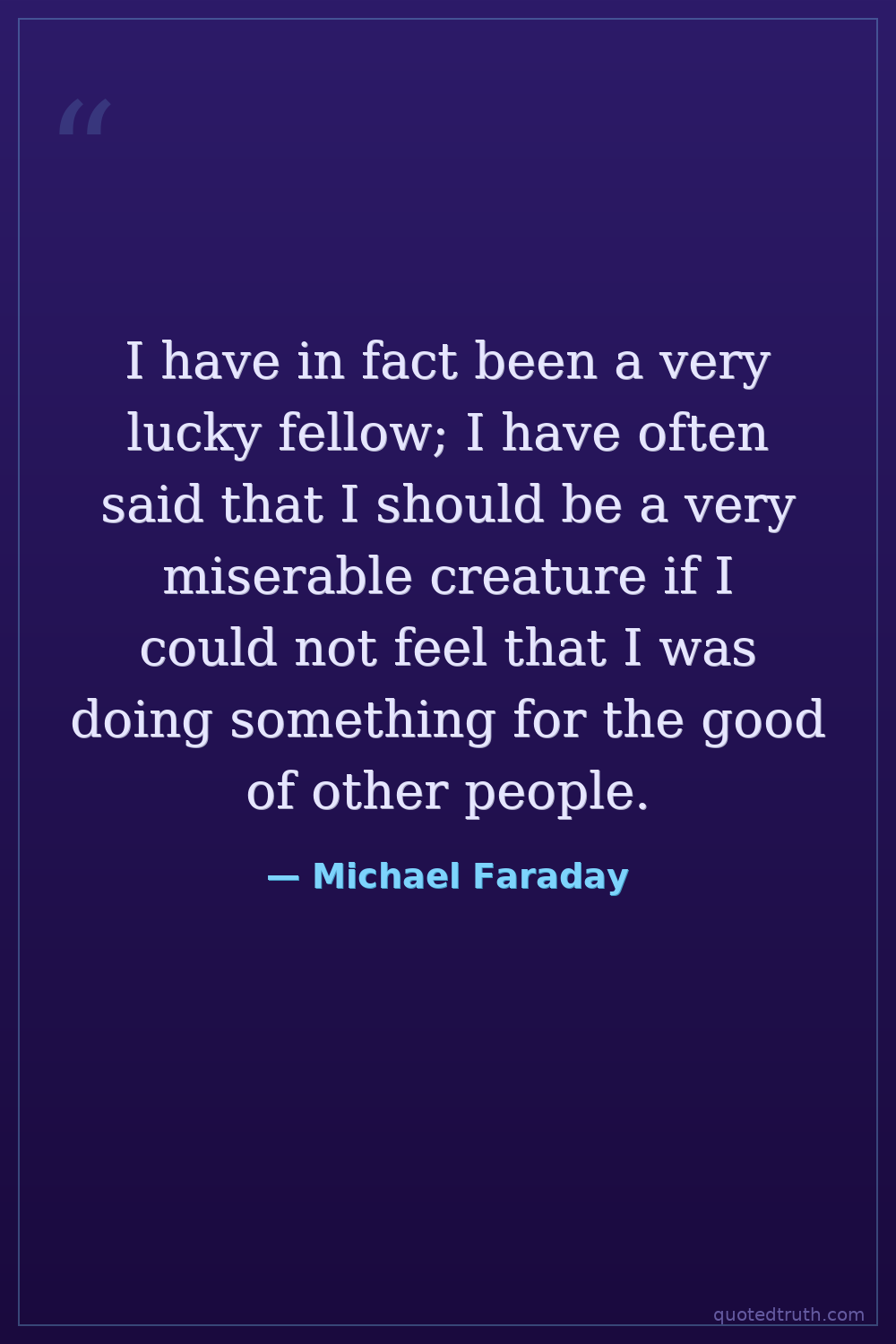
Faraday says his happiness depends on being useful to others. He counts himself fortunate, but admits that luck alone would not satisfy him. Without the sense that his work benefits people beyond himself, he would feel wretched. Purpose, not achievement or recognition, is what gives his life worth. Serving others is the condition that turns a good life into a meaningful one.
Relevance to Michael Faraday
Faraday refused a knighthood, declined burial in Westminster Abbey, and turned down lucrative consulting to focus on pure research and public lectures. He founded the Royal Institution's Christmas Lectures for children and advised on mine safety, lighthouses, and pollution. A devout Sandemanian Christian, he saw science as service. This quote captures his lifelong rejection of status in favor of work that genuinely helped ordinary people.
The era
Faraday worked in Victorian Britain (1791-1867) as the Industrial Revolution transformed daily life through electricity, gas lighting, and telegraphy. Scientists were increasingly professionalized and courted by industry for profit. Amid this commercialization, Faraday modeled an older ideal of the natural philosopher as public servant. Victorian moral culture prized duty and self-effacement, and his refusal of honors resonated with a public that admired character as much as discovery.
AI-generated insights based on extensive research and information for context. Factual errors? Email [email protected].