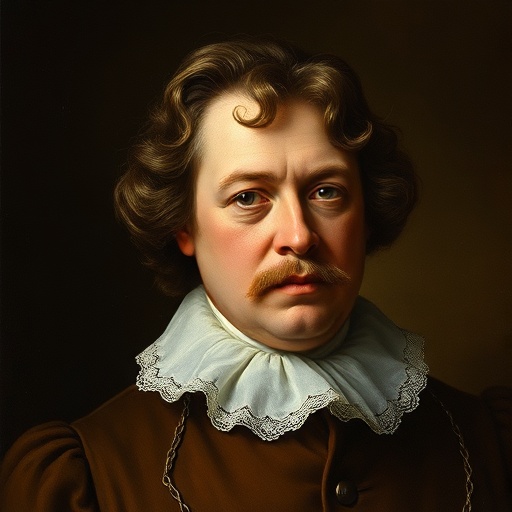
Edward Jenner — "I have often been surprised at the credulity of mankind; but I have also been su…"
I have often been surprised at the credulity of mankind; but I have also been surprised at their obstinacy.
I have often been surprised at the credulity of mankind; but I have also been surprised at their obstinacy.
Click any product to generate a realistic preview. Up to 3 at a time.
* Initial load can take up to 90 seconds — revising the preview in another color is nearly instant.
"It is the lot of man to suffer; but it is also his lot to alleviate the sufferings of others."
"The most valuable possessions are those which we acquire by our own exertions."
"I have often thought that if mankind were more generally enlightened, they would be more virtuous."
"I have often been accused of being too sanguine in my expectations; but time will show whether I am right or wrong."
"I shall not attempt to give a detail of all the cases that have come under my observation, but shall select a few of the most striking, and such as will, I trust, be sufficient to convince the candid …"
Found in 1 providers: grok
1 source checked
People can swing between two opposite failures of judgment: accepting claims without evidence, and refusing to accept claims despite abundant evidence. Jenner observes the paradox that the same species capable of swallowing nonsense whole can also dig in stubbornly against well-proven facts. Both tendencies — being too open and being too closed — block clear thinking and can lead to real-world harm.
Jenner spent years documenting cowpox's protective effect before publishing in 1798, expecting science to speak for itself. Instead he encountered both failure modes simultaneously: the public credulously believed smallpox was divine punishment or accepted quack cures, yet obstinately rejected vaccination despite mounting evidence of its safety and effectiveness. Religious groups, rival physicians, and frightened parents exemplified the obstinacy. His entire career was a battle against both irrationalities at once.
Jenner's era straddled Enlightenment optimism and deep-rooted superstition. Smallpox killed roughly 400,000 Europeans annually in the late 1700s, yet folk beliefs and religious conviction shaped responses more than science. The idea of injecting material from a cow to prevent disease struck many as heretical or grotesque. Meanwhile, charlatans sold useless remedies without resistance. Science was newly asserting authority over medicine, making public irrationality in both directions sharply visible.
AI-generated insights based on extensive research and information for context. Factual errors? Email [email protected].
Your cart is empty