What it means
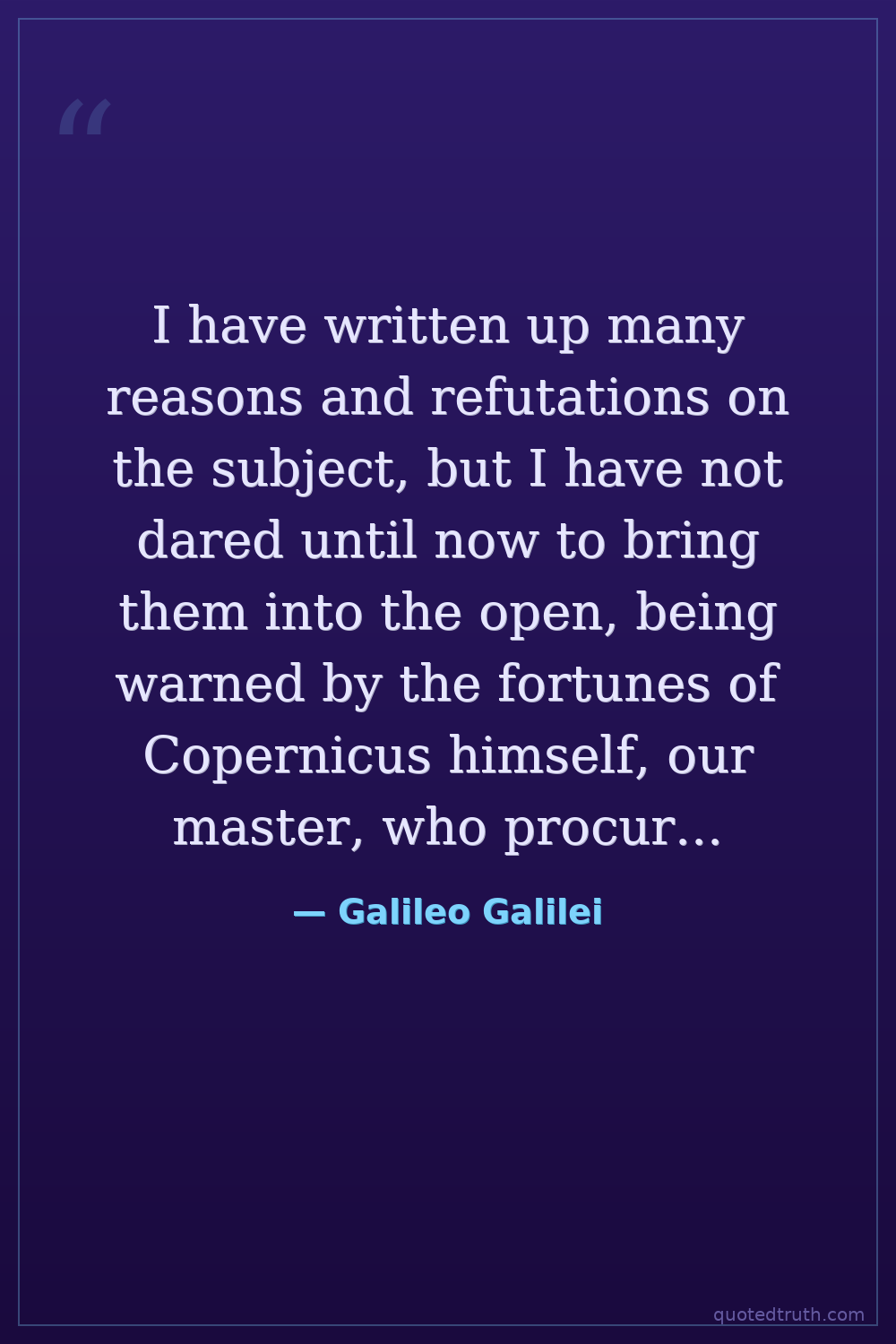
Galileo had prepared arguments supporting a controversial scientific truth but chose not to publish them, having watched Copernicus earn lasting fame only among a small educated minority while being mocked and dismissed by the broader public. The quote captures the painful calculus of the truth-teller: when the intellectually curious are few and the hostile crowd is vast, silence feels like the only rational choice, however frustrating.
Relevance to Galileo Galilei
Written to Johannes Kepler in 1597, this letter reveals Galileo already privately accepted heliocentrism a decade before his telescopic discoveries. His caution proved both wise and futile — when he finally published the Dialogue in 1632, the Inquisition forced a recantation and lifelong house arrest. His character blended intellectual boldness with political calculation, and this quote captures that tension: a man who knew the truth but measured the cost of saying so.
The era
In the late 16th century, Copernicus's heliocentric model had circulated for 50 years yet remained dangerous. The Counter-Reformation hardened Church orthodoxy; Aristotelian cosmology underpinned Catholic theology. Giordano Bruno was burned at the stake in 1600 partly for cosmological heresies. Universities answered to clerical authority. Publishing heterodox science risked heresy charges, not just professional ruin, making Galileo's calculated silence less cowardice than a survival strategy in a culture that punished intellectual dissent.
AI-generated insights based on extensive research and information for context. Factual errors? Email [email protected].