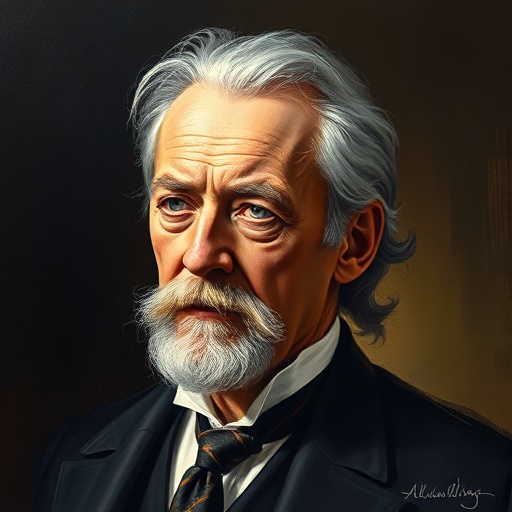
Alexander Fleming — "I never sought fame or fortune, only to contribute to human knowledge."
I never sought fame or fortune, only to contribute to human knowledge.
I never sought fame or fortune, only to contribute to human knowledge.
Click any product to generate a realistic preview. Up to 3 at a time.
* Initial load can take up to 90 seconds — revising the preview in another color is nearly instant.
"Penicillin sat on my bench for ten years while I was called a quack."
"It has been said that I am a lucky man. I agree. I have been very lucky."
"When I woke up just after dawn on September 28, 1928, I certainly didn't plan to revolutionize all medicine by discovering the world's first antibiotic, or bacteria killer. But I suppose that was exac…"
"Penicillin cures, but wine makes people happy."
"I have been accused of being untidy. I confess to being untidy, but I have never allowed my untidiness to interfere with my work."
Found in 1 providers: grok
1 source checked
Intellectual humility over ambition: genuine motivation comes from advancing human understanding, not chasing recognition or wealth. Fleming separates the intrinsic reward of discovery from its external payoffs — fame and fortune are incidental, even irrelevant, to real scientific progress. In modern terms: do the work because it matters, not for the résumé line or the payout. Curiosity and contribution, not celebrity, are what drive lasting scientific work.
Fleming's 1928 discovery of penicillin was accidental — mold contaminating a petri dish — yet he pursued the observation out of genuine curiosity, not commercial intent. He published his findings but didn't patent penicillin or push to develop it clinically. When Howard Florey and Ernst Chain developed it into a wartime antibiotic, Fleming shared the 1945 Nobel Prize graciously. Colleagues consistently described him as modest and genuinely unbothered by celebrity.
Fleming worked through both World Wars, an era when bacterial infections — not bullets — caused most combat deaths. Before penicillin, a simple wound could be fatal. Post-WWII, the pharmaceutical industry exploded commercially, and scientists faced growing pressure to patent and profit from discoveries. Fleming's statement pushes back against that tide. In an age when science was being harnessed for national prestige and corporate gain, his stated motivation was deliberately counter-cultural.
AI-generated insights based on extensive research and information for context. Factual errors? Email [email protected].
Your cart is empty