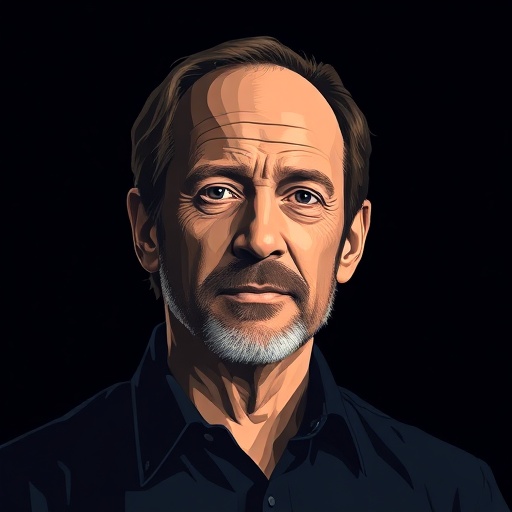
Tim Berners-Lee — "I regret that I put two slashes in the URL. It was unnecessary."
I regret that I put two slashes in the URL. It was unnecessary.
I regret that I put two slashes in the URL. It was unnecessary.
Click any product to generate a realistic preview. Up to 3 at a time.
* Initial load can take up to 90 seconds — revising the preview in another color is nearly instant.
"I didn’t invent the web for people to waste time on it."
"We need to make sure the web is a force for good, not evil."
"The web was designed to be decentralized, but it’s becoming more centralized."
"The web is now controlled by a handful of powerful companies."
"The web is for everybody. That's why it's called the World Wide Web."
British computer scientist who invented the World Wide Web at CERN in 1989 and founded the W3C, championing open web standards. Closely associated with Vint Cerf (TCP/IP co-creator and 'father of the internet') and Marc Andreessen (Mosaic browser creator and Netscape co-founder). For an intellectual contrast, see Mark Zuckerberg, Facebook (Meta) founder — Zuckerberg's walled-garden Facebook is the canonical contemporary opposite of Berners-Lee's open-web vision; Berners-Lee's Solid project and 'recapture the web' essays are explicitly written as a rebuttal to the platform-monopoly model Facebook pioneered.
Found in 1 providers: grok
1 source checked
A blunt, self-deprecating confession that one small design choice — the double slash in every URL — was needlessly baked in. The colon alone would have separated protocol from address. Because URLs are now typed and rendered billions of times daily worldwide, those two redundant characters represent an enormous collective waste of human effort, all attributable to one casual decision made before anyone imagined the web would touch every corner of life.
Berners-Lee invented the URL, HTTP, and HTML at CERN circa 1989, effectively architecting the web alone. Known for intellectual humility and principled openness — he refused to patent the web — he regularly reflects publicly on his own design choices. This quote captures that character precisely: owning a permanent, trillion-times-replicated mistake without deflection or excuse. His career-long advocacy for a human-centered, equitable web flows from the same impulse — caring about cumulative human cost.
Berners-Lee wrote his web proposal in 1989, when the internet served a few thousand academic and military users. He borrowed the double-slash loosely from Apollo workstation file-naming syntax, an obscure precedent almost no one recognized. Decisions were made fast, without committees, with no conception of global scale. The entire early web era was engineers improvising permanent infrastructure under zero public scrutiny — small choices calcifying into standards that now underpin civilization.
AI-generated insights based on extensive research and information for context. Factual errors? Email [email protected].
Your cart is empty