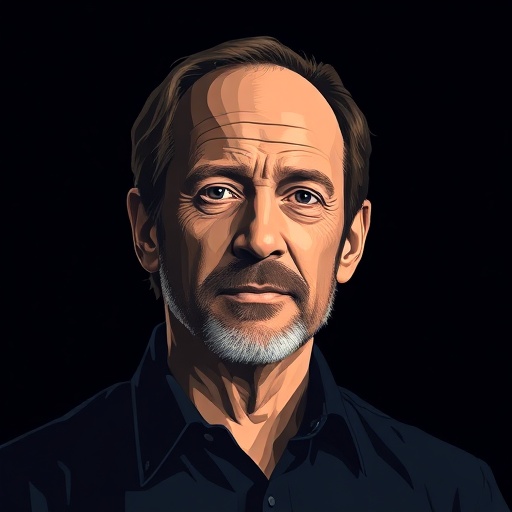
Tim Berners-Lee — "The web is for everybody. That's why it's called the World Wide Web."
The web is for everybody. That's why it's called the World Wide Web.
The web is for everybody. That's why it's called the World Wide Web.
Click any product to generate a realistic preview. Up to 3 at a time.
* Initial load can take up to 90 seconds — revising the preview in another color is nearly instant.
"We need to educate people about the dangers of the web, as well as its benefits."
"I believe that the web can be a tool for positive change in the world. We just need to guide it in the right direction."
"We need to break up the monopolies that control the web. They are too powerful."
"The web is a global public good. We need to protect it."
"The web is not just for looking up information. It's for connecting people, collaborating, and creating new things."
British computer scientist who invented the World Wide Web at CERN in 1989 and founded the W3C, championing open web standards. Closely associated with Vint Cerf (TCP/IP co-creator and 'father of the internet') and Marc Andreessen (Mosaic browser creator and Netscape co-founder). For an intellectual contrast, see Mark Zuckerberg, Facebook (Meta) founder — Zuckerberg's walled-garden Facebook is the canonical contemporary opposite of Berners-Lee's open-web vision; Berners-Lee's Solid project and 'recapture the web' essays are explicitly written as a rebuttal to the platform-monopoly model Facebook pioneered.
Found in 1 providers: grok
1 source checked
Berners-Lee insists the web's defining purpose is universal access. The very name—World Wide Web—encodes that promise: it stretches across every nation, language, ability, and economic class, not just to technical elites or paying customers. If any group is locked out by paywalls, censorship, surveillance, or design that ignores disability or low bandwidth, the network is failing the mission baked into its title. Inclusion is not a feature; it is the product itself.
Berners-Lee built the first web browser and server at CERN in 1989-1990 and then convinced CERN to release the protocols royalty-free in 1993, refusing to patent HTTP, HTML, or URLs. He founded the W3C in 1994 around open standards, later launched the Web Foundation and Solid project to fight platform lock-in, and authored the Contract for the Web. His career is one continuous insistence that the medium he invented belong to its users, not its gatekeepers.
He coined the line as the web matured from research tool into commercial battleground. By the 2000s and 2010s, walled gardens like Facebook, app-store ecosystems, and ISP throttling threatened the open protocols he had given away. Net-neutrality fights, the Snowden surveillance revelations of 2013, half the planet still offline, and growing accessibility lawsuits made universality contested rather than assumed. His reminder pushed back against enclosure during the web's first real reckoning with corporate and governmental capture.
AI-generated insights based on extensive research and information for context. Factual errors? Email [email protected].
Your cart is empty