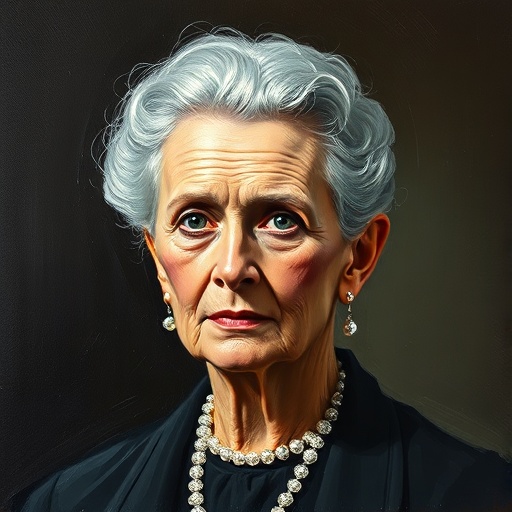
Marie Curie — "I was only a student, but I was burning with desire to learn."
I was only a student, but I was burning with desire to learn.
I was only a student, but I was burning with desire to learn.
Click any product to generate a realistic preview. Up to 3 at a time.
* Initial load can take up to 90 seconds — revising the preview in another color is nearly instant.
"The older one gets, the more one feels that the only thing that matters is to do one's duty."
"There are sadistic scientists who hurry to hunt down errors instead of establishing the truth."
"I am a scientist. I am a researcher. I am a discoverer. I am all of these things. And I am proud of it."
"Nothing in life is to be feared, it is only to be understood. Now is the time to understand more, so that we may fear less."
"A scientist in his laboratory is not only a technician: he is also a child placed before natural phenomena which impress him like a fairy tale."
Found in 1 providers: grok
1 source checked
This expresses the speaker's intense hunger for knowledge during their student years. Despite having no formal status or credentials, they felt an overwhelming drive to absorb everything they could learn. It captures that specific phase when someone is officially a beginner but internally consumed by curiosity, treating education not as an obligation but as something they crave deeply and pursue with relentless passion.
Marie Curie arrived in Paris in 1891 to study at the Sorbonne after years of self-teaching in Russian-controlled Poland, where women were barred from universities. She lived in a freezing attic, often fainting from hunger, yet graduated first in physics. This burning desire fueled her discoveries of polonium and radium, two Nobel Prizes, and her refusal to patent radium isolation, prioritizing scientific advancement over personal wealth.
In late 19th-century Europe, higher education was largely closed to women, and Polish women under Russian occupation faced additional suppression of their language and culture. Curie studied secretly at Warsaw's illegal Flying University before emigrating. The Sorbonne had only recently begun admitting women, and she was among just 23 female students among 1,800 in science. Scientific careers for women were nearly unheard of, making her determination both personal rebellion and historic breakthrough.
AI-generated insights based on extensive research and information for context. Factual errors? Email [email protected].
Your cart is empty